For decades, Southwest Airlines built one of the most recognizable identities in American aviation by rejecting many of the practices embraced by larger legacy carriers. While competitors layered their cabins with premium sections, restrictive fees, and loyalty-driven perks, Southwest cultivated an image centered on simplicity. Passengers checked bags for free, boarded through an open-seating system, and generally experienced a cabin environment with fewer visible divisions between casual travelers and elite frequent flyers.
That identity is now changing faster than at any point in the airline’s modern history.
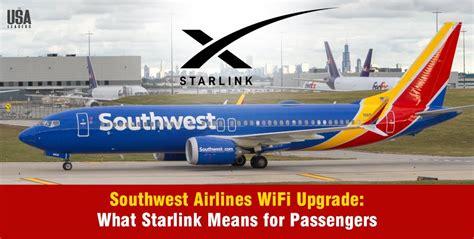
Southwest’s announcement that it will equip more than 300 aircraft with SpaceX Starlink WiFi by the end of 2026 initially appeared to be a straightforward technology upgrade. On the surface, the move positioned the airline alongside competitors racing to improve inflight connectivity for increasingly digital passengers. But hidden inside the announcement was a strategic shift with far larger implications: free access will only be available to Rapid Rewards loyalty members.
The policy may sound minor because joining the program costs nothing. Yet symbolically, it represents a dramatic departure from Southwest’s long-standing philosophy of treating passengers with minimal segmentation. The airline that once resisted industry trends is now embracing the same loyalty-driven ecosystem that transformed Delta, United, and American Airlines into highly data-focused travel businesses.
The result is not simply better internet onboard Southwest flights. It is the visible beginning of a new Southwest Airlines.
Southwest’s Starlink Rollout Is One Of The Biggest Technology Upgrades In Its History
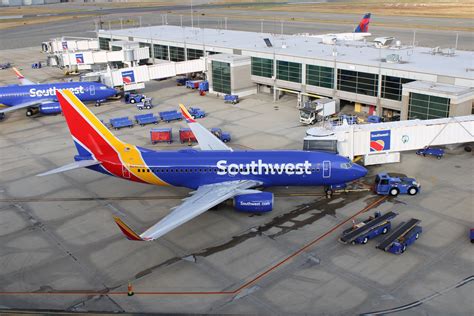
Southwest Airlines operates the world’s largest fleet of Boeing 737 aircraft, with more than 800 jets flying across domestic and international routes. Installing Starlink internet across such a massive operation is not a small experiment or limited pilot program. It is a multi-billion-dollar modernization effort that touches nearly every part of the airline’s customer experience strategy.
The first Starlink-equipped aircraft are expected to enter service during the busy summer travel season, with installations accelerating through the remainder of the year. Once operational, passengers will experience a level of connectivity that traditional airline internet systems have struggled to provide consistently.
Legacy inflight WiFi providers typically rely on geostationary satellites, which orbit tens of thousands of miles above Earth. That enormous distance creates high latency, slower response times, and inconsistent bandwidth performance during peak usage periods. Travelers often encounter buffering video streams, delayed web pages, and unstable connections that make video conferencing nearly impossible.
Starlink changes that equation entirely.
Because SpaceX operates a network of low-Earth-orbit satellites, signals travel dramatically shorter distances between aircraft and orbiting infrastructure. Latency frequently falls within the 20-to-40 millisecond range, while download speeds can exceed 100 Mbps per aircraft under ideal conditions. In practical terms, that allows passengers to stream movies, attend live Zoom meetings, upload large files, and even play cloud-based games in ways previously unrealistic on domestic airline networks.
The improvement is particularly important because passenger expectations surrounding connectivity have fundamentally changed since the pandemic era reshaped work culture. Millions of travelers now operate in hybrid work environments where uninterrupted internet access is considered essential rather than optional.
Business travelers increasingly expect to remain productive throughout flights. Leisure travelers want uninterrupted streaming, social media access, and real-time communication. Families traveling with children often depend on connected entertainment to make long flights manageable. Airlines unable to provide modern onboard internet increasingly appear outdated compared to rivals investing aggressively in next-generation systems.
Southwest understood that remaining competitive required a major leap forward technologically. Starlink provides that leap.
But the technology itself is only part of the story.
The Real Catch Is Southwest’s Loyalty Program Requirement
The most revealing element of Southwest’s Starlink announcement was not the speed of the internet or the scale of deployment. It was the decision to restrict complimentary access to members of the airline’s Rapid Rewards program.
That single requirement signals a profound strategic transformation.
Historically, Southwest differentiated itself by minimizing visible distinctions between passengers. The airline cultivated an egalitarian brand image where most travelers experienced the product similarly regardless of travel frequency or spending patterns. Free checked bags applied broadly. Open seating created a perception of equality onboard. Customer perks were relatively restrained compared to the highly tiered systems dominating other major airlines.
Now, Southwest is actively encouraging passengers to formally enter its loyalty ecosystem in exchange for onboard benefits.
Even though Rapid Rewards enrollment costs nothing, the airline gains substantial value from every new signup. Modern loyalty programs are no longer simple frequent-flyer clubs designed merely to reward repeat customers. They have evolved into sophisticated financial and data-driven businesses capable of generating billions in annual revenue.
Every enrolled passenger provides behavioral insights, booking data, spending patterns, route preferences, and long-term marketing opportunities. Airlines use this information to personalize promotions, strengthen customer retention, and drive co-branded credit card spending.
In many cases, loyalty divisions have become among the most profitable segments inside major airline corporations.
Delta Air Lines demonstrated the power of this model by linking free onboard WiFi to SkyMiles membership. The strategy dramatically increased customer enrollment while expanding Delta’s ability to monetize passenger engagement. Southwest’s Starlink policy follows the same blueprint almost exactly.
The message is unmistakable: participation in Southwest’s ecosystem increasingly determines access to premium benefits.
Southwest’s Open Seating Era Is Quietly Ending
The WiFi decision becomes even more significant when viewed alongside Southwest’s broader operational overhaul.
For decades, Southwest’s open-seating system represented one of the airline’s defining characteristics. Instead of assigning seats during booking, passengers boarded according to boarding-group order and selected seats after entering the aircraft. Supporters praised the system for being faster, more flexible, and less rigid than traditional boarding processes.
Open seating also reinforced Southwest’s cultural identity. While legacy airlines created increasingly segmented cabins with visible status distinctions, Southwest preserved an environment that felt comparatively equal once passengers boarded.
That era is ending.
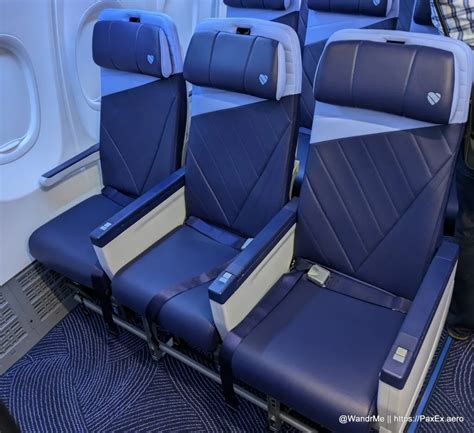
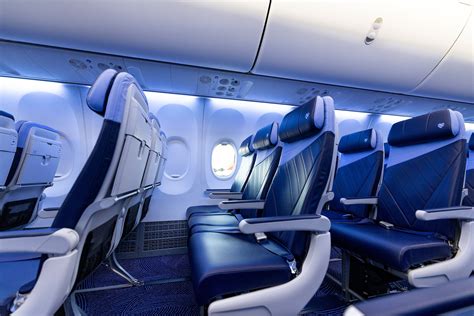
The airline is now transitioning toward assigned seating alongside premium seat categories that include extra-legroom sections and preferred rows near the front of the aircraft. Bookings under the new structure officially became available for travel beginning January 27.
The significance of this shift cannot be overstated.
Assigned seating fundamentally changes how Southwest monetizes its cabins. Instead of treating most seats similarly, the airline can now generate ancillary revenue through seat-selection fees, upgraded seating products, and priority-placement options. This strategy has already proven enormously profitable for competitors.
Airlines discovered years ago that travelers willingly pay extra for incremental comfort improvements even without purchasing traditional first-class tickets. Extra-legroom economy seats, preferred boarding access, and front-cabin placement collectively generate billions in high-margin revenue annually across the industry.
Southwest previously resisted those tactics because they conflicted with its brand identity. Now the airline is embracing them directly.
The psychological impact onboard is equally important. Assigned seating creates visible hierarchy inside the cabin. Elite travelers, higher-paying passengers, and loyalty members receive increasingly differentiated experiences compared to standard customers.
Southwest cabins are beginning to resemble the segmented structures long associated with legacy carriers.
Why Southwest Suddenly Wants More Premium Travelers
Southwest’s transformation is not happening randomly. It reflects changing economics inside the airline industry.
For years, Southwest relied heavily on operational simplicity and transparent pricing to attract travelers frustrated with traditional airlines. That strategy worked exceptionally well during periods when low fares and simplified service created meaningful differentiation.
But the competitive landscape changed.
Today’s airlines generate substantial revenue from sources extending far beyond ticket sales. Premium seating upgrades, loyalty partnerships, baggage fees, branded credit cards, subscription services, and targeted digital marketing all contribute to profitability. Investors increasingly expect airlines to maximize these ancillary revenue streams aggressively.
Southwest’s newer initiatives suggest leadership believes the airline can no longer rely solely on its historical simplicity model to sustain growth.
The introduction of premium seating options reflects that reality clearly. Extra-legroom rows create entirely new monetization opportunities without requiring Southwest to launch fully separated business-class cabins. Travelers willing to pay for comfort upgrades represent a lucrative customer segment that legacy airlines have exploited successfully for years.
The airline’s expansion into red-eye flights further illustrates this strategic repositioning.
Traditionally, Southwest focused heavily on daytime operations optimized around rapid aircraft turnarounds and simplified scheduling. Overnight flying was relatively limited compared to network carriers like United or American.
Expanding red-eye operations allows Southwest to increase aircraft utilization while competing more aggressively on transcontinental routes where overnight schedules are common. It also demonstrates a growing willingness to adopt operational practices once viewed as incompatible with Southwest’s historical model.
Southwest Is Following An Industry Trend It Once Resisted
Although Southwest’s changes feel dramatic internally, the broader airline industry has been moving toward loyalty-driven segmentation for years.
Delta helped normalize the concept of tying free onboard WiFi access to loyalty membership. American Airlines expanded premium seating products aggressively across domestic fleets. United invested heavily in Polaris branding, elite differentiation, and personalized digital ecosystems. Even low-cost carriers increasingly rely on ancillary revenue streams rather than base fares alone.
Southwest remained one of the last major holdouts.
That resistance helped preserve a loyal customer base that appreciated the airline’s simpler approach. But it also limited Southwest’s ability to capitalize on highly profitable industry trends transforming competitors into diversified travel-service businesses.
Modern airline economics increasingly revolve around customer ecosystems rather than transportation alone.
Co-branded credit card partnerships illustrate this perfectly. Airlines sell enormous quantities of loyalty points to banks, which then distribute those points through consumer spending programs. These partnerships often produce extraordinarily high-margin revenue because airlines monetize loyalty currencies independently from actual flight operations.
Customer data has become equally valuable.
Every loyalty-program enrollment strengthens an airline’s ability to analyze travel habits, personalize marketing campaigns, predict spending behavior, and encourage repeat purchases. The more passengers engage digitally through airline apps and loyalty systems, the more monetization opportunities emerge.
Southwest’s Starlink strategy fits directly into this larger evolution.
Free inflight internet is not purely a customer-service enhancement. It is also a mechanism for increasing Rapid Rewards participation, strengthening long-term customer engagement, and expanding data collection opportunities.
The Airline’s Identity Crisis Is Happening In Public
What makes Southwest’s transformation especially fascinating is how openly company leadership acknowledges the shift.
Executives have publicly described the changes as evidence that this is no longer the “Southwest of old.” Such direct language is unusual in the airline industry, particularly for a brand with decades of strong emotional loyalty attached to its identity.
Southwest understands that it is intentionally redefining itself.
That creates both opportunity and risk.
On one hand, modernization may improve profitability significantly. Premium seating, loyalty-driven engagement, assigned seating, and advanced onboard connectivity all align Southwest more closely with the revenue models dominating modern aviation. Investors generally favor these strategies because they diversify income streams and reduce dependence on volatile airfare pricing alone.
On the other hand, Southwest risks weakening the exact qualities that once made it distinctive.
Many loyal customers chose Southwest specifically because it resisted aggressive segmentation. The airline’s simplified cabin structure, open seating, and relatively egalitarian atmosphere created a different emotional experience compared to competitors. Travelers frustrated by endless airline upselling often viewed Southwest as refreshingly straightforward.
The challenge now is whether Southwest can evolve without losing too much of that cultural identity.
Passengers may welcome faster WiFi and more seating options while simultaneously disliking the growing sense of hierarchy onboard. Loyalty-linked perks can improve customer retention among frequent travelers while alienating casual passengers who previously appreciated Southwest’s universal approach.
Balancing those competing dynamics will shape the airline’s future reputation.
Starlink WiFi Represents More Than Better Internet
At first glance, Southwest’s Starlink announcement appears to be a technology story. Faster internet onboard aircraft certainly matters in an increasingly connected world. Travelers will likely appreciate the ability to stream content reliably, work remotely during flights, and remain connected throughout journeys.
But strategically, the announcement carries far deeper implications.
Starlink serves as a visible symbol of Southwest Airlines’ reinvention into a more segmented, premium-oriented, and data-driven airline.
The free WiFi “catch” reveals the company’s evolving priorities. Access to benefits increasingly depends on formal participation inside Southwest’s broader customer ecosystem. Assigned seating introduces clearer cabin hierarchy. Premium rows create monetization opportunities. Red-eye expansion increases network competitiveness.
Individually, each change appears manageable.
Collectively, they represent one of the most significant brand transformations in modern airline history.
Southwest spent decades positioning itself against many practices now becoming central to its future strategy. The airline that once rejected visible customer segmentation is steadily adopting the same structural logic driving competitors across the industry.
Whether that evolution strengthens Southwest long-term remains uncertain.
The airline may ultimately succeed in combining operational friendliness with modern premium offerings, creating a hybrid model capable of appealing to both loyal legacy customers and newer high-spending travelers. Stronger connectivity, flexible seating options, and improved loyalty engagement could increase competitiveness substantially.
Yet there is also genuine risk that Southwest becomes less emotionally differentiated in the process.
If passengers eventually perceive Southwest as merely another large airline with loyalty-gated perks, premium upsells, assigned seating tiers, and segmented customer experiences, the company may lose some of the uniqueness that fueled its rise in the first place.
That tension makes Southwest one of the most closely watched airlines in 2026.
The Starlink rollout may deliver some of the best inflight internet in the domestic market. But the larger story is not about satellites orbiting above Earth.
It is about an airline redefining what it wants to be.