Qantas, once seen as a pioneer in in-flight connectivity with its domestic WiFi offering, now finds itself scrambling to catch up to an international industry that has rapidly evolved. While many global airlines have embraced next-generation, low-latency broadband technologies like Starlink, Qantas has only recently begun to upgrade its international fleet. The question looms: is Qantas too late to the international WiFi game?
Qantas’ Domestic WiFi: A Solid, But Limited Offering
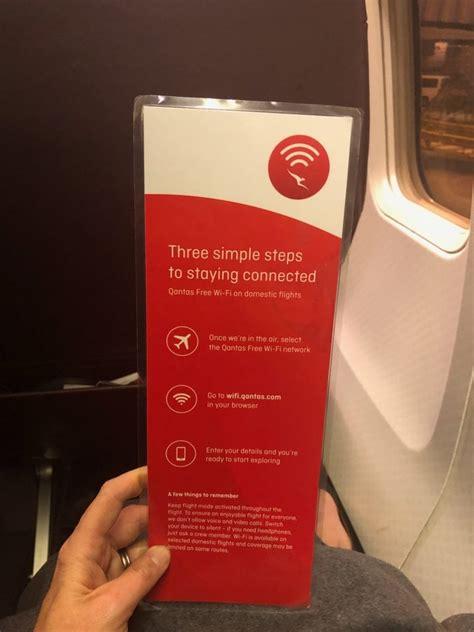
Within Australian airspace, Qantas’ domestic WiFi service is widely praised. Offering a fast, free, and unlimited connection, the airline’s domestic internet access sets a high standard compared to other carriers that charge by the megabyte or limit access to basic messaging apps. The system, enabled via NBN Sky Muster geostationary satellites, covers the expanse of Australia’s domestic routes well — but there’s a catch. The coverage stops at the national border.
Despite its high performance overland, the use of Sky Muster’s geostationary satellites, orbiting 36,000 kilometers above Earth, results in prohibitive lag times outside of Australia. The system is not designed for global coverage, and this fundamental limitation has delayed Qantas’ ability to compete internationally.
The Problem With International Connectivity
Qantas passengers on long-haul flights to destinations like London, Los Angeles, or Singapore often find themselves disconnected for hours. The airline’s current satellite system isn’t equipped to support reliable internet once the plane exits Australian skies. According to Qantas, regulatory constraints and hardware limitations are partly to blame, but the root issue lies in the infrastructure.
By relying on aging geostationary satellites, Qantas finds itself boxed into a regional model at a time when low Earth orbit (LEO) satellite networks, such as SpaceX’s Starlink, are redefining connectivity standards across the aviation industry.
Starlink Sets a New Standard While Qantas Hesitates
The global pivot toward Starlink WiFi represents a disruptive leap in onboard internet quality. Unlike geostationary satellites, Starlink’s LEO satellites orbit at just 550 km, reducing latency and ensuring seamless coverage regardless of the flight path. Airlines like Qatar Airways, airBaltic, Air France, and United have already begun installing Starlink across their fleets.

In contrast, Qantas has been slow to react. Despite conducting a promising domestic WiFi trial in 2016 and rolling out Sky Muster-based services across its domestic Boeing 737 and select A330 aircraft, the airline made little progress on international connectivity until very recently.
This hesitance could prove damaging in an era where in-flight internet access is increasingly considered a basic expectation. Business travelers, digital nomads, and leisure passengers alike now prioritize WiFi availability in their airline choice, and Qantas’ sluggishness has not gone unnoticed.
A Long-Awaited Shift: Viasat and the Global Plan
Qantas is now actively partnering with Viasat, a satellite broadband provider with capabilities for global coverage. As of early 2025, retrofitting has begun on select Airbus A330s flying routes to Singapore and Hong Kong, offering fast and free connectivity that extends beyond domestic borders.
Additionally, trans-Tasman flights to New Zealand now benefit from the upgraded systems. This expansion, though overdue, signifies a meaningful shift in Qantas’ approach to international internet services. The rollout will continue through 2026, gradually encompassing the airline’s Boeing 787 Dreamliners and Airbus A380s.

But while this retrofit initiative is essential, it’s also relatively conservative compared to competitors fully committing to Starlink. Viasat’s solution, while robust, does not match the low latency and global consistency of LEO-based networks, especially across transoceanic and polar routes.
Future-Proofing with New Aircraft Deliveries
To supplement its retrofit strategy, Qantas has ordered a new fleet of aircraft pre-equipped with Viasat WiFi. This includes 25 Airbus A321XLRs, 24 Airbus A350-1000s, and new additions to its Boeing 787 Dreamliner family.
These new aircraft are part of Qantas’ much-publicized Project Sunrise, aimed at delivering non-stop services from Sydney and Melbourne to New York, London, and Paris. These ultra-long-haul routes will be operated using the A350-1000s, designed to offer premium cabin layouts and, importantly, consistent internet connectivity throughout the journey.

Project Sunrise represents a high-stakes endeavor for Qantas. If successful, it will position the airline as a leader in ultra-long-haul luxury travel, with connectivity playing a central role in the passenger experience. However, whether Viasat will deliver a competitive enough product on these routes remains an open question.
The Global Trend: WiFi Expectations Are Evolving
In recent months, Starlink-enabled flights have gone beyond novelty and entered the realm of mainstream expectation. Airlines have hosted live-streamed esports competitions, inflight Zoom calls, and even allowed passengers to stream 4K Netflix content at cruising altitude, all without charge. This bar has been set not just for luxury carriers but for budget airlines as well.
As a result, the aviation industry is bifurcating into two categories:
- Airlines with low-latency, high-speed, globally available internet (often via Starlink)
- Airlines offering limited or regional connectivity (like Qantas’ current setup)
Passengers increasingly view the former as innovators and the latter as outdated.
Too Late to Lead, But Not Too Late to Compete
Qantas’ recent strides, including the adoption of Viasat and the WiFi-enablement of new aircraft, show that the airline is determined to close the gap. But eight years is a long time in technology. Since its initial domestic WiFi debut in 2017, Qantas has seen rivals leapfrog ahead.
The missed opportunity lies not only in passenger satisfaction but also in brand perception. Airlines that embraced global WiFi early — like Qatar Airways — have used it as a powerful marketing tool, symbolizing modernity, luxury, and attentiveness to passenger needs.
Even now, Qantas’ Viasat rollout seems more like playing defense than offense. There’s no announcement suggesting that Starlink or any LEO-based solution is on the horizon for the carrier. As long as it continues down the Viasat path, Qantas may forever remain a step behind the connectivity curve.
Conclusion: A Critical Juncture for Qantas
Qantas’ long-awaited move to bring WiFi to international flights is undeniably positive. It shows responsiveness to global trends and passenger expectations. Yet, in a world that increasingly equates constant connectivity with quality of service, Qantas’ half-decade delay in fully embracing global onboard internet may have already cost it valuable ground.
While Viasat is a credible partner and an improvement over the legacy Sky Muster system, it does not match the global performance standard now being set by Starlink. Unless Qantas begins to pivot more aggressively toward next-generation solutions, it risks being classified as a legacy brand in a digital-first world — remembered more for what it could have done sooner than for what it eventually delivered.
Passengers may soon book based on one simple filter: “Does this flight have Starlink?” If the answer is no, the Australian flag carrier may find itself in the slow lane of a fast-moving industry.