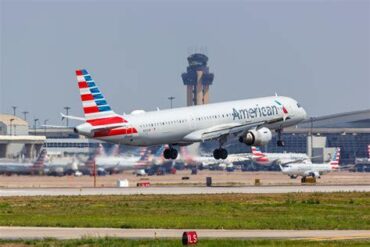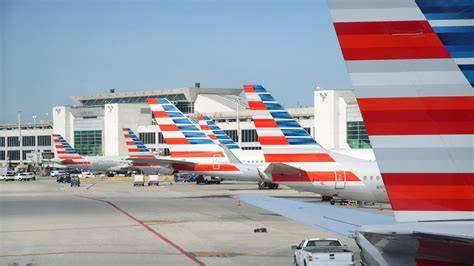
American Airlines has made another round of adjustments at its largest and most important hub, Dallas/Fort Worth International Airport (DFW). Over the period from January 2023 through July 2026, the carrier ended nine domestic routes from DFW, removing nonstop service to airports ranging from small Texas communities to destinations in the Northeast and Pacific Northwest.
The changes highlight the constant evolution of American Airlines’ network. Even at a hub as powerful as DFW, not every route can justify the aircraft, crew, and schedule required to maintain it. Some markets produce weak demand, while others can be served more efficiently through a different American hub or by connecting passengers through DFW rather than operating a dedicated nonstop flight.
For travelers, however, a route cancellation can mean more than a simple line disappearing from a timetable. Smaller communities can lose their only connection to American’s enormous DFW network, while passengers who once enjoyed a nonstop flight may suddenly face a connection, a longer journey, or another airline.
American Airlines’ Nine Route Cuts From Dallas/Fort Worth
An examination of American Airlines’ DFW network identified nine airport pairs that were served during the January 2023-to-July 2026 period but are no longer scheduled from August 2026 through March 2027. The affected markets were all domestic, demonstrating that the cuts were focused on the airline’s U.S. network rather than international flying.
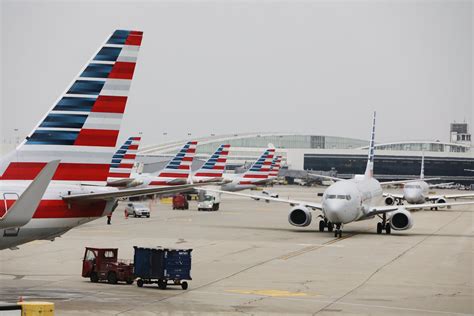
The routes disappeared at different points, reflecting individual market decisions rather than a single network-wide reduction. American ended service to Columbus, Georgia, in February 2023, followed by Del Rio, Texas, in April 2023 and Springfield, Illinois, in May 2023. The airline subsequently left Hilton Head, South Carolina, in August 2023, Fayetteville, North Carolina, in March 2024, and Burlington, Vermont, in October 2024.
The more recent changes affected the Pacific Northwest and Florida. American ended its DFW service to Eugene, Oregon, in August 2025, followed by Redmond/Bend, Oregon, in September 2025. The final market identified in the analysis was Daytona Beach, Florida, where the remaining limited service ended in February 2026.
| Route from DFW | End of service |
|---|---|
| Columbus, Georgia (CSG) | February 2023 |
| Del Rio, Texas (DRT) | April 2023 |
| Springfield, Illinois (SPI) | May 2023 |
| Hilton Head, South Carolina (HHH) | August 2023 |
| Fayetteville, North Carolina (FAY) | March 2024 |
| Burlington, Vermont (BTV) | October 2024 |
| Eugene, Oregon (EUG) | August 2025 |
| Redmond/Bend, Oregon (RDM) | September 2025 |
| Daytona Beach, Florida (DAB) | February 2026 |
Why American Airlines Is Cutting DFW Routes
The importance of these cancellations becomes clearer when DFW’s scale is considered. Dallas/Fort Worth is American Airlines’ dominant hub, ranking first for the carrier across several major measures, including flights, seats, available seat miles, and destinations. With such a large operation, American has enormous flexibility in moving aircraft between markets.
That flexibility also creates a high standard for individual routes. An aircraft assigned to a weak market could potentially generate better returns somewhere else, particularly when the same aircraft can be deployed on a route with stronger demand or higher yields.
This is especially significant for regional services. Smaller airports frequently depend on American Eagle flights operated by regional carriers using aircraft such as Embraer regional jets or Bombardier/CRJ-family aircraft. Although these aircraft are useful for connecting smaller communities to major hubs, their economics can become challenging when passenger demand remains consistently low.
The nine cancellations therefore should not necessarily be interpreted as evidence that DFW itself is weakening. Quite the opposite is true. American continues to operate a huge network from the airport, and eliminating marginal routes can allow the airline to concentrate capacity where it believes demand and revenue potential are stronger.
Del Rio Shows Why a Route Can Become Unsustainable
The DFW–Del Rio route provides one of the clearest examples of the economics behind American’s decision. Del Rio International Airport (DRT) is located close to the Mexican border and roughly 291 nautical miles from DFW. American Eagle operated the market between November 2018 and April 2023, initially using Envoy Air Embraer ERJ140 and ERJ145 aircraft before SkyWest operated the route with CRJ700s.

According to U.S. Department of Transportation data cited in the reference analysis, the route carried 164,098 round-trip passengers over its operating period, with an overall load factor of only 59.3%. Even before the pandemic, the market struggled to achieve consistently strong utilization. Its best annual load factor was 69.1% in 2019, while 2020 fell sharply to 43.5%.
The final year of operation provided another important clue. Around 85% of the route’s passengers connected onward through DFW, meaning relatively few travelers were simply traveling between Del Rio and Dallas. Although connectivity is one of the principal reasons regional routes exist, the economics still have to justify maintaining the nonstop link.
The route also reportedly generated lower revenue per available seat mile than American’s other DFW–Texas markets. When weak demand and weak revenue are combined with the costs of maintaining aircraft and crews, a cancellation becomes considerably easier to understand.
Columbus, Georgia, Also Struggled With Demand
Columbus Airport (CSG) represents another example of a small-market route that failed to achieve sustainable demand. American Eagle first operated DFW–CSG between 2010 and 2013, with twice-daily service using small Embraer regional aircraft. The route returned in April 2021 but survived for less than two years, ending in February 2023.
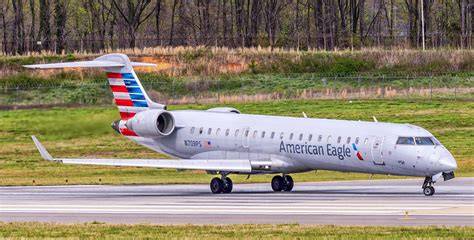
The second period produced an average load factor of only 63.3%, barely different from the approximately 62% recorded during its earlier operating era. The numbers suggest that American had repeatedly tested the market but was unable to generate the passenger volumes necessary for long-term service.
American’s withdrawal from DFW left CSG without the carrier, while Delta Air Lines continues to serve Columbus from Atlanta. That distinction is important because it demonstrates that a route’s viability is not determined solely by the size of the airport. Hub geography, connecting opportunities, local demand, and airline network strategy all influence whether a particular nonstop flight makes sense.
Most of the Airports Still Have American Service
Despite nine DFW route cancellations, American has not completely abandoned most of the affected airports. Only Del Rio and Columbus, Georgia, no longer receive American service at all, according to the analysis.
The other seven airports remain connected to American’s broader network through different hubs or facilities. This illustrates an important feature of the airline’s network strategy: ending a nonstop route from DFW does not necessarily mean ending the relationship with the destination.
For American, shifting a market to another hub can preserve connectivity while allowing aircraft to be used more efficiently. For passengers, the experience changes because a nonstop flight disappears, but access to the airline’s wider network may remain available.
What the DFW Route Cuts Mean for American’s Network
The nine cancellations offer a useful snapshot of how American Airlines manages its busiest hub. DFW remains the center of an enormous domestic and international network, but size does not make every route immune from scrutiny.
The affected markets also show that route decisions can emerge from very different circumstances. Some routes served smaller communities with limited demand, while others involved destinations that remain part of American’s network through different hubs. The common factor is that the DFW nonstop service no longer appears in the airline’s scheduled network for the period examined.
For travelers, the practical lesson is simple: DFW’s vast American Airlines network continues to evolve. Routes can disappear even when the airport itself remains exceptionally strong, and smaller markets are particularly vulnerable when passenger demand cannot support dedicated regional service.
At the same time, the cancellations demonstrate the value of DFW as a hub. American can continually reshape its schedule, redirect aircraft toward stronger markets, and maintain connectivity through alternative hubs. In an airline industry where every aircraft and every departure must earn its place, even one of the world’s largest hubs cannot escape the pressure to make every route count.