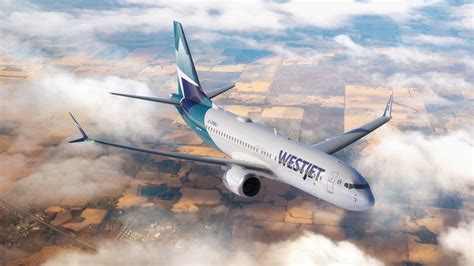
WestJet is making a significant adjustment to its United States flight network, removing 27 transborder routes that were operated at some point between January 2025 and July 2026 but will no longer appear in the airline’s schedule from August 2026 onward. The cuts represent a broader effort by the Canadian carrier to focus capacity on stronger-performing markets while reducing exposure to routes with weaker demand, higher operating costs, or limited long-term potential.
According to aviation schedule data from Cirium Diio, WestJet’s US network has contracted as the airline responds to changing travel patterns, economic conditions, and evolving strategic priorities. The carrier transported approximately 4.7 million round-trip passengers between Canada and the United States in 2025, but traffic declined by around 15% compared with the previous year.
The affected routes include a mixture of leisure destinations, seasonal services, and some flights connected to WestJet’s strategic relationship with Delta Air Lines. While the two airlines maintain a transborder partnership featuring codesharing and reciprocal loyalty benefits, not every route within their combined network has delivered the required commercial performance.
WestJet’s US Network Retrenchment Targets Seasonal and Competitive Routes
The majority of the canceled services were not considered core routes for WestJet. Several operated for only one or two seasons, while others faced intense competition or struggled with demand levels that could not justify continued operations.
The airline’s largest reductions are concentrated at Vancouver International Airport (YVR), where US-bound flights are expected to fall significantly. During the peak summer period of 2026, WestJet’s US service from Vancouver will decline by approximately 46.6% year over year. By comparison, the airline’s overall US capacity reduction is much smaller at about 13.3%.
Vancouver experienced some of the most extensive changes because WestJet operated several long-distance transborder routes from the airport. One example was the Vancouver–Fort Lauderdale service, which represented the carrier’s longest operation to the US mainland during the reviewed period. That route, along with several other YVR services, will be removed.
In contrast, WestJet’s main hub at Calgary International Airport (YYC) remains relatively stable. Only one Calgary-US route was eliminated, and the hub’s overall US schedule declined by just 3.2%. This highlights the airline’s intention to protect stronger markets while reducing flights that provide lower returns.
Full List of WestJet US Routes Being Eliminated
The 27 canceled routes span several Canadian cities, including Vancouver, Edmonton, Toronto, Winnipeg, Regina, Saskatoon, and Halifax. Many connected Canadian communities with popular US leisure destinations such as Las Vegas, Orlando, and Florida markets.
The eliminated routes include:
- Ottawa to Fort Myers
- Regina to Orlando
- Saskatoon to Orlando
- Victoria to Las Vegas
- Winnipeg to Los Angeles
- Edmonton to San Francisco
- Vancouver to San Diego
- Edmonton to Chicago O’Hare
- Edmonton to Nashville
- Edmonton to Seattle
- Halifax to Orlando
- Toronto to Los Angeles
- Winnipeg to Nashville
- Vancouver to Boston Logan
- Vancouver to Nashville
- Vancouver to San Francisco
- Vancouver to Tampa
- Calgary to Raleigh/Durham
- Kelowna to Las Vegas
- Edmonton to Atlanta
- Regina to Las Vegas
- Saskatoon to Las Vegas
- Vancouver to Fort Lauderdale
- Vancouver to Lihue
- Vancouver to Orlando
- St. John’s to Orlando
- Toronto to Las Vegas
Why WestJet Ended These Flights
The decision reflects the difficult economics of operating transborder aviation markets. Airlines must balance passenger demand, aircraft utilization, fuel costs, airport fees, competition, and seasonal fluctuations.
Some canceled routes were relatively new launches designed to capture temporary demand. For example, Vancouver to Boston Logan International Airport began on June 9, 2025, shortly before the busy summer travel season. The route operated with Boeing 737-700, 737-800, and 737 MAX 8 aircraft, offering up to five weekly flights.
However, the service ended after the final departure on October 13, 2025. The route had previously experienced changes among multiple airlines, including Air Canada and JetBlue, showing the challenges of sustaining nonstop service between the two cities.
The removal of Vancouver-Boston demonstrates how airlines continually evaluate whether a route can generate sufficient revenue. Even a market with strong business and leisure connections may struggle if passenger demand does not support profitable operations.
Low Load Factors Highlight Market Challenges
Another example was WestJet’s short-lived Vancouver–Tampa service. The route launched in 2025 during a period when both WestJet and Air Canada entered the market, creating additional nonstop capacity between the two cities.
WestJet operated the service only on Saturdays between June 14 and October 25, 2025. Air Canada also introduced seasonal flights, and together the airlines quickly added nearly 21,000 round-trip seats to a market that previously had no nonstop option.
However, passenger demand failed to meet expectations. Data from the US Department of Transportation showed WestJet achieved a load factor of only 54.2%, while Air Canada recorded a similar figure of 54.4%. With aircraft seats remaining significantly underfilled, both carriers exited the route.

WestJet Focuses on Stronger Core Markets
Although losing 27 US routes may appear substantial, the changes represent a network optimization strategy rather than a complete withdrawal from the American market. WestJet continues to maintain important connections between Canada and major US destinations, especially from its Calgary hub.
The airline has increasingly emphasized routes that provide better aircraft utilization, stronger passenger demand, and improved financial performance. Seasonal leisure flights can create opportunities during peak periods, but they also carry risks when demand changes or competitors enter the market.
WestJet’s latest schedule adjustments show how airlines constantly reshape networks in response to market conditions. As travel patterns continue evolving, the carrier appears focused on building a more efficient US network with fewer underperforming routes and greater concentration on profitable operations.