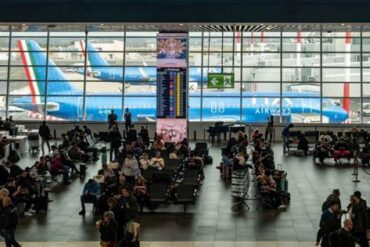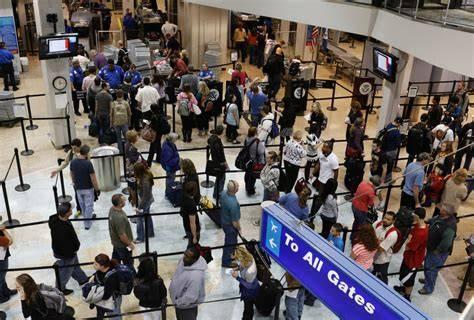
The Transportation Security Administration has abruptly suspended a major expansion of its Gateside by TSA PreCheck program, the initiative that allows eligible non-ticketed visitors to clear airport security and meet friends or family at the departure gate. What began in September as a 13-airport pilot ballooned to a planned 314 locations on October 2, only for the agency to reverse course within days. The original pilot remains operational, but the national rollout is now on indefinite hold, and the speed of that about-face has unsettled airports, confused travelers, and revived a bigger question about how far the post-9/11 boundaries of airside access should be pushed.
From 13 Airports to 314 and Back Again in Two Weeks
Gateside was designed to restore an experience largely lost after the September 11 attacks: walking a parent to the gate, greeting a returning service member at arrivals, or simply lingering in the terminal over a meal and a view of the apron. The mechanics are straightforward. TSA PreCheck members and eligible members of other trusted traveler programs submit an application online one to three days before their visit, using a valid Known Traveler Number and a Login.gov account. Approved visitors pass through TSA PreCheck screening and pay nothing beyond their existing membership fee, a detail that made the program unusually accessible compared with earlier airport-specific visitor passes.
Throughout late September and early October, the program appeared to be moving on rails. On October 1, Tulsa International Airport (TUL) announced it would launch Gateside, confirming that the program was being extended to 301 additional airports the following day and lifting the national network to 314 locations. Kim Kuehler, the airport’s communications manager, framed the launch in community terms, saying the airport was “excited to offer another way for our community to enjoy more of our airport,” whether welcoming someone home, seeing a loved one off, or spending extra time together beyond security. Airports across the country followed in short order, promoting the benefit to local travelers and in some cases booking their first visitors within hours.
Then the floor gave way. By October 15, the application portal had reverted to just the original 13 airports, with TSA telling airports plainly that the Gateside program was “on hold indefinitely aside from the 13 airports in the pilot program.” The broader expansion had survived less than two weeks in the field, despite having been publicized by both the agency and its airport partners.
Denver, Norfolk, and the Cost of a Silent Reversal
The withdrawal has already produced the kind of operational whiplash that erodes public trust. Denver International Airport (DEN) confirmed to CNN that TSA had returned Gateside to its pilot footprint, even though visitors had successfully used the program there the previous week. At Norfolk International Airport (ORF), officials learned their airport had vanished from the application system only after travelers began complaining, according to News34. Norfolk had logged 31 Gateside visitors in its first four days of operation, a modest but tangible demonstration that the program worked at the local level.
Those episodes matter because they expose a governance gap rather than a travel inconvenience. When a publicly promoted airport benefit is withdrawn without clear advance communication, the burden falls on frontline airport staff who never had authority over the decision and on travelers who planned around it. The airports are left explaining a federal program they do not control, and the agency has offered no public statement on what changed between the October 2 expansion and the mid-October retreat.
What TSA Has Not Explained About the Suspension
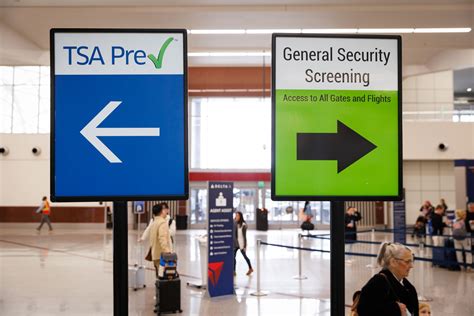
TSA has not identified a reason for the suspension, and every explanation currently in circulation remains unconfirmed. A rollout to hundreds of airports in a single day would require coordination among checkpoint personnel, individual airport operators, and the national application system, and any seam in that chain could produce failures at scale. View From The Wing has pointed to inconsistent staff training and technical problems, citing reports of approved visitors being turned away at Dallas/Fort Worth International Airport (DFW) because checkpoint staff and supervisors said they had not been trained on the program or could not locate the approval in their systems.
Checkpoint capacity offers a second plausible thread. Even approved visitors must pass through screening, and additional volume lands on the same lanes that ticketed passengers use during peak banks. Yet this argument is weaker than it first appears. Unlike ticketed travelers, non-travelers can be governed through strict daily allocations, a control that a number of US airports have already implemented for years through their own non-TSA airside visitor programs.
The Precedent: Visitor Programs Already Prove Controlled Access Works
The record from airport-run visitor programs makes the suspension of Gateside look less like a technical necessity and more like an unresolved policy question. Seattle-Tacoma International Airport (SEA) caps its visitor pass at 300 people daily and recorded nearly 2,500 visitors a month last year, sustained volume handled without disrupting normal screening. Philadelphia International Airport (PHL) permits just 100 visitors a day through its Wingmate Pass, while Cleveland sets the same ceiling for its Hopkins Hangout Pass. San Francisco’s Gate Explorer, launched in April, raised its daily cap from 200 to 300 in response to demand. Detroit, San Diego, Tulsa, and Kansas City run their own variants with differing application windows—from same-day kiosks at DTW to a 30-day booking horizon at SFO—and even smaller markets like Tulsa draw more than 1,000 visitors a month.
That body of evidence suggests airside visitor access is a manageable, demand-positive operation, not an unquantified risk. The airports that ran these programs did so deliberately, using daily caps and pre-application windows to keep visitor flow inside existing checkpoint capacity, and their experience gives TSA a tested template should Gateside return.
Why the Reversal Clashes With Horizon 25 Modernization
The suspension sits oddly against everything else TSA is doing to speed people through checkpoints. On October 6, TSA Administrator David Cummins announced upgraded PreCheck lanes at seven airports over six weeks, systems that combine electronic identity gates, advanced body scanners, and AI-assisted baggage screening and could potentially double checkpoint throughput. With PreCheck enrollment near 50 million, the agency wants to add another 20 million participants over three years, all of it framed under its wider Horizon 25 strategy.
The hardware is already arriving. Eight self-service eGates have been tested at Charlotte Douglas International Airport (CLT), new body scanners allow passengers to stand with arms lowered rather than raised overhead, and Touchless ID keeps expanding, with American Airlines confirming in April that biometric verification was live at all of its major hubs. TSA’s CT scanner rollout continues in parallel, with 1,162 units across 296 airports projected by July 2026, delivering three-dimensional carry-on imagery even though the standard 3-1-1 liquids restrictions remain in force. The agency has also floated ending the requirement to remove water bottles, though no such change has been confirmed.
What Travelers and Airports Should Do Now
For now, the operative fact is narrow and verifiable: Gateside exists at the original 13 pilot airports and nowhere else, regardless of what travelers may have read during the first half of October. Visitors planning a gate-side goodbye or arrival greeting at any of the 301 expanded locations should contact the airport directly before booking around the benefit, and airports that promoted the program face the harder task of messaging a reversal they did not choose. Whether the suspension proves temporary remains an open question, but the thousands of visitors flowing through airport-run programs every month make one point clear—the demand for controlled, non-ticketed terminal access did not disappear when the portal did.