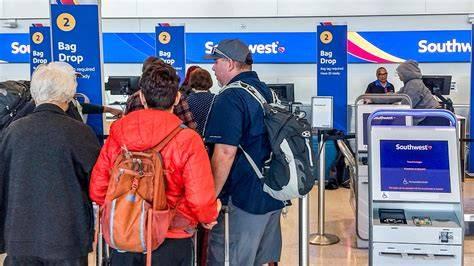
Southwest Airlines spent five decades selling itself on what it refused to charge for. Two free checked bags, a seat waiting after you boarded, and no change fees formed the core of a brand built on simplicity. That identity is now gone, replaced by a commercial engine that extracts money at the moment of booking rather than at the gate. The shift has produced one of the more dramatic financial turnarounds in modern US airline history, and the numbers behind it deserve close scrutiny because they reveal how quickly customer habits can be rewritten when a carrier makes the right structural moves.
The Financial Impact of Southwest Airlines’ New Fees
The headline figure Southwest has put in front of investors is more than $2 billion in additional annual operating profit for 2026, a number that blends assigned seating and checked baggage into a single contribution. Chief Financial Officer Tom Doxey laid out that estimate at an investor conference in September 2026, and the phrasing matters: this is profit, not gross revenue, meaning the fees are not merely inflating the top line while costs eat the gains. Management has described the outcome as meeting, and in several quarters exceeding, the internal models built before either change went live.
What makes that figure remarkable is the starting position. Southwest’s ancillary revenue base was historically thin by industry standards, precisely because the two most monetizable touchpoints in domestic travel were given away. The first two bags flew free, and seat selection happened through a boarding position rather than a price tag. Both choices earned loyalty and drove Rapid Rewards engagement, but they left enormous value on the table while competitors such as United Airlines, Delta Air Lines, and American Airlines built multi-billion-dollar ancillary programs. Southwest’s reversal closed that gap in less than two years.
Southwest Airlines’ Baggage Fees Are Generating Around $1 Billion
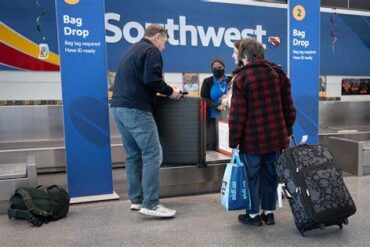
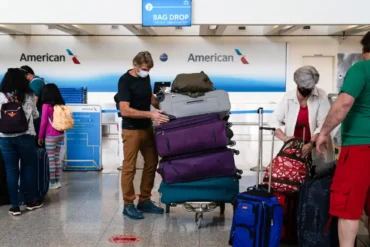
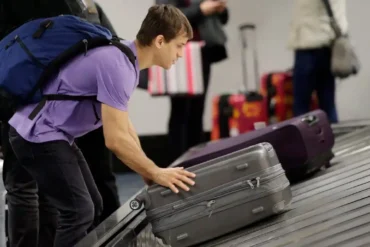
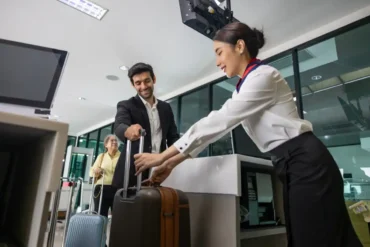
The baggage decision arrived in a specific sequence. Tickets purchased from May 2025 onward carried fees for the first and second checked bag, ending a policy that loyalists had treated as almost contractual. By October 2025, management was already telling analysts that bag charges were tracking at roughly $1 billion annually, slightly ahead of the original projection. Subsequent fee increases during 2026 pushed that trajectory higher again, and during the third-quarter earnings call, Doxey confirmed the one-billion-dollar benchmark was still running ahead rather than falling short.
The counterintuitive lesson is that demand for checked bags barely moved. Travelers on Southwest’s dense domestic network still need to move golf clubs, strollers, and week-long wardrobes, and they still needed a route to the cargo hold. What changed was the price point, not the behavior. Each fee is small relative to a ticket, but Southwest carried more than 100 million passengers annually before the policy shift, and a single checked bag on even a modest share of those journeys compounds into a sum that would have been invisible under the old model. The revenue is, in effect, a repricing of a service the airline had been subsidizing.
Assigned Seating Has Become Another Major Revenue Generator
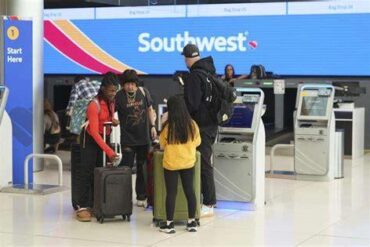
The seating overhaul followed a parallel timeline. Assigned-seat tickets, including extra-legroom options, became bookable in July 2025 for flights departing from January 2026, giving Southwest time to retrain crews and reconfigure cabin layouts. The old open-boarding ritual, where passengers lined up according to a letter and number, gave way to a familiar seat map. CEO Bob Jordan framed the change as unlocking more than $1 billion in additional operating profit during 2026, with a longer-range target of roughly $1.5 billion annually by 2027.
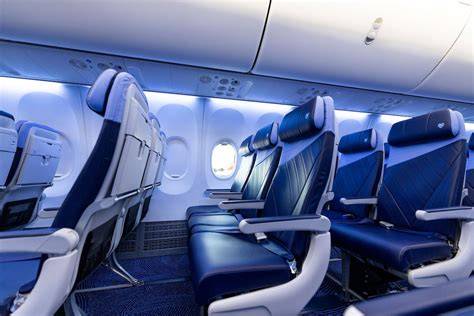
Extra-legroom inventory is the strategic hinge here. Airlines with tight seat pitch have long monetized the exit rows and bulkhead sections, but Southwest’s single-class, all-737 cabin made this difficult. By repositioning a defined block of rows as a paid upgrade, the carrier created a mid-tier product that captures travelers unwilling to pay for a full premium fare but happy to spend for a few inches of knee room. That structure widens the funnel of upgraders far beyond business travelers and corporate accounts, which is why management sees room to lift the seating contribution by another half-billion dollars in 2027.
More Passengers Are Now Paying for Additional Services
The most revealing statistic in the entire transformation is behavioral rather than financial. Fewer than 20% of passengers previously bought an add-on such as a checked bag, preferred seat, or extra legroom. After the changes, that share rose to roughly 60%. A threefold jump in attach rate explains why two discrete policy decisions could produce a contribution that management now compares to the earnings power of an entire regional airline.
Several forces drive that attach rate. Assigned seating forces every booking through a seat page, which is a natural merchandising moment that Southwest never previously had. The extra-legroom upsell sits directly beside the standard seat map, adjacent to the decision a traveler is already making. And a fare ladder with distinct bundles gives budget-sensitive flyers a reason to step up rather than skip. Customers still seeking the lowest price can book Wanna Get Away fares and decline every extra, preserving Southwest’s value positioning, while others self-select into richer spend. The airline now earns money from segmentation rather than from a single blanket price.
Southwest Airlines’ Overall Financial Performance Has Improved
These initiatives sit inside a broader earnings recovery. Third-quarter 2026 operating revenue hit a record $8.4 billion, up about 21.2% year over year. Passenger revenue across the first nine months of 2026 climbed by $3.3 billion, or 17.8%, with management attributing the gain to higher-priced fare mix, baggage fees, and assigned seating working in combination rather than in isolation. Revenue per available seat mile rose 16.4% to 17.92 cents, the metric that best captures whether Southwest is extracting more from the capacity it already flies.
Adjusted earnings per share reached $0.66 in the third quarter, roughly 500% higher than a year earlier. That swing looks less dramatic when set against 2025, a year in which Southwest recorded full-year adjusted earnings before interest and taxes of just $574 million. Fuel costs, labor agreements, and fleet transition expenses still shape the bottom line, but ancillary revenue is now doing heavy lifting that ticket prices alone could not sustain. The transformation is less about one fee and more about a carrier learning to monetize every stage of the booking journey.
What the New Charging Structure Means for Southwest Airlines’ Future
Southwest is not treating these charges as temporary levers. The jump from a $1 billion-plus seating contribution in 2026 to roughly $1.5 billion in 2027 signals management expects the extra-legroom and preferred-seat ladder to keep maturing as travelers grow accustomed to the booking interface. Beyond seats and bags, the airline is also rebuilding its loyalty economics, with a revamped Chase co-branded card partnership and a program designed to reward spend in ways that generate fee revenue for Southwest. Tom Doxey noted that the $2 billion figure excludes this additional loyalty income, meaning the full commercial upside remains partially uncounted.
The strategic logic extends to fleet. Southwest remains the world’s largest Boeing 737 operator, with 803 aircraft in service, including 343 737 MAX 8s, plus 167 more MAX 8s on order and 269 MAX 7s pending certification. A single-family fleet keeps unit costs low and, crucially, makes cabin retrofits for assigned seating and extra-legroom rows simpler to standardize across hundreds of airframes. The same fleet flexibility supports denser scheduling on the domestic network that generates the passenger volumes these fees depend on.
The Verdict on Southwest’s Seat and Bag Revenue Strategy
Southwest will not publish a clean line item for seat and baggage revenue, and investors should not expect one. What the carrier has given instead is a profit contribution above $2 billion annually in 2026, a baggage stream running ahead of its $1 billion target, and an assigned seating program tracking toward $1.5 billion by 2027. The proportion of travelers buying add-ons has tripled. Fare mix has improved. Revenue per available seat mile has climbed sharply. Against that backdrop, the old two-free-bags promise now reads less like a service legacy and more like a multi-billion-dollar concession the airline can no longer afford, and the speed of the pivot suggests Southwest has no intention of turning back.