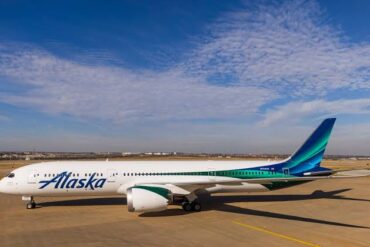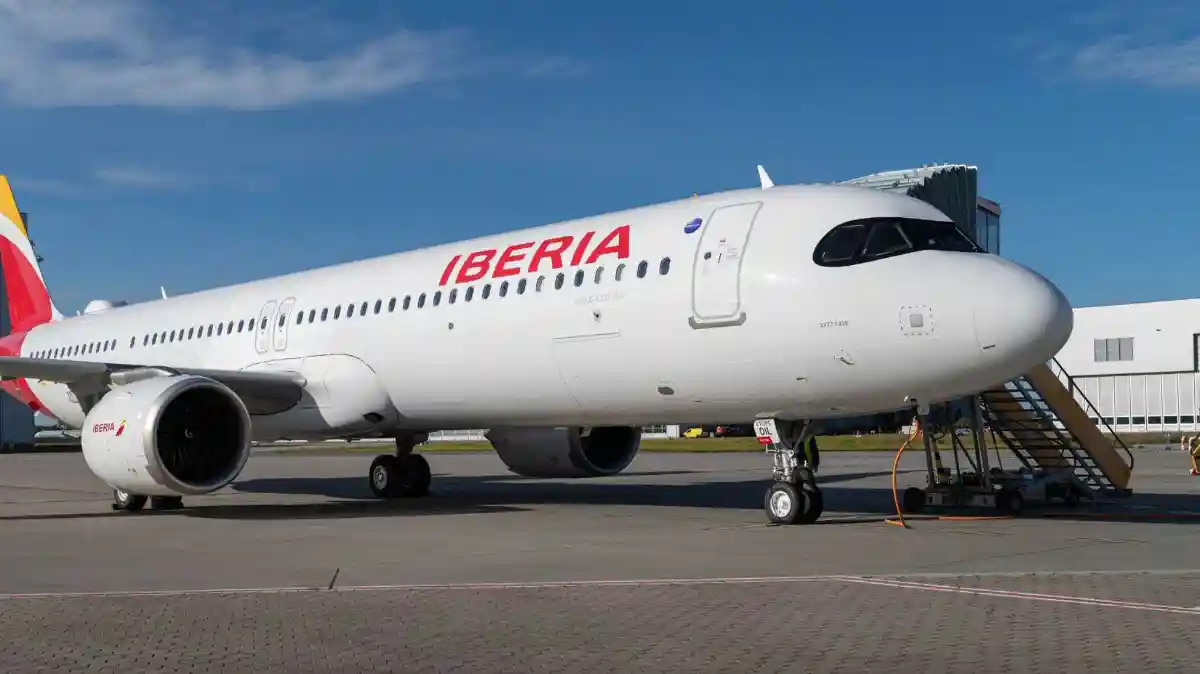
Two aircraft leave North American soil on the same winter morning, both bound for Europe, both riding the same North Atlantic Track. One is a Boeing 787 Dreamliner holding ETOPS 330 authority. The other is an Airbus A321XLR certified to ETOPS 180. To a passenger in seat 34A, the crossings look interchangeable: a cabin, a departure, a cup of coffee, a landing. Behind the flight deck door, the two captains are solving fundamentally different problems. The widebody commander has five and a half hours of single-engine diversion time in his back pocket; the narrowbody commander has three. That single number reshapes how each crew reads the ocean beneath them, where they build their Equal Time Points, and what counts as a legitimate safe haven when the weather turns hostile at 37,000 feet.
What ETOPS Certification Actually Grants a Twin-Engine Crew
For decades, twins were chained to the coastline. In the early jet era, the FAA required aircraft with two engines to stay within 60 minutes of a diversion airport, a rule built on the fear that one engine failure might cascade into an unrecoverable situation far from land. That regulation kept Boeing 747s, McDonnell Douglas DC-10s, and Lockheed L-1011 TriStars as the only credible transatlantic machines. The barrier began to crack in the 1980s as turbofan reliability data piled up and the statistical case for extended twin operations became impossible to ignore. In 1985, TWA received the first ETOPS approval for 767 transatlantic service at 120 minutes. Since then, the envelope has expanded through 180, 240, and, for the 787, all the way to 330 minutes.
The term matters precisely because it is misunderstood. ETOPS is not a badge stamped on an airframe model at the factory. It is a three-legged certification covering the specific combination of airframe, engine, and operator. An airline must prove maintenance programs, crew training standards, and operational procedures rigorous enough to justify the diversion window it requests. A 787 flown by an operator with a 330-minute approval does not imply that every carrier flying the type enjoys the same privilege. The same logic cuts the other way for the A321 family, currently held at ETOPS 180. On any given day, two aircraft of the same type may be legally separated by hundreds of miles of usable ocean simply because one airline invested in the reliability case and the other did not.
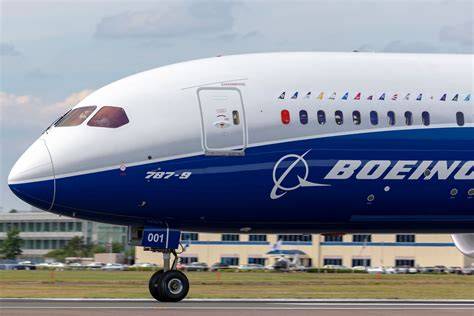
The Geometry of a Three-Hour Circle Versus a Five-and-a-Half-Hour Circle
The arithmetic of diversion time converts brutally into geography. At 180 minutes, an A321XLR’s diversion circle reaches roughly 1,350 to 1,500 nautical miles from the nearest suitable field, depending on single-engine cruise speed and wind. At 330 minutes, the 787’s radius stretches to approximately 2,500 to 2,750 nautical miles. In practical terms, the widebody captain carries nearly twice the geographic buffer at every point along the track. That is the entire article in one sentence, and everything else follows from its operational consequences.
On the North Atlantic, the difference manifests as a narrower safe corridor for the XLR. Keflavík, Kangerlussuaq, the Azores, Shannon, and Newfoundland sit comfortably inside a 330-minute circle for most of the crossing. A 787 planner can file a broad spectrum of tracks and barely glance at the edge of the envelope. The A321XLR crew has a tighter problem: every latitude and longitude along the filed route must remain within three hours of at least one suitable alternate, and the candidate list shrinks alarmingly over the ocean’s midpoint where the sea itself is the only neighbor. Dispatchers must validate the track point by point, incorporating wind forecasts, runway availability, and the weather at each potential haven, because a diversion airport that is fogged in or snow-closed is not an airport at all.
The consequence widens into a planning reality the 787 never has to face. On a day when a critical field such as Kangerlussuaq is closed, the A321XLR’s route menu contracts immediately, because fewer fields fall within its three-hour tent. The Dreamliner absorbs the same closure with comparative ease; its five-and-a-half-hour radius keeps additional airports available that the narrowbody could never reach on one engine within legal time. Two crews, one ocean, two different maps.
Where Equal Time Points Reveal the Difference in Thinking
An Equal Time Point is the position along a route where the time to continue onward to the next suitable airport equals the time to turn back to the last one. It is not a fixed coordinate. It breathes with the wind. A stiff headwind outbound implies a tailwind homeward, which drags the ETP forward along the route; a pushing tailwind outbound shoves it back. The ground distance to the ETP equals the total distance between the two diversion airports multiplied by return groundspeed, divided by the sum of continue and return groundspeeds. Both the A321XLR and the 787 Flight Management Systems solve this continuously from live wind data and display it on dedicated ETOPS pages, but crews are drilled to understand the underlying mathematics and cross-check the machine.
The critical nuance that separates a polished understanding from a shallow one is that there is no single ETP. Each failure scenario demands its own calculation, because each assumes different performance. An engine-out ETP uses single-engine cruise speed at current weight, slower than normal cruise but still capable of holding near the original flight level. A depressurization ETP assumes immediate descent to 10,000 feet, where passengers can breathe without supplemental oxygen, but where fuel burn climbs sharply and true airspeed sags, pushing the ETP notably farther from the route midpoint. The pressurization case is usually the more conservative of the two. And on a narrowbody with a smaller supplemental oxygen supply than a widebody, the time available at altitude before mandatory descent is shorter, which tilts the calculation even further toward the pessimistic side. That is the XLR captain’s day job: layering worst-case scenarios, watching each ETP drift with the wind, and knowing that a depressurization over the mid-Atlantic leaves a narrower menu of fields than the 787 crew would ever contemplate.

Why Narrowbody Crews Are Being Re-Trained for Oceanic Airspace
A320-family pilots at US carriers have spent careers inside the comfortable certainty of domestic and short-haul flying, where a suitable diversion airport is never more than a few hundred miles away. The North Atlantic forces a different procedural universe. The North Atlantic Track system shifts daily with the jet stream. The airspace is non-radar, meaning controllers depend on position reports from aircraft rather than sweeping radar returns. Communication migrates from routine VHF to HF radio and satellite systems, each with its own quirks and its own failure modes. None of this appears in a pilot’s ordinary domestic routine, which is why carriers are investing heavily in conversion training.
American Airlines made the commitment concrete in September 2025, flying 42 non-revenue A321neo crossings between Philadelphia and Edinburgh across three weeks. No passengers, no cargo, no revenue: the flights existed solely to certify eight A320 fleet check pilots under FAA observation, who then qualified additional instructors and line pilots. The target is a pipeline of 45 line pilots at the airline’s New York JFK base for transatlantic XLR operations. Philadelphia to Edinburgh was chosen for its short overwater legs and manageable logistics, since American already ran seasonal 787 service on the pair. The syllabus covered NAT track procedures, HF and satellite comms, oceanic clearance management, and hard-familiarity with every diversion field along the way. Classroom slides and simulator sessions cannot fully replicate the procedural coordination with multiple air traffic control authorities that a real ocean crossing demands, which is why the carrier burned 42 ferry flights to get it right. The XLR entered the fleet in late 2025, initially shuttling New York to Los Angeles before turning to the Atlantic in early 2026.
How Narrowbodies Reshaped Transatlantic Economics and Diversion Planning
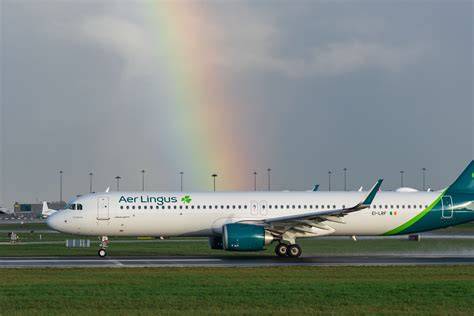
The A321LR proved the concept years ago. Aer Lingus flies it from Dublin to Hartford, Cleveland, and Nashville, markets that cannot fill a widebody but happily support a 180-seat narrowbody. TAP Air Portugal deploys the type from Lisbon to smaller North American cities, and JetBlue works it between New York and Europe. The A321XLR pushes the frontier further with its 4,700-nautical-mile range, unlocking city pairs from the US East Coast and Midwest deeper into continental Europe than the LR’s 4,000 nautical miles could touch. Iberia launched the type in 2025 as the first operator, and American holds 50 XLRs on order, with Aer Lingus and TAP among the carriers lining up behind them. Each of those new routes drags a 180-minute problem into airspace widebody crews once owned alone.
The Captain’s Mindset Difference in One Crossing
Put the two commanders side by side over the same patch of ocean and the divergence becomes stark. The 787 captain treats the mid-Atlantic as a solved problem, with alternates scattered generously around the envelope like emergency exits in a well-designed building. The A321XLR captain treats the same latitude as a moving constraint, continuously recalculating whether the next three hours of single-engine flight still terminate at a viable runway. Both are safe. Both are legal. Both are the product of rigorous certification. But the XLR commander flies the Atlantic with a sharper awareness of edges, a more intimate relationship with alternate weather, and a mental map that never stops updating. That is what an ETOPS rating of 180 minutes actually means in a human mind: not a certificate on a wall, but a permanent, quiet vigilance stitched into every mile of blue water.