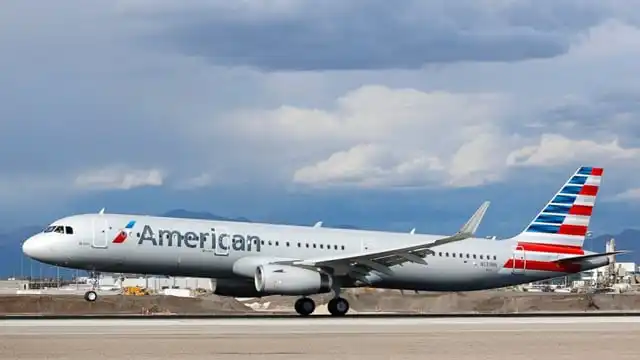
The claim that American Airlines accidentally flew a non-ETOPS Airbus A321 to Hawaii sounds almost unbelievable at first. A modern passenger aircraft crossing thousands of miles of open ocean without the required extended-range certification seems like the kind of aviation mistake that should never happen. Yet in August 2015, that is exactly what occurred when American Airlines operated an Airbus A321 from Los Angeles International Airport (LAX) to Daniel K. Inouye International Airport (HNL) in Honolulu using an aircraft that was not approved for ETOPS operations.
The incident was not a case of an unsafe aircraft suddenly failing to meet basic flight requirements. The Airbus A321 involved was a fully functional commercial jet capable of physically completing the journey. The problem was that long overwater flights require more than simply having enough fuel and range. The aircraft must meet specific regulatory, maintenance, equipment, and operational standards designed for situations where diversion airports are far away.
The event became an important example of how modern airline operations depend on precise fleet management. To passengers, two Airbus A321 aircraft sitting next to each other on the ramp may appear identical. Behind the scenes, however, one aircraft may be approved for remote oceanic operations while another may not. That difference can determine whether an aircraft is legally dispatched on a particular route.
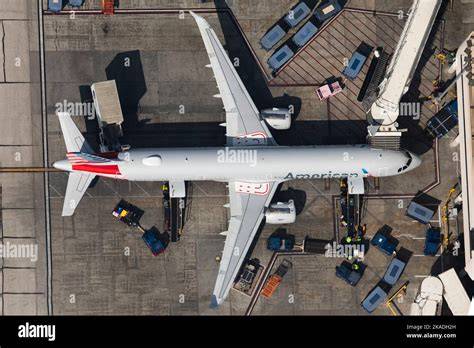
What Is ETOPS Certification and Why Does It Matter for Hawaii Flights?
ETOPS, originally meaning Extended-Range Twin-Engine Operational Performance Standards, is one of the most important concepts in modern commercial aviation. The regulation allows twin-engine aircraft to operate routes that take them far away from suitable diversion airports, including long flights over oceans, deserts, and remote regions.
Before ETOPS regulations became widespread, twin-engine aircraft were often restricted from flying far from land because regulators wanted aircraft to remain within a reasonable distance of an airport in case of an engine failure. Improvements in aircraft reliability, engine technology, maintenance practices, and operational procedures changed that approach.
An ETOPS approval does not simply mean an aircraft has enough range to reach a destination. Instead, it confirms that an aircraft and airline operation can safely manage a situation where one engine becomes unavailable or another major system problem occurs far from an airport.
For example, an aircraft with an ETOPS-180 rating is approved to fly up to 180 minutes from an appropriate diversion airport at its approved one-engine-inoperative cruise speed. This provides a carefully calculated safety margin if the aircraft must divert.
The certification process considers many factors, including:
- Aircraft systems reliability
- Engine performance and failure history
- Maintenance procedures
- Crew training standards
- Dispatch requirements
- Emergency equipment
- Fire suppression capability
- Weather planning
- Communication systems
For Hawaii routes from the mainland United States, ETOPS is especially important because aircraft spend significant portions of the flight over the Pacific Ocean. Unlike domestic routes where multiple airports may be nearby, Pacific crossings leave fewer options if something unexpected happens.
Why Not Every Airbus A321 Is Automatically ETOPS Certified
One of the biggest misunderstandings surrounding this incident is the assumption that all Airbus A321 aircraft are identical. While aircraft in the same family share many characteristics, certification depends on far more than the aircraft model name.
An Airbus A321 can be configured for short domestic flights, regional routes, or extended overwater operations. The differences may include additional equipment, specific maintenance programs, operational approvals, and regulatory certification.
For an airline to operate an A321 on ETOPS routes, several approvals must exist simultaneously. Airbus must demonstrate that the aircraft design and engine combination can meet extended-range requirements. The airline must then receive approval for its own operational procedures from aviation authorities.
The Federal Aviation Administration evaluates whether the airline has appropriate systems in place, including maintenance programs, pilot training, flight planning procedures, and dispatch processes.
This means an airline cannot simply take any A321 from its fleet and assign it to a Hawaii route because the aircraft has enough fuel range. The specific aircraft must belong to an approved configuration and be supported by the correct operational framework.
That distinction was at the center of American Airlines’ mistake in 2015.
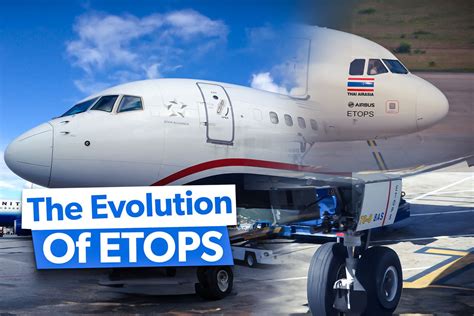
The American Airlines Airbus A321 Mistake That Sent the Wrong Jet to Hawaii
The aircraft involved was American Airlines Airbus A321 N137AA, a relatively new aircraft that had entered the airline’s fleet in 2015. The aircraft was part of American’s standard A321 fleet and was not one of the specially configured Hawaii-capable A321 aircraft.
On August 31, 2015, American Airlines assigned N137AA to operate Flight AA31 from Los Angeles to Honolulu. The airline had recently introduced Airbus A321 service on the Hawaii route, creating a situation where aircraft scheduling became especially important.
American Airlines operated a small subfleet of A321 aircraft specifically prepared for Hawaii service. These aircraft had the required certification and equipment for extended overwater operations. However, the aircraft assigned to the flight was a standard A321 variant rather than one of the Hawaii-qualified aircraft.
The mistake was discovered after the aircraft was already airborne over the Pacific Ocean. Once airline personnel identified the issue, American Airlines immediately notified the FAA.
Rather than turning the aircraft back to Los Angeles, the airline allowed the flight to continue to Honolulu. The decision was based on operational considerations, including the aircraft’s condition, available options, and the fact that the aircraft was already safely progressing toward Hawaii.
The aircraft landed without incident, and no passengers were harmed.
However, the return flight was canceled, and the aircraft was flown back without passengers using a limited crew arrangement. American Airlines then reviewed its procedures to prevent similar scheduling errors from happening again.
Why Did American Airlines’ Non-ETOPS A321 Flight Become Such a Big Story?
The significance of the incident was not that an Airbus A321 suddenly proved incapable of flying across the Pacific. The aircraft successfully completed the flight, demonstrating that the physical capability of the jet was not the main issue.
The problem was operational compliance.
In aviation, regulations are built around preventing risks before they become emergencies. ETOPS requirements exist because airlines cannot rely on luck when operating far from airports. A flight crossing the Pacific Ocean must be planned around worst-case scenarios, not normal conditions.
A passenger sitting inside the aircraft would not have noticed any difference between N137AA and an ETOPS-approved Hawaii A321. The cabin, seats, engines, and flight experience would have appeared almost identical.
But from an airline operations perspective, the aircraft represented two completely different categories.
This is why the mistake attracted attention from aviation professionals. It highlighted how complex airline scheduling systems have become and how a small administrative or software error can create a significant operational issue.
American Airlines later stated that it updated internal procedures and software systems to better distinguish between standard A321 aircraft and Hawaii-qualified aircraft.
The lesson was clear: aircraft certification is not merely a label attached to a model. It is a combination of aircraft capability, airline procedures, maintenance standards, and regulatory approval.
How Airlines Prevent Similar Fleet Management Errors
Modern airlines operate thousands of daily flights using hundreds of aircraft. Managing those operations requires extremely sophisticated systems that track aircraft status, maintenance requirements, crew qualifications, and route approvals.
For specialized routes such as Hawaii operations, dispatch teams must confirm several details before assigning an aircraft.
The airline must verify:
- The aircraft has the required certification
- The aircraft configuration matches route requirements
- Maintenance status is acceptable
- Crew qualifications meet operational standards
- Weather and alternate airport planning are appropriate
Even a fleet with many similar aircraft can contain important differences. A Boeing 737 used for domestic flights may not have the same approvals as another Boeing 737 used for transoceanic operations. The same principle applies to Airbus A321 aircraft.
As airlines increasingly use narrowbody aircraft for longer international routes, these distinctions are becoming even more important.
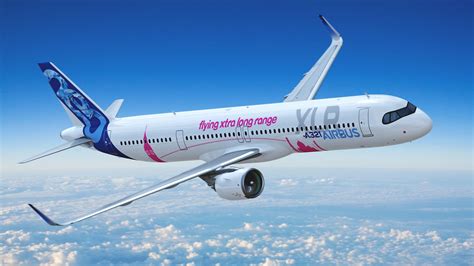
Aircraft such as the Airbus A321XLR are designed specifically to expand narrowbody long-haul operations. They allow airlines to serve routes that previously required larger widebody aircraft. However, every aircraft still requires the correct certification and operational approval before entering service.
Which American Airlines Aircraft Are Approved for Long Overwater Routes?
American Airlines operates a wide range of aircraft designed for long-distance flying. Its traditional long-haul fleet has included aircraft such as the Boeing 777-200ER, Boeing 777-300ER, and Boeing 787 Dreamliner family, all of which are designed for extended international operations.
The airline has also expanded its use of Airbus narrowbody aircraft for longer missions. Hawaii routes have become an important part of this strategy, with appropriately configured Airbus A321 aircraft playing a role in connecting the mainland United States with the Hawaiian Islands.
The introduction of the Airbus A321XLR is expected to further change the way airlines approach long-distance narrowbody flying. These aircraft combine improved range with lower operating costs compared with larger widebody jets, allowing airlines to open new routes with smaller passenger demand.
However, the American Airlines incident remains a reminder that aircraft capability and operational approval must always move together.
The Final Verdict: Did American Airlines Really Fly a Non-ETOPS Airbus A321 to Hawaii?
Yes, American Airlines did accidentally operate a non-ETOPS Airbus A321 on a flight from Los Angeles to Hawaii in 2015. The basic claim is accurate.
However, the event does not mean the Airbus A321 was unsafe or incapable of completing the route. The aircraft successfully reached Honolulu, and there was no emergency during the flight.
The real issue was that the aircraft was not approved for that specific type of extended overwater operation. The mistake exposed weaknesses in aircraft assignment procedures and demonstrated why ETOPS certification remains a critical part of modern aviation safety.
The incident ultimately became a valuable operational lesson. Airlines depend on strict procedures because aviation safety is built on thousands of small details working correctly every day.
Aviation technology continues to advance, and aircraft like the Airbus A321XLR are expanding the possibilities of long-distance narrowbody travel. Yet the fundamental principle remains unchanged: the right aircraft, with the right certification, must operate the right route.