United Airlines has ended scheduled service to six destinations in 2026, removing a mix of domestic markets and one international destination from its extensive global network. The changes range from a short-lived transatlantic-style expansion into West Africa to smaller regional routes serving popular vacation areas and communities across the United States. While the withdrawals represent only a small portion of United’s overall network, they reveal how passenger demand, route profitability, seasonal travel patterns, and aircraft deployment continue to shape the airline’s schedule.
The six airports are Dakar in Senegal, Nantucket in Massachusetts, Pellston in Michigan, Rhinelander in Wisconsin, Sault Ste. Marie in Michigan, and Yellowstone Airport in Montana. United’s final departures from these markets occurred between January and October 2026, with most of the domestic withdrawals taking place in September. The changes also follow the airline’s earlier exits from destinations including Havana, Stockholm Arlanda, and Tenerife South in 2025, demonstrating that even a major global carrier regularly reassesses where its aircraft can generate sustainable returns.
United Airlines’ Six Destinations Dropped in 2026
The six destinations cover different parts of United’s operation, from a long-distance international route departing Washington Dulles to short regional services operated by United Express partners. The withdrawals were not all driven by the same circumstances, making it important to examine each market individually rather than treating the changes as a single network-wide retreat.
| Destination | Final month of service in 2026 | Airport served from | Aircraft used |
|---|---|---|---|
| Dakar, Senegal | January | Washington Dulles (IAD) | Boeing 767-300ER |
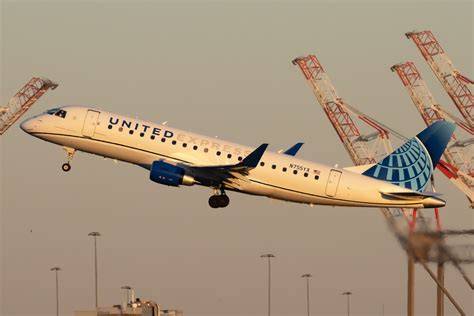
| Nantucket, Massachusetts | September | Chicago O’Hare (ORD) and Newark (EWR) | Embraer E175 and CRJ550 |
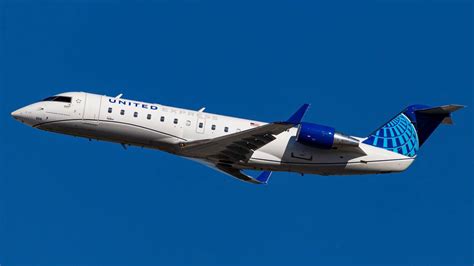
| Pellston, Michigan | September | Chicago O’Hare (ORD) | CRJ200 |
| Rhinelander, Wisconsin | September | Chicago O’Hare (ORD) | CRJ200 |
| Sault Ste. Marie, Michigan | September | Chicago O’Hare (ORD) | CRJ200 |
| Yellowstone, Montana | October | Denver (DEN) | CRJ200 |
The list illustrates the diversity of United’s route network. Four of the six destinations depended on smaller regional aircraft, while Dakar required a much larger Boeing 767-300ER configured for longer international operations. Nantucket was served from two major hubs, Chicago O’Hare and Newark, whereas the three smaller Midwestern communities relied on connections through O’Hare.
Why United Airlines Dropped Its Yellowstone Flights
United Express began serving Yellowstone Airport (WYS) in June 2021, when airlines were expanding service to outdoor destinations amid changing travel preferences during the COVID-19 pandemic. Located approximately two miles from the western entrance of Yellowstone National Park, the airport offers convenient access to one of America’s best-known national parks. It should not be confused with Yellowstone Regional Airport (COD), which is approximately 135 miles east of WYS, near Cody, Wyoming.
United initially operated as many as three daily flights between Denver and Yellowstone, a distance of approximately 408 nautical miles, or 756 kilometers. However, demand proved inconsistent as the airline industry recovered and travel patterns changed. United recorded 238 departures on the route in 2021, but that figure dropped to just 34–36 departures annually between 2022 and 2024. Service subsequently increased to 188 departures in 2025 and 219 in 2026, yet the additional flights did not fully resolve the route’s commercial challenges.
Passenger load factors help explain the decision. According to the US Department of Transportation figures cited in the reference material, the route’s load factor did not exceed 58.4% before 2025. It improved to 72.6% in 2026, although the figure fell to 64.6% during May and June. These results suggest that United struggled to fill enough seats consistently, particularly during periods when seasonal demand was weaker.
Revenue performance also placed the route at a disadvantage. In 2025, Yellowstone ranked 152nd among United’s 169 domestic routes from Denver in total revenue per available seat mile (TRASM), a measure that helps airlines assess revenue generated relative to available seating capacity and distance flown. By comparison, Denver–Cody ranked 67th, and flights to Cody remained scheduled and bookable for 2027. With no Yellowstone flights listed for 2027 despite the airline’s schedule extending into September, a return appears unlikely based on the published timetable.
United’s Short-Lived Dakar Route to Senegal
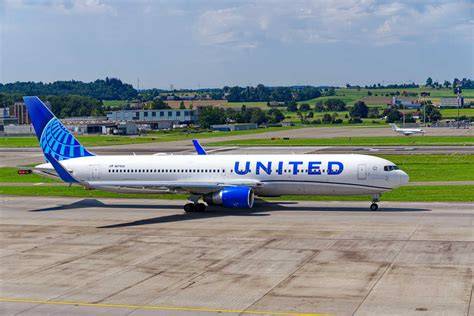
United’s withdrawal from Dakar, Senegal, was the only international destination removal among the six. The airline operated the route from Washington Dulles, covering approximately 3,481 nautical miles, or 6,447 kilometers, each way. Its 203-seat Boeing 767-300ER aircraft operated three flights per week, giving United a direct link between the Washington area and West Africa.
The route lasted less than a year, with service ending in January 2026. United competed with Delta Air Lines, which served Senegal from New York’s John F. Kennedy International Airport. Although United’s paid-off Boeing 767 aircraft were suitable for testing long-distance markets without introducing an entirely new fleet type, aircraft suitability alone could not guarantee commercial success.
The key challenge was the strength of demand from Washington Dulles and the decision to operate the route year-round. Dakar can attract business, visiting-friends-and-relatives, and leisure travelers, but demand must be sufficient across the operating calendar to support regular flights. The reference material indicates that the route underperformed expectations, with traffic from the Washington market proving a more significant concern than fares and yields alone.
Three More Regional Destinations Disappear From Chicago O’Hare
United also ended flights to Pellston and Sault Ste. Marie in Michigan, as well as Rhinelander in Wisconsin. All three destinations were connected to Chicago O’Hare by United Express Bombardier CRJ200 regional jets, aircraft commonly deployed on thinner routes where larger jets would provide more capacity than local demand could support.
These services play an important role in connecting smaller communities with a major hub. Passengers can use O’Hare to reach destinations across the United States and internationally, while the regional flights feed traffic into United’s broader network. However, the economics of such routes can be challenging when passenger numbers are limited, operating costs are high relative to aircraft capacity, or alternative travel options reduce demand.
The September withdrawals show that hub connectivity does not automatically make every regional route sustainable. United must balance the benefits of maintaining service to smaller communities against aircraft availability, operating expenses, and the performance of competing opportunities across its network.
Nantucket Flights End as the Summer Season Closes
Nantucket, a popular island destination off the coast of Massachusetts, was another domestic market dropped in September 2026. United served the island from both Chicago O’Hare and Newark, using different regional aircraft: SkyWest’s Embraer E175 on the Chicago route and GoJet’s CRJ550 from Newark.
The destination’s appeal is closely tied to seasonal tourism, particularly during the warmer months when visitors travel to enjoy beaches, historic districts, and the island’s coastal atmosphere. Such demand can support additional airline capacity during summer, but it becomes more difficult to sustain frequent service when visitor numbers decline.
United’s September exit does not necessarily establish that the airline will never return to Nantucket. Nevertheless, the published schedule contained no flights for 2027, even though the airline’s booking horizon already extended into the following September. That absence suggests the service will not resume in the immediate future unless United subsequently changes its plans.
What the Six Route Cuts Mean for United Airlines
United serves an exceptionally broad network, with Chicago O’Hare remaining its largest source of scheduled flights in the period covered by the reference material. Against that scale, the loss of six destinations is relatively limited. Yet the withdrawals offer a useful look at how airlines decide which routes deserve continued investment.
International expansion can fail when demand from a departure hub does not support year-round service, as the Dakar example demonstrates. Domestic routes face different pressures: Yellowstone struggled with historical load factors and weak revenue performance, while the Midwestern regional markets depended on smaller aircraft to connect communities with a major hub. Nantucket, meanwhile, illustrates the difficulty of balancing seasonal tourism with a schedule designed to operate reliably throughout the year.
For travelers, the practical consequence is straightforward: passengers planning trips to these destinations should not assume United or United Express service will return for the next summer season. They may need to consider other airlines, alternative airports, or ground transportation, depending on their destination.
Ultimately, United Airlines’ six destination exits in 2026 reflect targeted network adjustments rather than a wholesale reduction in its global reach. The airline continues to serve hundreds of airports, but its latest changes reinforce a central reality of commercial aviation: routes survive only when passenger demand, operating costs, aircraft availability, and revenue performance align.