
Seattle-Tacoma International Airport is the heart of Alaska Airlines’ network, but even the carrier’s largest hub has routes where aircraft depart with substantial numbers of empty seats. Data from the US Department of Transportation covering the 12 months through June 2026 reveals 11 Alaska routes from Seattle with load factors below 73%, including one seasonal service that averaged only 36.7% full.
Alaska operated an enormous presence at Seattle during the period, with around 303 daily nonstop departures, representing 52.6% of the airport’s scheduled passenger activity. Its strength is primarily domestic, although the carrier has rapidly expanded its international network as it works toward becoming a more significant global airline. That expansion has created some unusually low early load factors, particularly on newly launched long-haul routes.
The airline’s average load factor from Seattle was 83.2%, slightly above its 82.4% system-wide figure. The 11 routes below that level therefore stand out, but the numbers require context. A low load factor does not automatically mean a route is unsuccessful. New services, seasonal markets, increased frequencies and larger aircraft can all depress the average while an airline develops a market.
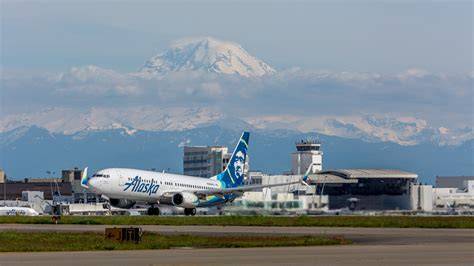
Alaska Airlines’ Emptiest Seattle Route Is Vail
The weakest performer was Seattle–Vail, which recorded a load factor of just 36.7%. Alaska carried 2,056 round-trip passengers during the period included in the DOT data, although the route operated only during part of the year.
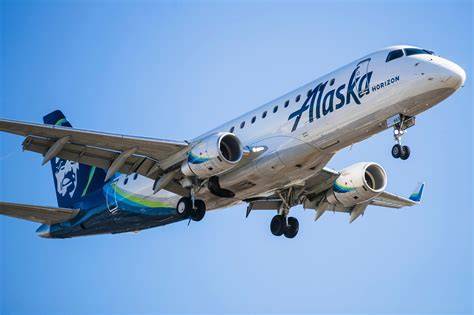
Alaska launched the service on December 20, 2024, giving Seattle travelers a nonstop option to Colorado’s Vail Valley during the winter season. The route covers approximately 817 nautical miles each way and is operated by Horizon Air using 76-seat Embraer E175 regional jets. The schedule has consisted of three weekly flights during the winter.
The numbers became particularly weak in early 2026. Vail recorded a 48.0% load factor in December 2025, but that fell to only 26.9% in January 2026. In practical terms, roughly 20 of the aircraft’s 76 seats were occupied on an average flight during that month.
More than seven in ten passengers on the route traveled between Seattle and Vail itself rather than connecting beyond Alaska’s hub. That suggests the service was largely dependent on local demand rather than the broader connectivity Alaska can generate through Seattle. Its financial performance was also weak, with Vail producing the carrier’s lowest total revenue per available seat mile among Seattle routes in the examined data.
Resort Markets Dominate the Bottom of the List
Vail was followed by several other leisure-oriented destinations. Steamboat Springs recorded a 61.3% load factor, while Sun Valley reached 63.4%. Jackson Hole was slightly higher at 65.1%.
These markets share an important characteristic: they are heavily influenced by seasonal leisure demand. Airlines can fill aircraft very differently during ski season, holidays and shoulder periods. A 12-month average can therefore conceal significant changes between individual months.
Sun Valley also had a particularly busy period in the data, recording a record number of flights. More capacity can reduce the percentage of seats filled even when the absolute number of passengers remains healthy. That distinction is important when judging the performance of a route from load factor alone.
Rome and London Heathrow Show the Cost of Rapid Expansion
Two of the most notable entries are Rome and London Heathrow, because both are international routes launched as Alaska accelerated its long-haul ambitions.
Rome recorded a 66.8% load factor, with 24,538 round-trip passengers in the 12-month period. However, the route only began in April 2026, meaning the DOT measurement captures just a limited portion of its operation. London Heathrow followed in May with daily service and substantial capacity, producing a 68.2% load factor and 16,565 round-trip passengers.
It would be premature to interpret those figures as long-term evidence of weak demand. Alaska’s first long-haul expansion began with Tokyo Narita in May 2025 and Seoul Incheon in September. European flying followed in 2026, with Rome, Heathrow and Reykjavík–Keflavík joining the network. Athens and Paris are scheduled to follow in 2027.
The contrast with Tokyo is striking. Narita achieved an 86.2% load factor, showing that Alaska’s international strategy can generate strong demand in some markets. The newer European routes simply need more operating history before their performance can be assessed across complete seasons.
Alaska’s Smaller Domestic Markets Also Appear
The remaining routes include Walla Walla at 68.7%, Bozeman at 69.7%, Eugene at 70.0%, Redmond/Bend at 71.2% and Arcata/Eureka at 72.3%.
These markets demonstrate why load factors alone cannot tell the entire story. Eugene, Redmond/Bend and Walla Walla are relatively short-haul markets, yet they can provide valuable connectivity into Alaska’s Seattle hub. The carrier may accept lower average seat occupancy because maintaining frequent service supports business travel, regional access and connections throughout the wider network.
What the 37% Load Factor Really Means
The 36.7% load factor on Vail is certainly eye-catching, but it should not automatically be interpreted as a route destined for cancellation. Alaska introduced the service relatively recently, operates it seasonally and faces demand that can change sharply across the winter calendar.
The broader picture is more revealing. Several of Alaska’s lowest-load routes are either new international services, seasonal leisure markets or strategically important regional links. Together, they show the challenge of expanding an airline network while balancing aircraft utilization, connectivity and passenger demand.
For Alaska, the key question is not simply how many seats are filled today. It is whether these markets can build sustainable demand as schedules mature. The next full seasons will provide a much clearer test, particularly for Rome and Heathrow, while Vail will remain under pressure to demonstrate that its winter demand can justify continued service from Seattle.