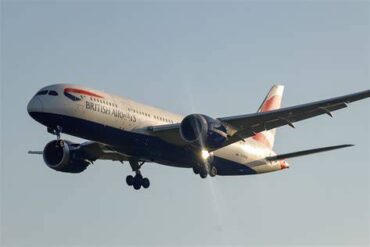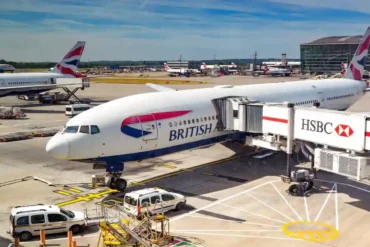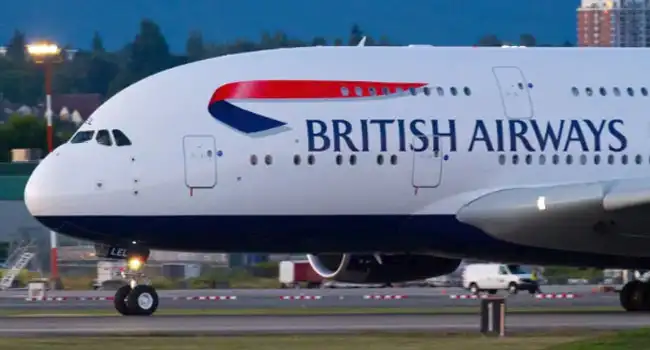
British Airways continues to face major disruption across its Heathrow Middle East network, with six important routes still suspended as the airline adjusts its schedule following the wider aviation impact of the war in Iran. The affected destinations include Abu Dhabi, Amman, Bahrain, Dubai, Riyadh, and Tel Aviv, leaving a substantial gap in British Airways’ regional network compared with the same period last year.
The suspensions are particularly significant because London Heathrow is now the airline’s only UK airport serving the Middle East. Several of the affected markets are major business and connecting hubs, while Dubai and Riyadh are among the most important destinations in the region for British Airways passengers.
According to schedule data examined using OAG information, most of the suspended services are currently expected to return around the transition into the winter schedule. However, the planned dates and aircraft assignments remain subject to change, meaning passengers should not assume that every previously announced restoration will necessarily take place.
British Airways Suspends Six Heathrow Middle East Routes
The six suspended routes represent a substantial portion of British Airways’ Middle East network from Heathrow. The airline last operated Abu Dhabi on March 2, 2026, while Amman, Bahrain, Dubai, and Riyadh were suspended earlier or later in the following weeks. Tel Aviv became the latest of the six routes to stop operating, with its last Heathrow departure on May 3.
The planned return dates vary considerably. Amman is scheduled to return on November 4, 2026, while Dubai and Riyadh are both currently scheduled to resume on November 3. Tel Aviv is expected to return on October 25. Bahrain has a much later planned restart date of March 28, 2027, while Abu Dhabi has become the most uncertain route, with its return now expected during the winter 2027/28 season.
These dates illustrate how British Airways is rebuilding its network cautiously rather than restoring every suspended route at once. Capacity is also being adjusted on several markets, suggesting that a route returning to the timetable does not necessarily mean a return to its previous level of service.
Dubai, Riyadh and Amman Face Reduced Capacity
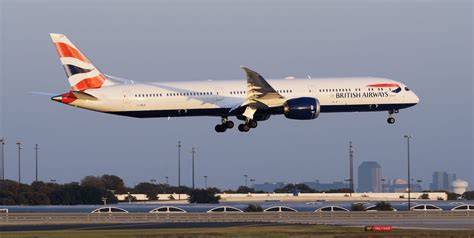
Dubai remains one of the most closely watched routes in the group. British Airways is currently planning to resume the service on November 3 with a daily Boeing 787-10. From March 28, 2027, the schedule is expected to increase to two daily Boeing 777-200ER flights.
The return plan is notably different from previous schedules. The Airbus A380 is no longer scheduled on the route, although it could potentially return during the following winter season. That change matters because Dubai has historically been one of British Airways’ largest and most important Middle East markets.
Riyadh is also scheduled to return on November 3. British Airways plans a daily operation, primarily using the 787-10, although the 787-8 and 787-9 are also expected to appear. From March 28, 2027, only the 787-8 and 787-9 are currently scheduled, with no second daily service planned through the following summer.
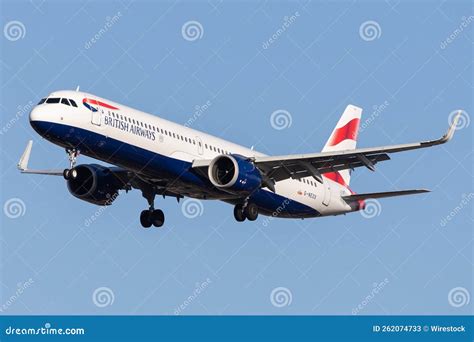
Amman is scheduled to return on November 4 with four weekly A320neo flights. That is a clear reduction from the previously planned daily operation, showing that British Airways is restoring connectivity while maintaining a more conservative capacity level.

Bahrain and Abu Dhabi Remain Particularly Uncertain
The Bahrain route stands out because its planned restoration is much later than most of the other suspended services. British Airways currently expects the Heathrow-Bahrain route to return on March 28, 2027, with a daily Boeing 787-9 operation.
Abu Dhabi faces an even less certain future. The route last operated on March 2, 2026, and although British Airways previously scheduled a daily 787-8 service for October 25, that plan has since changed. The current expectation is for the route to return during the winter 2027/28 season, while the exact operating pattern remains unknown.
That uncertainty is important because Abu Dhabi was previously served daily, including with Boeing 787-8 and 787-9 aircraft. A long suspension therefore represents more than a temporary schedule adjustment; it changes the structure of British Airways’ Heathrow network in the Gulf.
Tel Aviv Service Returns With Half the Planned Frequency
Tel Aviv is the sixth suspended destination and currently has the earliest planned return date. British Airways is scheduled to resume flights from Heathrow on October 25, 2026, using the Airbus A321neo.
However, the planned frequency has been cut in half compared with the earlier schedule. The airline currently intends to operate a daily service, illustrating how restoration can occur with significantly less capacity than before the suspension.
For passengers, this means that the return of a route should not automatically be interpreted as a full restoration. Aircraft type, frequency, and connecting opportunities can all be materially different when the service comes back.
Doha Is Not Included in the Six Suspended Routes
One important exception is Doha, which is not included among the six suspended Heathrow routes. British Airways resumed its London Heathrow-Doha service on September 1, 2026, following an earlier suspension, and currently operates the route daily with a Boeing 777-200ER.
From March 28, 2027, British Airways plans to increase the route to two daily 777-200ER flights. The relationship with Qatar Airways is especially significant because both airlines belong to the oneworld alliance and maintain a joint venture, making Doha an important connecting point within the broader network.
British Airways has also operated the route with larger aircraft in the past, including the Airbus A380. The carrier previously served Doha from London Gatwick as well, although that service ended in 2024.
British Airways’ Middle East Network Remains 59% Smaller
The scale of the disruption becomes clearer when comparing the upcoming November schedule with the same period last year. By November 4, British Airways is scheduled to serve five Middle East destinations from Heathrow: Doha, Amman, Dubai, Riyadh, and Tel Aviv.
Together, those routes account for 32 weekly departures. That compares with 78 weekly departures in November 2025, when British Airways served eight Middle East destinations from Heathrow, including Abu Dhabi, Bahrain, and Jeddah.
The resulting reduction is approximately 59%, leaving British Airways with a dramatically smaller Middle East operation than it had only one year earlier. Although several routes are scheduled to return, the combination of suspensions and reduced frequencies means the network is still far from its previous scale.
For passengers watching the recovery, the key dates are therefore not simply the advertised restart dates. The more important question is how much capacity British Airways actually restores once each route returns.