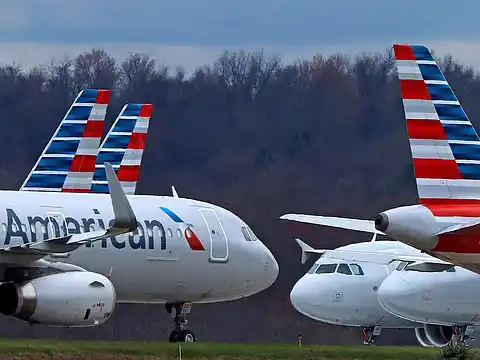
American Airlines has temporarily suspended its sole Middle East route — the daily service between Philadelphia International Airport (PHL) and Doha Hamad International Airport (DOH) — in response to what it has described as “regional hostilities.” This marks a significant shift in the airline’s international operations and reflects the broader ripple effects of increasing geopolitical tensions in the region.
The flight, designated AA120, operated with a Boeing 787-9 Dreamliner, has been a vital transcontinental link since its launch, especially due to the strategic partnership between American Airlines and Qatar Airways under the oneworld alliance. As of June 18, flights through June 20 had already been canceled, with official suspension extending through at least June 22. The airline stated that it is actively monitoring the security situation and could extend the suspension depending on regional developments.
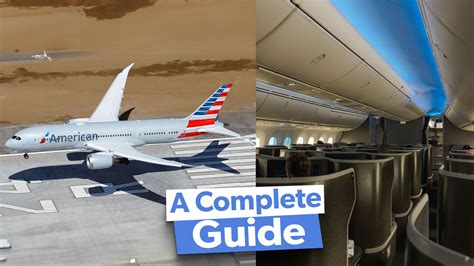
The Sole American Airlines Gateway to the Gulf
American Airlines’ Philadelphia-Doha route has served not only business and leisure travelers heading to Qatar but also a key function in feeding passengers into Qatar Airways’ extensive network that stretches across the Middle East, Asia, and Africa. With no other American Airlines flights currently operating in the region, this route represented a strategic gateway into a critical market.
While Qatar remains neutral in the current Israel-Iran tensions, the proximity of the country to areas of potential conflict has raised safety concerns for carriers operating within and near conflict zones. This sensitivity is not unfounded; the past few weeks have seen a sharp uptick in missile strikes and retaliatory attacks between Israel and Iran, affecting regional airspace and flight operations.
Heightened Security Alerts from the U.S. Embassy
Following the American Airlines decision, the U.S. Embassy in Doha issued a security advisory urging American citizens in Qatar to exercise heightened caution. The embassy’s guidance emphasized maintaining a low profile, avoiding areas associated with U.S. interests, and being vigilant in public spaces. Passengers affected by the cancellation were encouraged to reach out to airlines directly for updates and rebooking options.
This advisory aligns with a broader trend in U.S. foreign diplomatic missions across the Middle East as tensions spike and potential flashpoints shift rapidly. Notably, U.S. embassies in Jordan, Israel, and the UAE have also issued periodic security updates.
The Ripple Effect Across the Atlantic
American Airlines’ suspension follows a wave of cancellations from United Airlines and Delta Air Lines, both of which had paused flights to Tel Aviv in recent weeks following direct threats and attacks. United Airlines also temporarily halted its Newark–Dubai route.
According to Cirium, a leading aviation analytics firm, 358 weekly scheduled flights currently connect the U.S. to the Middle East. American, United, and Delta represent 35 of these weekly flights, including:
- American Airlines: Philadelphia – Doha (7 flights/week, B787-9)
- Delta Air Lines: New York JFK – Tel Aviv (7 flights/week, A330-900)
- United Airlines: Newark – Dubai (7 flights/week, B777-300ER)
- United Airlines: Newark – Tel Aviv (14 flights/week, B787-10)
As of June 19, only Qatar Airways continues to operate direct flights to U.S. cities including New York, Boston, Miami, and Dallas. American’s strategic withdrawal now places additional pressure on code-share and interline agreements to manage stranded or rerouted passengers.
Regional Conflict Complicates Aviation Operations
The core issue driving these disruptions stems from the increasingly unpredictable security environment in the Middle East. The latest flashpoint centers on an exchange of missile strikes between Israel and Iran, following months of growing hostilities. This conflict has triggered mass cancellations and delays across the region.
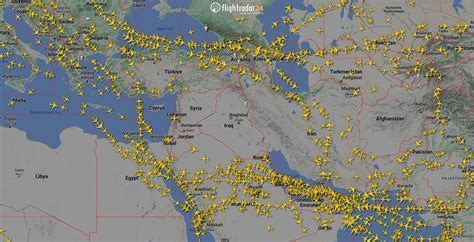
Over 500 commercial flights have been canceled from key hubs such as Tel Aviv, Dubai, Amman, Istanbul, and Beirut. Emirates, Etihad, Royal Jordanian, Air France, and Lufthansa have all announced temporary flight suspensions to various Middle Eastern destinations. Notably, Emirates has canceled flights to Jordan and Lebanon until June 22, and to Iran and Iraq until June 30.
Dubai International Airport (DXB) — one of the world’s busiest hubs — is reportedly the most affected. Data from FlightAware indicates that 35+ flights were canceled and 127 delayed in a single day. Flydubai, the UAE’s low-cost carrier, reported 56 cancellations and 70 delays, more than any other airline in the region.
Rerouting and Risk Mitigation Measures
The rise in aviation risk has forced multiple airlines to reroute flights to avoid hostile airspace. This precaution not only increases fuel consumption and delays but also stretches crew and aircraft availability. Air carriers are revisiting their contingency planning, implementing real-time risk assessments, and consulting with aviation regulators and intelligence agencies.
The FAA and EASA have issued flight advisories warning commercial operators to avoid specific air corridors over Syria, Iran, and parts of Iraq. Aircraft en route between Europe, Asia, and Africa are being rerouted around dangerous zones — an echo of past aviation crises such as the downing of Malaysia Airlines Flight MH17 over Ukraine in 2014.
Strategic Implications for American Airlines and Partners
The suspension of the Doha route carries implications beyond logistics. It underscores the fragility of U.S. airline presence in the Middle East. American Airlines, which already suspended service to Tel Aviv following the Hamas attacks in October 2023, now has no active routes to the region. This places American at a competitive disadvantage compared to Gulf carriers like Emirates and Qatar Airways, which continue to serve U.S. destinations even amid tension.
Furthermore, the PHL–DOH route was a cornerstone of the American-Qatar partnership, offering seamless connections for travelers heading to Southeast Asia, Africa, and the Indian Subcontinent. With this link severed, American now relies solely on its alliance agreements for passenger movement into those markets.
Looking Ahead: Monitoring and Reassessment
American Airlines emphasized in its statement that it will “continue to monitor the situation with safety and security top of mind” and will resume service only when the risk level drops. Industry experts believe the airline will reassess the route’s viability depending on the duration and scale of the ongoing conflict.
The situation presents a challenge for international carriers looking to expand or sustain service in volatile regions. The resurgence of conflict-driven airspace closures, combined with pressure from insurance and risk compliance teams, is forcing airlines to reevaluate long-haul operations.
Meanwhile, passengers stranded or rerouted due to the suspension are being accommodated on alternative airlines — mostly via Qatar Airways or European partners like British Airways or Lufthansa. Travel agents and airline customer service teams are reportedly overwhelmed with itinerary change requests.
Conclusion: A Strategic Pause or the Start of Retrenchment?
American Airlines’ suspension of its Doha route could be interpreted in two ways: as a temporary, strategic safety move, or as a signal of a more enduring retrenchment from the Middle East. In either case, the decision reflects the challenges facing global aviation in times of geopolitical instability.
With the Middle East once again at the center of regional hostilities, airlines must balance profitability with passenger safety. For American Airlines, the route’s future may hinge not only on regional developments but on whether a lasting stability can be achieved — a question that remains unanswered amid growing international tensions.