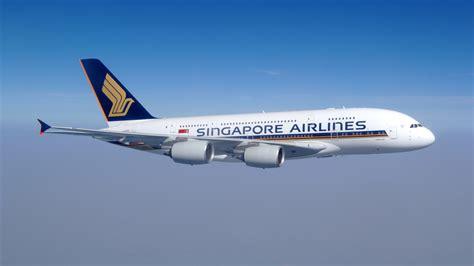
Singapore’s flag carrier, Singapore Airlines, has abruptly halted its highly anticipated capacity upgrade on the Singapore–Dubai corridor, signaling how rapidly shifting geopolitical tensions are reshaping long-haul aviation strategy. The airline has suspended bookings and paused operations on the route, delaying the planned deployment of its flagship Airbus A380—a move that underscores the fragile balance between demand recovery and operational risk.
A Strategic Route Grounded by Geopolitical Reality
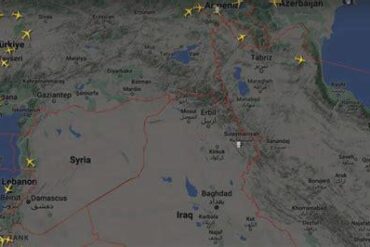
The suspension of flights between Singapore and Dubai comes as regional instability linked to the ongoing Iran conflict disrupts airspace and dampens forward bookings. Services are currently unavailable through May 1, with a tentative restart scheduled for May 2. However, the volatile situation leaves little certainty about whether that timeline will hold.
What makes this development particularly significant is its timing. The airline had planned to introduce the A380 on March 29, aligning with the start of the IATA northern summer season—a period typically associated with stronger travel demand and network expansion. Instead, the route has gone dark, reflecting a broader industry pattern of cautious retrenchment rather than aggressive growth.
The A380 Deployment Plan Now in Question
The now-delayed transition from the Boeing 777-300ER to the A380 represented more than a simple aircraft swap. It was a calculated capacity expansion, nearly doubling daily round-trip seat availability from 528 to 942. Such a move suggested strong confidence in sustained demand between the two hubs.

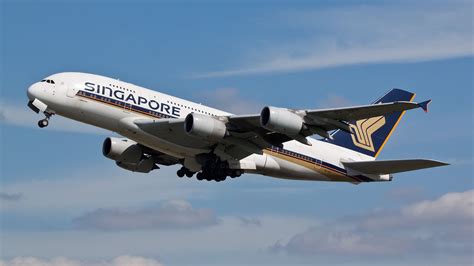
Each A380 in Singapore Airlines’ fleet is configured with 471 seats across four cabins, including ultra-premium suites featuring a double-bed concept, a hallmark of the airline’s luxury positioning. Business class offers a 1-2-1 layout, while premium economy and economy cabins are designed to balance comfort with high-density efficiency.
Yet, the current environment raises a critical question: does the market still justify such capacity? With uncertainty affecting both leisure and business travel, the economics of deploying a superjumbo aircraft on this route have become far less predictable.
Dubai’s Role in Singapore Airlines’ Network
Historically, Dubai has been one of Singapore Airlines’ most important Middle Eastern destinations. The route has seen a wide range of aircraft over the past two decades, including the A330-300, A350-900, and even the iconic 747-400 in earlier years. Its strategic importance lies not only in point-to-point demand but also in its role as a gateway for connecting traffic.
In 2025 alone, the Singapore–Dubai market recorded approximately 375,000 round-trip passengers. Notably, the majority of these travelers were local, with around 95% opting for nonstop flights. Despite operating fewer frequencies than its regional competitor Emirates, Singapore Airlines maintained a steady, albeit smaller, share of the market.
The Hidden Engine: Connecting Traffic
While local demand forms the backbone of the route, connecting passengers play a crucial supporting role. Without this additional traffic, maintaining high load factors—and therefore profitability—would be significantly more challenging.
Routes such as Dubai–Singapore–Manila have historically been among the most popular, driven by strong labor and diaspora links. Other key onward destinations include Bali, Jakarta, Kuala Lumpur, Sydney, and Melbourne. In fact, nearly half of all connecting passengers travel between Dubai and Southeast Asia, particularly Indonesia and the Philippines.
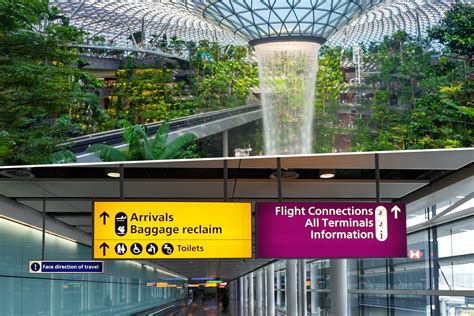
This interconnected network amplifies the importance of Singapore’s hub at Changi Airport, allowing the airline to aggregate demand from multiple regions into a single long-haul service. However, when disruptions occur—whether geopolitical or economic—the ripple effects can quickly undermine this delicate balance.
What Comes Next for the Superjumbo Strategy
As of now, Singapore Airlines still intends to deploy the A380 on the Dubai route once operations resume. The aircraft is scheduled not only for the remainder of 2026 but also extending into 2027, suggesting a long-term commitment to high-capacity service—at least on paper.
However, aviation history shows that such plans are often fluid. If demand remains suppressed or operational risks persist, the airline may reconsider its strategy, potentially reverting to smaller aircraft or adjusting frequencies instead of capacity.
The situation encapsulates a broader truth about modern aviation: even the most meticulously planned network strategies can be upended overnight. For an airline renowned for precision and premium service, adaptability has become just as critical as ambition.