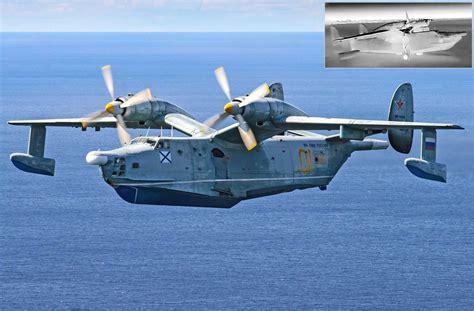
Russia is still operating a remarkably old aircraft over the Black Sea, and the Beriev Be-12 Chayka is a vivid example of how modern warfare can give obsolete technology an unexpected second life. Designed in the Soviet Union during the early 1960s, the twin-engine turboprop amphibian was created for a very different naval war, one centered on hunting submarines rather than tracking small, fast-moving uncrewed surface vessels. Yet the changing character of the Black Sea conflict has made the aircraft useful again.
The Be-12 was never intended to become a frontline tool against modern maritime drones. Its original purpose was maritime patrol and anti-submarine warfare, supported by sensors, sonobuoys, depth charges, torpedoes, and other equipment suited to the Cold War. More than six decades later, however, its ability to fly slowly over the water for prolonged periods gives it a niche that newer aircraft do not necessarily fill as economically or as simply.
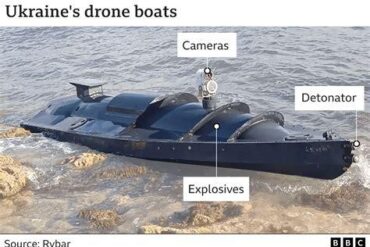
That niche matters because Ukraine’s extensive use of uncrewed surface vessels has imposed serious pressure on Russia’s Black Sea Fleet. Ukrainian sea drones have attacked warships, naval infrastructure, and vessels in port, forcing Russia to rely increasingly on layered defenses and surveillance. In that environment, a 1960s Soviet flying boat can perform a surprisingly relevant task: searching broad stretches of water for small, difficult-to-detect targets.
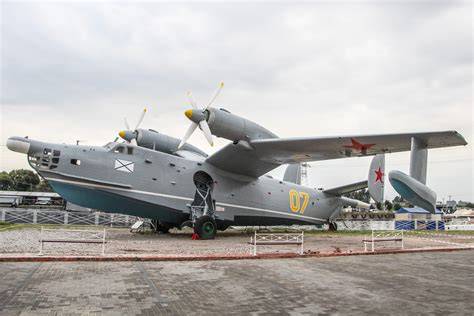
Why the Beriev Be-12 Chayka Still Matters
The Beriev Be-12 Chayka, known to NATO as the Mail, was designed as an amphibious maritime patrol aircraft. Its hull-like lower fuselage allowed it to operate from water as well as conventional runways, while its high-mounted wings and turboprop engines gave the aircraft the characteristics needed for maritime operations.
Its greatest advantage today is not speed, stealth, or sophisticated electronics. It is endurance at relatively low speed and the ability to remain useful over coastal waters without requiring the performance characteristics of a modern fighter or strike aircraft. A drone boat moving across the Black Sea presents a very different surveillance problem from a submarine, but the basic requirement remains familiar: locate the target, maintain contact, and pass information to another defensive element.
This is where the Be-12’s apparent weaknesses can become practical strengths. A modern aircraft designed primarily for high-speed operations may cover enormous distances quickly, but a slow-moving patrol aircraft can spend more time examining a specific area. The Chayka can loiter for roughly three hours, according to estimates cited in the reference material, giving Russian forces an airborne platform for persistent visual and sensor-based maritime surveillance.
A Cold War Aircraft Reborn for Drone Warfare
The most striking aspect of the Be-12’s continued service is the difference between its original mission and its current relevance. The Soviet Union built the aircraft to confront submarine threats during the Cold War, when maritime aviation was part of a vast system designed to track NATO submarines and protect Soviet naval forces.
That strategic environment disappeared decades ago. The Soviet Union collapsed, naval aviation budgets contracted, and maintaining specialized amphibious aircraft became increasingly difficult. The Be-12 survived largely because Russia continued to operate a small number of aircraft for maritime patrol and search-and-rescue duties.
The war in Ukraine changed the equation. Uncrewed surface vessels created a threat that did not require a new generation of aircraft to address every part of the problem. Russia needed eyes over the water, and the remaining Be-12s already possessed the basic characteristics required for that job.
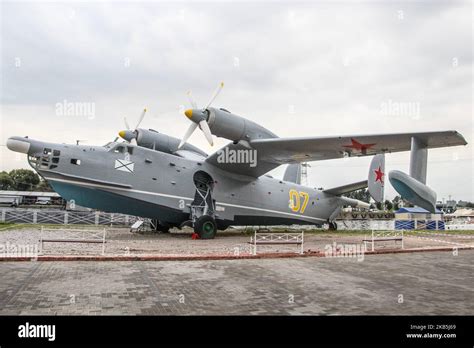
The aircraft’s payload capacity is also substantial by the standards of a patrol platform of its age. Estimates cited by Janes place its potential payload in the region of 6,000 to 11,000 pounds, depending on configuration. Historically, that could include sonobuoys, depth charges, torpedoes, mines, and conventional bombs.
Whether today’s aircraft retain their original anti-submarine equipment is far less certain. Reports have indicated that some Be-12s had shifted toward search-and-rescue duties before the full-scale invasion of Ukraine. That makes it difficult to determine exactly how each surviving aircraft is configured. Nevertheless, surveillance does not require every Cold War weapon system to remain functional.
The Numbers Reveal the Real Problem
The Be-12’s continued operation should not be mistaken for evidence of a healthy fleet. Quite the opposite is true. The aircraft is surviving at a time when its production line has been closed for more than half a century and replacement parts, specialized maintenance expertise, and compatible equipment are increasingly difficult to sustain.
The aircraft was designed around 1960 and entered production several years later. Production continued until 1973, with estimates suggesting that roughly 150 examples were completed. By the end of the Cold War, more than 50 were believed to remain airworthy. Today, estimates of flying examples are dramatically lower, with only a small number thought to be operational.
That shrinking pool is crucial. When a military operates an aircraft from the 1960s, the problem is not simply that the airframe is old. Every component becomes part of a long-term logistical challenge. Engines, structural components, hydraulic systems, avionics, wiring, and mission equipment all require specialized maintenance. The smaller the fleet becomes, the harder it is to justify an industrial supply chain dedicated to keeping it alive.
The Be-12’s engines are themselves products of an earlier Soviet design philosophy. Its turboprops generate just under 4,000 horsepower each, allowing the aircraft to reach approximately 330 miles per hour. Estimates put its maximum range somewhere around 932 to 1,243 miles, while a combat radius of roughly 373 miles is sufficient for operations around Crimea and the northern Black Sea.
That geography is important. Sevastopol and other Crimean facilities place Russian naval aviation relatively close to contested waters. A platform does not need intercontinental range when its primary mission is to monitor maritime approaches around the peninsula and along the Ukrainian coastline.
Ukraine’s Sea Drones Have Changed the Black Sea
The continued use of the Be-12 makes little sense without understanding the transformation of naval warfare in the Black Sea. Ukraine has repeatedly demonstrated that relatively inexpensive uncrewed systems can threaten much more expensive naval assets.
The loss and damage suffered by Russian vessels have forced the Black Sea Fleet to become increasingly cautious. The sinking of the cruiser Moskva in 2022 became the most famous symbol of Russia’s naval difficulties, but the wider campaign has involved attacks on landing ships, patrol vessels, submarines, port facilities, and other infrastructure.
Uncrewed surface vessels are particularly disruptive because they change the economics of naval warfare. A relatively inexpensive drone can force a defender to commit expensive missiles, aircraft, helicopters, patrol boats, or surveillance assets. Even when a drone is intercepted, the defender has still been compelled to detect it, identify it, track it, and respond before it reaches a valuable target.
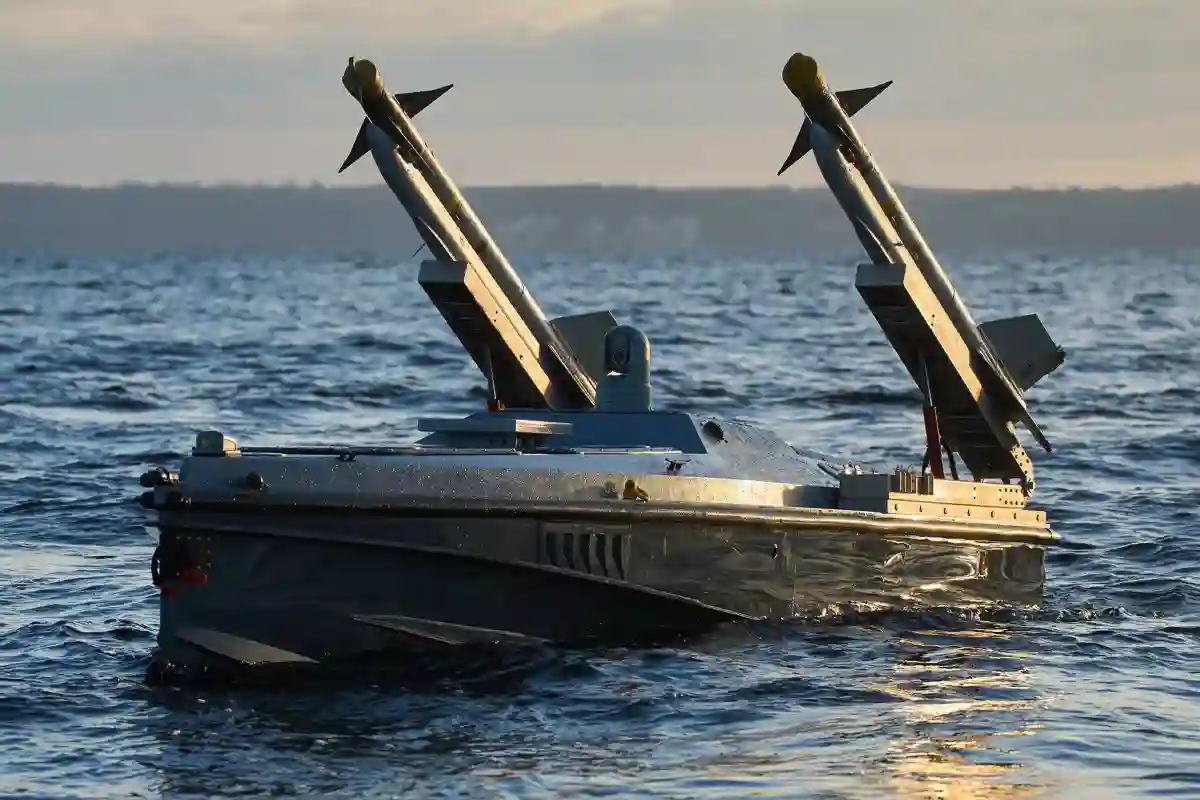
The Be-12 fits into this defensive equation as an airborne search platform. It can scan maritime areas and potentially help locate drones before they approach ports or warships. It can also contribute to the broader surveillance network that includes coastal radar, helicopters, patrol boats, other aircraft, and defensive positions around naval bases.
Its vulnerability is obvious. A large, slow aircraft with a distinctive profile is hardly an ideal platform for operating close to a sophisticated enemy’s air defenses. But the Black Sea environment is not simply a conventional air war. The aircraft can operate from standoff distances and use its range and loiter capability to contribute to surveillance without necessarily entering the most dangerous airspace.
Russia Never Successfully Replaced the Be-12
The deeper story is not simply that Russia continues to fly an old aircraft. It is that the country spent decades trying, and largely failing, to replace it.
The Beriev A-40 Albatros was supposed to provide that replacement. The jet-powered amphibian first flew in 1986 and was conceived as a far more ambitious platform capable of replacing both the Be-12 and the land-based Ilyushin Il-38 in anti-submarine operations.
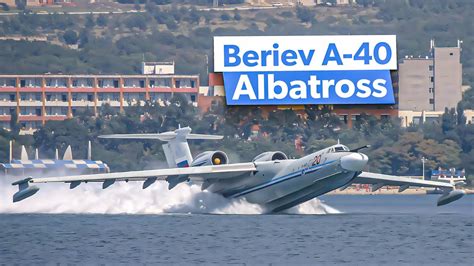
As recently as the 2010s, Russian officials continued discussing modernized A-40 aircraft as future replacements for the aging Be-12s. Those plans did not translate into a practical successor fleet.
The Beriev Be-200 represents another possible route. Developed as a modern amphibious aircraft and best known for firefighting and civilian missions, it is vastly newer than the Chayka and powered by turbofans rather than turboprops. In theory, a military derivative could provide a modern foundation for maritime patrol and surveillance.
In practice, however, replacing an established military aircraft involves much more than selecting a newer airframe. Sensors, communications equipment, weapons integration, training, maintenance infrastructure, spare parts, and production capacity all have to be developed or adapted. Sanctions and wartime industrial pressures have made that challenge more difficult for Russia’s aerospace sector.
The Be-12 Is Also Becoming a Target
There is an important irony in the Chayka’s return to relevance. The aircraft’s renewed usefulness has made its small remaining fleet more valuable, but it has also made those aircraft more attractive targets.
The reference material reports that Ukrainian drone attacks destroyed two Be-12s parked at a military repair facility in Sevastopol in September 2025. If confirmed, the incident would represent a significant moment because the type had survived decades of military service without being lost in combat. Additional reports have described later attacks damaging other aircraft at aviation facilities in occupied Crimea.
These incidents illustrate a fundamental weakness in Russia’s position. The Be-12 fleet is small enough that even a handful of losses can have an outsized effect. A modern aircraft fleet can absorb losses because replacement airframes can eventually be manufactured. A fleet of rare Cold War survivors cannot.
A Symbol of Russia’s Wider Naval Problems
The Chayka is ultimately a window into a much larger problem facing the Russian Black Sea Fleet. Russia entered the war with a powerful collection of naval platforms, but Ukraine demonstrated that ships operating in confined waters can be exposed to relatively inexpensive asymmetric weapons.
The fleet’s difficulties have encouraged a shift toward defensive operations, dispersal, layered surveillance, and reliance on unmanned systems. The relocation of important assets away from Sevastopol has further complicated Russian naval operations, while Turkey’s enforcement of the Montreux Convention has restricted the movement of additional major Russian warships into the Black Sea during the conflict.
Russia is simultaneously trying to develop its own uncrewed capabilities, improve coastal defenses, and preserve the remaining manned platforms that can contribute to surveillance. In that context, an aircraft that would normally be considered obsolete can suddenly become strategically useful.
How Long Can the Chayka Keep Flying?
The answer is probably not long. The Be-12’s future depends on shrinking airframes, difficult maintenance, limited industrial support, and continuing combat losses. Its age makes operation unrealistic.
Yet the very conditions that should have ended its career have prolonged it. Russia needs maritime surveillance, Ukraine continues to operate sea drones, and modern replacements have not arrived in meaningful numbers. The Be-12 therefore remains trapped in an unusual cycle: increasingly obsolete, increasingly vulnerable, but still useful enough to keep flying.
That makes the aircraft more than a curiosity from the Soviet era. It is evidence of how warfare can resurrect capabilities that appear irrelevant under normal assumptions. A flying boat designed during the Cold War to hunt submarines now has a role in a conflict shaped by inexpensive autonomous surface drones.
The Beriev Be-12 Chayka was never designed for this war. Its engines, airframe, sensors, and weapons belong to another technological age. But as long as Russia needs to watch the Black Sea and lacks enough modern aircraft to do the job, this remarkable survivor can still provide something difficult to replace: time in the air, eyes over the water, and another layer of defense for a fleet under extraordinary pressure.
Its eventual retirement is almost inevitable. The more interesting question is what replaces it. If Russia cannot field a modern amphibious maritime patrol aircraft in sufficient numbers, the final Be-12s will not simply mark the end of a historic aircraft family. They will mark the disappearance of one of the few remaining airborne tools available to Russia for a mission that the war in Ukraine has unexpectedly made important again.