Russian fighter jets have long been emblematic of Moscow’s military prowess, dominating skies across multiple theaters of conflict. With decades of development under the banner of Sukhoi and Mikoyan design bureaus, these aircraft represent a fusion of Soviet legacy and modern innovation. Yet, recent events in the Black Sea have underscored their vulnerabilities, heralding a new era in aerial and naval warfare.
The Su-30: Russia’s Multirole Workhorse
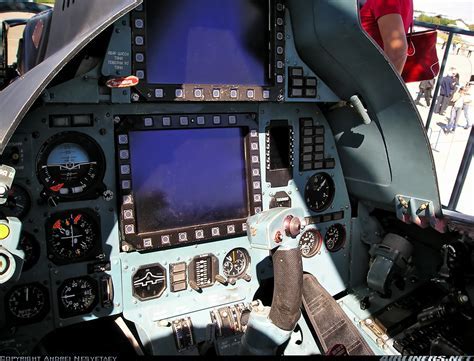
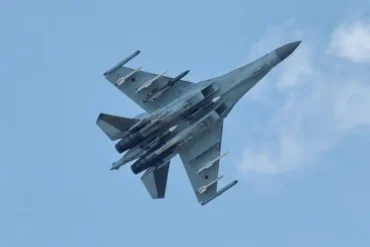
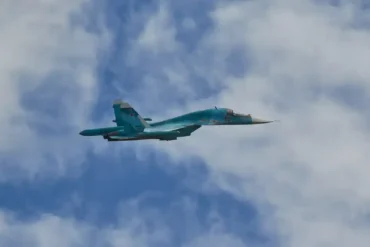
At the heart of Russia’s fighter fleet lies the Sukhoi Su-30, a formidable twin-engine multirole fighter designed for air superiority and ground attack missions. The Su-30, known by NATO as “Flanker-C”, is equipped with advanced avionics, thrust-vectoring engines, and long-range radar, granting it impressive maneuverability and situational awareness. It boasts a combat radius of approximately 1,500 kilometers, with a maximum speed of Mach 2 and the capacity to carry up to 8,000 kilograms of ordnance.
Originally developed in the 1990s, the Su-30 has seen multiple iterations, including the Su-30MKI tailored for India, and the Su-30SM configured for Russian use. These variants have been exported to nations across Asia, the Middle East, and Africa, reinforcing Moscow’s geopolitical influence through arms sales.
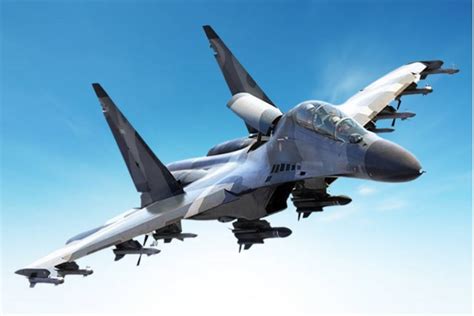
Despite its formidable capabilities, the Su-30’s design philosophy reflects Cold War-era doctrines that prioritize dogfighting and heavy payloads over stealth. While this approach yields tactical advantages in certain scenarios, it exposes the aircraft to vulnerabilities in modern asymmetric warfare, as evidenced by recent encounters in Ukraine.
The Black Sea Incident: A Turning Point
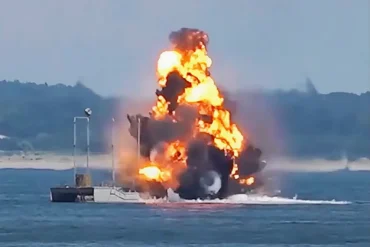
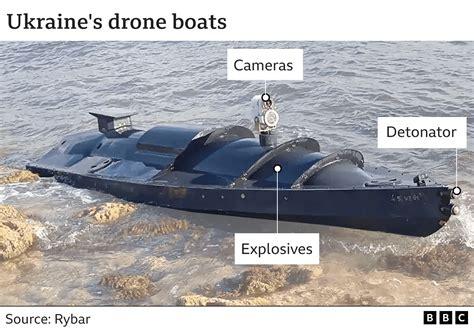
On May 2, Ukrainian military intelligence claimed a landmark victory: the destruction of two Russian Su-30 fighters over the Black Sea, allegedly by missiles launched from Magura sea drones. If confirmed, this would mark the first time in history that a fighter jet was downed by a missile fired from an unmanned naval drone.
Ukraine’s Defense Intelligence Directorate (GUR) released footage showing a Magura-7 sea drone locking onto a Su-30, delivering an AIM-9 Sidewinder missile directly to the target. This innovative tactic reflects Ukraine’s broader strategy of leveraging cost-effective, remotely piloted systems to erode Russia’s technological and numerical advantages at sea and in the air.
Lieutenant General Kyrylo Budanov, head of the GUR, confirmed the operation involved two drones, each delivering a successful strike. While one pilot crew reportedly survived, the second crew perished. These Su-30s, each valued at around $50 million, represent a significant material and psychological blow to Russia’s air operations in the region.
The Rise of Sea Drones in Air Combat
The successful employment of a sea drone to destroy a combat aircraft challenges conventional military paradigms. Traditionally, air superiority has been contested through fighter-versus-fighter engagements or via surface-to-air missile systems from land-based platforms. The notion that a small, remotely piloted boat could neutralize a high-performance fighter jet introduces asymmetrical tactics with profound implications.
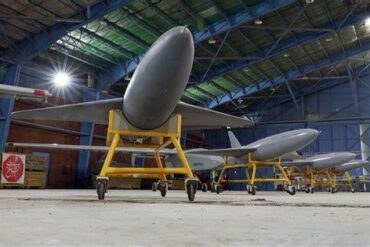
Magura-7 drones, believed to be equipped with stealth features and electronic countermeasures, offer flexibility in approaching naval and aerial targets undetected. Their deployment signals a shift towards autonomous warfare, where smaller, cheaper platforms challenge expensive legacy systems.
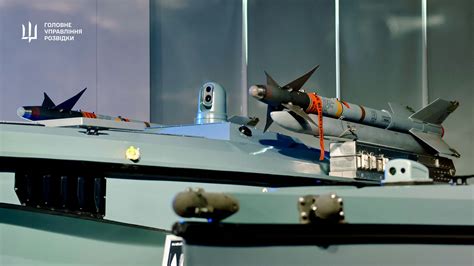
The Ukrainian Ministry of Defense hailed the event as a “world first”, emphasizing that “war at sea is entering a new era.” Indeed, the convergence of naval drones, long-range guided munitions, and artificial intelligence in targeting suggests future conflicts may see an erosion of the dominance once held by manned fighter jets.
Implications for Russian Air Power
Russia’s fighter fleet, including the Su-30 and its derivatives like the Su-35 and Su-34, has faced mounting attrition since the onset of its invasion of Ukraine in February 2022. Losses have included aircraft shot down by MANPADS, surface-to-air missile systems, and now, potentially, by naval drones. The cumulative effect is a reduction in sortie rates, pilot morale, and air coverage over contested regions.
Moreover, these incidents expose gaps in Russia’s integrated air defense systems (IADS) along the Black Sea coast. If sea drones can penetrate detection networks and deliver precision strikes on high-value air assets, then the vulnerability extends not only to jets in flight but to naval and air base infrastructure.
Russia’s Strategic Response and Future Outlook
As Russia prepares for Victory Day celebrations on May 9, the symbolic loss of advanced fighter jets poses a challenge to its domestic narrative of military invincibility. Moscow’s defense establishment may be compelled to accelerate counter-drone measures, integrate more electronic warfare systems, and bolster naval patrols to safeguard its airspace and maritime assets.
Yet the broader question looms: can legacy airframes like the Su-30 adapt to an evolving battlespace dominated by autonomous systems, network-centric warfare, and multi-domain operations? While incremental upgrades to avionics, radar, and electronic suites can extend operational relevance, the absence of low-observable (stealth) features makes them increasingly susceptible to detection and targeting.
Additionally, the proliferation of Western-made munitions such as the AIM-9 Sidewinder, repurposed for unconventional launch platforms, further complicates Russian air operations. It underscores the need for countermeasures against versatile missile systems, not solely those launched from aircraft.
Global Ramifications: The Drone Revolution
Beyond the tactical and operational implications for Russia and Ukraine, the downing of Russian fighter jets by naval drones represents a watershed moment in global military affairs. Militaries worldwide will undoubtedly study the engagement, drawing lessons for integrating unmanned maritime platforms into broader air defense and offensive strategies.
Countries investing heavily in drone swarms, autonomous strike vessels, and AI-assisted targeting systems may accelerate procurement and development timelines. Meanwhile, nations reliant on traditional air power paradigms must reconsider force protection measures and explore cross-domain defenses to counter threats from sea, air, and cyberspace.
Conclusion: A New Chapter in Aerial Warfare
The destruction of Russian Su-30 fighter jets by missiles launched from Ukrainian Magura sea drones stands as a stark reminder that technological innovation can upend conventional military hierarchies. The incident not only demonstrates the growing lethality of unmanned systems but also signals a strategic inflection point in how wars are fought above and across the sea.
As the Black Sea becomes an increasingly contested domain, the integration of sea drones capable of delivering precision-guided munitions raises critical questions about future air defense, pilot survivability, and the role of manned aircraft in modern conflict. For Russia’s air force, it is a warning: the battlefield is evolving, and so must its tactics and technology.