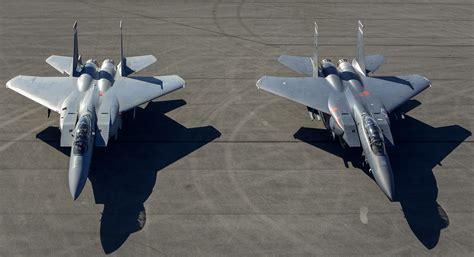
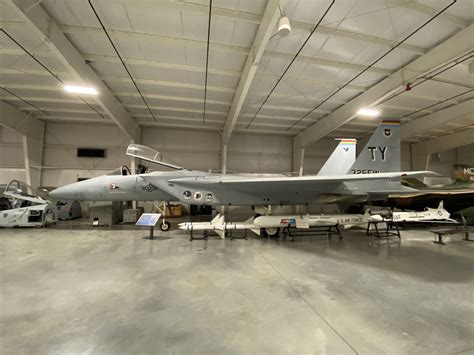
The emergence of the F-15EX Eagle II has reshaped the balance of air superiority, representing a leap forward in avionics, radar systems, electronic warfare, and missile technology. Based on the airframe of the original F-15A that took to the skies in the early 1970s, the EX is a demonstration of what five decades of aerospace development can achieve when layered over a proven design. But how would it fare against its ancestors in a direct combat scenario? Specifically, how many of the original F-15A Eagles would it take to shoot down a single F-15EX?
Setting the Stage: Theoretical Air Combat Scenario
In this exercise, we analyze a simplified but technically grounded scenario: a head-on engagement between a lone F-15EX and a variable number of F-15As. The aircraft launch from separate bases hundreds of miles apart, converging at cruise speed. There is no outside support—just pure aerial confrontation. This scenario strips away external variables to focus purely on platform capabilities: radar, weapons systems, electronic warfare, and performance dynamics.
The analysis centers on when each aircraft detects the other, how long until missile exchanges occur, and how many older aircraft are needed to overcome the cutting-edge lethality of the EX.
Radar and Detection Advantage: Seeing First, Shooting First
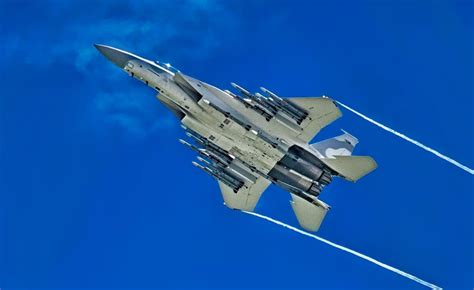
The heart of air combat superiority is situational awareness, and here the F-15EX is dominant. Its active electronically scanned array (AESA) radar offers nearly three times the detection range of the original APG-63 system found on the F-15A.
The F-15A’s radar, state-of-the-art in its era, can detect medium-sized aerial targets at 55–60 nautical miles (nm) in typical combat conditions. In contrast, the F-15EX’s radar—drawing lineage from the APG-83 on advanced F-16s—can detect targets at ranges approaching 200–250 nm, thanks to compounding improvements in signal processing, power output, and beam shaping.
This distance advantage grants the EX the option to engage from well outside the F-15A’s radar cone, approaching from oblique or rearward angles. More importantly, it means the EX can fire first and do so before the F-15A pilots even know they are under threat.
Electronic Warfare: Cloaking and Degrading Legacy Systems
Radar range is only part of the picture. The F-15EX also carries a full suite of next-generation electronic warfare (EW) systems, including digital radar warning receivers, jammers, and signal direction-finding tools. These systems allow the EX to mask its emissions, spoof incoming radar pulses, and identify enemy positions passively.
Meanwhile, the F-15A’s 1970s-era radar warning receivers are easily overwhelmed by modern signals. They may not even trigger in time to provide useful warning before AMRAAMs are inbound. This disparity means the EX isn’t just firing first—it’s doing so against largely unaware targets.
Missile Matchup: AMRAAM vs. Sparrow and Sidewinder
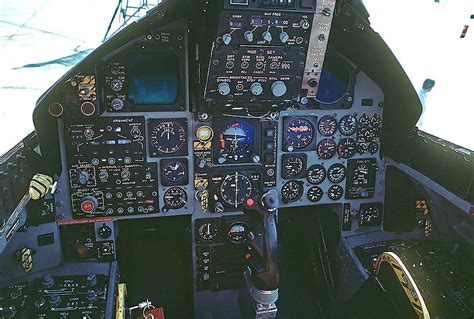
Missile capability is where the chasm between generations becomes most lethal. The F-15A’s primary long-range weapon is the AIM-7F Sparrow, a semi-active radar homing missile that requires continuous target illumination. Its effective combat range is 22–26 nm, with a theoretical aerodynamic range of about 61 statute miles. However, effective use requires that the F-15A remain radar-locked on the target until impact, limiting tactical flexibility.
The F-15EX, by contrast, carries AIM-120D AMRAAMs, capable of over 125 miles in test engagements. Their active radar seekers enable “fire-and-forget” capability, and midcourse datalink updates make them lethal at long ranges, even against maneuvering targets.
Engagement modeling shows the EX detecting approaching F-15As at 200–250 miles, launching AMRAAMs from an optimal range of 50–85 miles, with missile flight times around 250 seconds. During that window, both aircraft groups close by about 40 miles, but the EX’s missile salvo lands well before the F-15As can fire back.
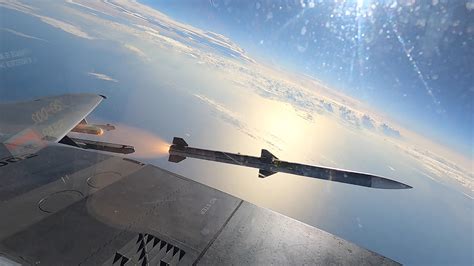
With a payload of up to 12 AMRAAMs, and historical hit probabilities near 60–67%, the F-15EX could plausibly destroy 7–11 F-15As in this first volley alone—before any of the older fighters can return fire.
Dogfight Dynamics: Post-Missile Manoeuvring and Kinematics
What happens after the EX depletes its missile inventory is critical. At that point, it becomes a missile-empty platform with superior avionics but limited speed advantage. The F-15A pilots, if not destroyed in the opening salvo, can attempt a high-speed chase using afterburner to reach speeds near Mach 2.0.
The F-15EX, carrying conformal fuel tanks (CFTs) and an expanded loadout, suffers from increased drag and weight, which reduces its top speed by as much as 200 knots. Within 6–7 minutes, a determined A-model formation could close the distance and force a within-visual-range (WVR) engagement.
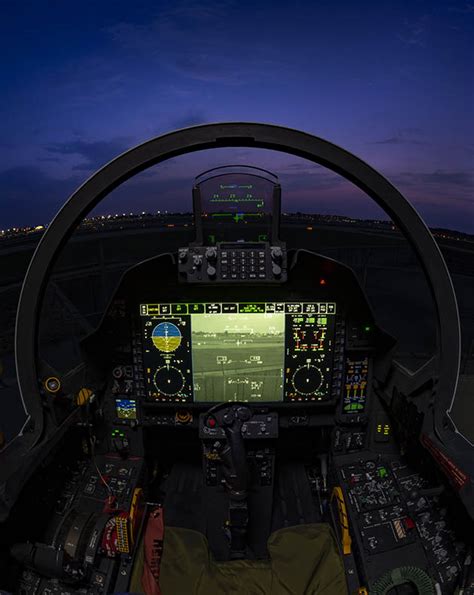
At this point, the surviving F-15As can employ AIM-9J Sidewinders, but these are rear-aspect only, limiting launch opportunities to ideal positioning. In a turning fight, the EX’s fly-by-wire flight controls, digital helmet-mounted cueing, and glass cockpit interface still offer tactical advantages, even without missiles.
However, numerical superiority begins to matter here. If more than 3–4 F-15As survive the AMRAAM volley, they can coordinate multi-vector attacks, potentially overwhelming the EX through sustained dogfighting, especially if they force it into a fuel-depleting defensive posture.
Attrition Estimations and Engagement Outcomes
Taking into account:
- Initial AMRAAM salvo effectiveness (7–11 kills)
- Post-salvo dogfight risks
- Sparrow and Sidewinder use-case constraints
- Speed and agility factors under fuel and drag penalties
…we arrive at a practical requirement of 10–14 F-15As needed to reliably shoot down a single F-15EX. Of these, 2–3 may survive, likely damaged and fuel-depleted. This assumes disciplined coordination and aggressive pursuit after missile attrition.
This analysis reveals a key truth: technology outpaces numbers. One F-15EX can neutralize a small squadron of older Eagles before even entering visual range, provided it manages its munitions and evasion correctly. Only by overwhelming it with mass, speed, and persistence can the older fighters achieve a kill.
The Modernization Gap: Legacy Limitations vs. Fifth-Gen Interfaces
This scenario underscores the gap not just in hardware, but in information integration. The F-15EX isn’t simply an upgraded airframe—it is a data-fused weapons node, integrated into Link-16, infrared search and track (IRST) systems, and joint combat networks.
By contrast, F-15As lack all such features unless retrofitted at great cost. Their pilots rely on line-of-sight radio, manual radar interpretation, and analogue instruments. In a modern engagement environment, this is like sending a horse cavalry against mechanized armor.
Conclusion: A Battle of Eras, Not Just Airframes
The F-15EX is not invincible. In sufficient numbers, the F-15A Eagles can still present a credible threat, especially if they leverage coordinated attacks and survive the initial missile wave. But this requires numerical ratios of nearly 14:1, a damning statistic for any legacy airframe.
In realistic wartime conditions, with support assets, AEW&C platforms, and real-time C3ISR links, this ratio could become even worse for the F-15A. Technology has redefined the rules of engagement, and the F-15EX exemplifies how a legacy airframe can be reborn into a platform that dominates the battlespace not just through firepower, but through information superiority.
Ultimately, it’s not just about how many missiles a fighter carries, or how fast it can fly. It’s about how well it can see, decide, and engage—and the F-15EX does all three with devastating efficiency.