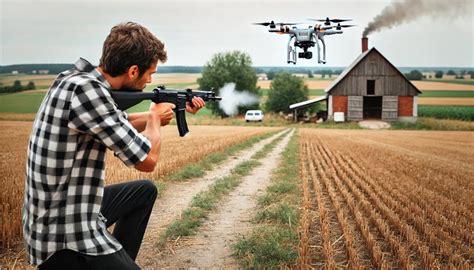
Drones have become a common sight in neighborhoods across the United States. Whether it’s a hobbyist capturing panoramic landscapes or a professional surveyor mapping out a construction site, drones offer unprecedented access to the skies. But as their presence increases, so do privacy concerns and disputes over airspace. One pressing question on the minds of many homeowners is: Can you legally shoot down a drone flying over your property? The answer, according to the Federal Aviation Administration (FAA), is an emphatic no.
Why You Can’t Just Shoot a Drone Out of the Sky
Many property owners assume that if a drone is hovering over their backyard, it’s within their rights to remove it—by any means necessary. However, under federal law, drones are considered aircraft, and shooting at one is treated as a federal offense. The FAA classifies drones, regardless of size, as part of the U.S. national airspace system, and damaging one is no different than sabotaging an airplane.
Title 18 U.S. Code § 32, known as the Aircraft Sabotaging Act, makes it a crime to “set fire to, damage, destroy, disable, or wreck any aircraft.” This includes drones, which are specifically listed under the FAA’s interpretation of aircraft. Even if the drone appears to be invading your privacy, discharging a weapon at it is illegal and can result in serious criminal charges, including prison time and substantial civil penalties.
In addition to the legal risks, there are significant safety hazards involved. A missed shot can send bullets or buckshot hurtling into the air with unpredictable trajectories. When those projectiles come back down, they can cause property damage, injury, or even death. Even if the drone is hit, its descent is uncontrolled and can similarly harm people or property below.
Understanding Air Rights vs. FAA Jurisdiction
While homeowners do hold certain air rights, these are limited and do not extend into navigable airspace—which, according to the FAA, typically begins 400 feet above ground level. Drones are permitted to fly in this lower stratum for commercial and recreational purposes, provided the pilot complies with FAA regulations.
Depending on the state, a homeowner might have rights to the immediate airspace above their home, but this is generally interpreted to cover structural concerns (e.g., overhanging branches or construction). The minute a drone enters the sky above your home, it’s flying in a space governed by federal law, and thus any hostile action toward it can result in federal investigation.
Legal Consequences of Shooting a Drone
The consequences of shooting down a drone are severe. The FAA has clearly stated that interfering with an aircraft operation is a federal crime. Violators can face:
- Civil penalties of up to $25,000 per violation
- Criminal charges leading to fines and imprisonment
- Liability lawsuits filed by the drone owner for the destruction of property
In one notable incident, a Kentucky man shot down a drone over his backyard, claiming it invaded his privacy. Though a local court initially sided with the homeowner, federal authorities warned that such actions violated FAA laws. Ultimately, the case highlighted the jurisdictional conflict between property rights and aviation law—one in which the FAA’s authority prevailed.
Alternatives to Dealing With Annoying or Suspicious Drones
Understandably, having a drone buzz around your home can feel intrusive. But instead of resorting to violence, homeowners have legal and safer alternatives:
1. Document the Incident
Take photos or videos of the drone in flight, especially if it’s lingering over your property for an extended time. Try to identify its make, model, and any visible registration numbers.
2. Contact Local Law Enforcement
Report the incident to your local police department. If the drone is engaging in illegal behavior—such as spying, harassment, or trespassing—authorities can investigate and, if necessary, escalate the issue to the FAA.
3. Report to the FAA
The FAA has an online drone incident reporting portal. If you suspect the drone is being used in violation of regulations, such as flying at night without permission or hovering near airports, the agency can take enforcement action.

4. Talk to the Operator
If you can safely identify the operator (they’re often nearby when flying recreationally), consider a civil and respectful conversation. Many drone users are unaware of the discomfort they cause and may be willing to adjust their flight paths.
Tempting But Illegal: Other Methods of Drone Interference
You might be tempted to disable a drone through less destructive methods—like signal jammers, laser pointers, or net guns. Unfortunately, all of these can land you in legal hot water.
- Signal jammers are illegal under Federal Communications Commission (FCC) rules. These devices interfere with communication signals and pose a danger not just to drones but to emergency communications.
- Laser pointers aimed at drones (or aircraft of any kind) are considered federal offenses. Aiming a laser at an airplane has already resulted in arrests and felony convictions.
- Net guns, while clever, are still considered a form of interference. If you bring a drone down with one, you’re likely to face legal action under the same Aircraft Sabotaging Act.
- Using another drone to knock the offending drone out of the sky is both ineffective and illegal, plus it may destroy your own property in the process.
The Future of Drone Regulation and Homeowner Rights
The rapid proliferation of drones has outpaced regulatory frameworks. As complaints rise, lawmakers are considering how best to balance homeowner privacy with federal airspace control. Some proposed solutions include:
- Creating geo-fenced zones around private property
- Requiring flight approval for drones over residential zones
- Offering real-time tracking tools so residents know when drones are in their vicinity
Until such measures are implemented, the FAA remains the authority on all matters relating to drones in U.S. airspace. Taking the law into your own hands will only escalate matters, likely leading to fines or criminal charges that far outweigh the annoyance of a buzzing drone.
Conclusion: Don’t Pull the Trigger—Call the Authorities
The urge to take immediate action when a drone invades your personal space is understandable. But under current U.S. law, your airspace rights are limited, and drones are protected as federal aircraft. Shooting at one is not only dangerous—it’s a felony. Instead, rely on legal channels. Document the incident, report it to local and federal authorities, and push for stronger privacy protections if needed.
As drone technology continues to evolve, so too will the legal landscape. For now, the rule is clear: You cannot shoot down a drone over your property.