Russia’s military claims surrounding the S-500 Prometheus have sparked intense global interest, especially amid rising tensions with the West. Among its boldest assertions is the system’s ability to intercept hypersonic threats—notably, the U.S. Army’s Dark Eagle missile, a boost-glide hypersonic weapon set to redefine rapid-strike capabilities. But how credible is this claim?
The Strategic Context Behind the S-500 Claims
In December 2025, Russian President Vladimir Putin announced the combat deployment of the Oreshnik missile, emphasizing Russia’s industrial capacity to mass-produce it. Military analyst Alexander Stepanov, from the Russian Presidential Academy, further highlighted that the S-500 system would play a critical role in securing the country’s strategic depth, particularly in border regions.

Stepanov claimed that in the event of Western escalation in Ukraine, Russia could preemptively use the Oreshnik against NATO-linked military-industrial sites. He also asserted that the S-500 system is engineered to intercept U.S. hypersonic weapons, explicitly naming the Dark Eagle as a credible threat the system could neutralize.
What Is the Dark Eagle?
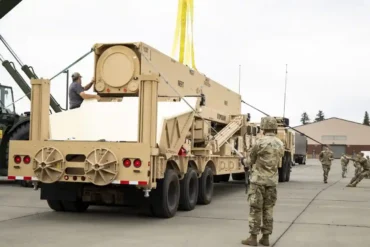
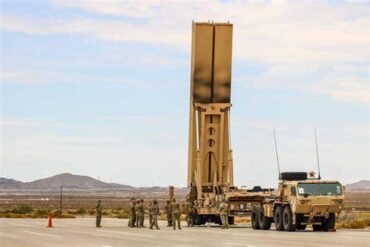
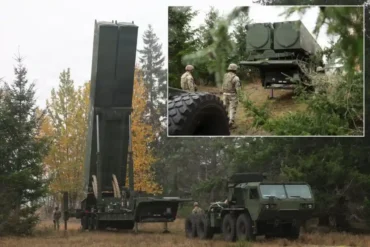
The Dark Eagle is a boost-glide hypersonic missile, part of the U.S. Army’s Long-Range Hypersonic Weapon (LRHW) program. It uses a Common Hypersonic Glide Body (C-HGB), designed to separate from the booster at high altitude and travel toward its target at speeds exceeding Mach 10. The missile boasts an effective range of 3,500 kilometers, covering critical theaters from Europe to the Indo-Pacific.
For maximum performance, the C-HGB must ascend to around 60 kilometers before beginning its hypersonic glide. This altitude ensures optimal aerodynamic conditions, minimizing drag and allowing the glide body to maintain its blistering speed. The missile’s flight trajectory is non-ballistic and highly maneuverable, making traditional interception difficult.
S-500 Detection and Engagement Envelope
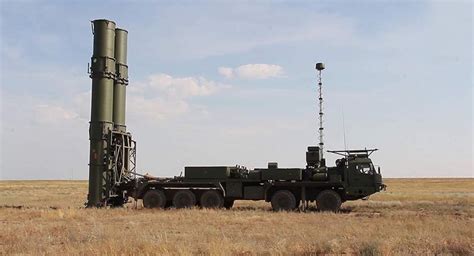
The S-500 Prometheus is a multi-tiered air and missile defense system designed to engage a wide spectrum of threats:
- ICBMs and ballistic missiles
- Hypersonic glide vehicles
- Low-Earth Orbit satellites
- Stealth aircraft and drones
The system comprises several interceptor variants:
- 77N6 & 77N6-N1: Designed for anti-ballistic and anti-satellite missions, these can reportedly reach speeds of 5,500 m/s (approx. Mach 16).
- 40N6M: A shorter-range interceptor (up to 400 km) tailored for cruise missile and aircraft threats.
A key feature of the S-500 is the active radar seeker embedded in its missiles. This allows terminal-phase autonomy, enabling them to adjust mid-flight and better engage maneuvering targets—an essential trait when confronting agile hypersonic weapons.
The Challenges of Intercepting Hypersonic Glide Bodies
At first glance, the S-500’s capabilities appear formidable. Its high-speed interceptors, long-range radar systems, and anti-hypersonic targeting suggest a credible defense solution. However, intercepting a weapon like Dark Eagle is exponentially more complex than hitting a ballistic missile.
First, let’s consider the engagement window. Hypersonic weapons, by design, spend the bulk of their flight time within the upper atmosphere. This makes them visible to radars like those integrated into the S-500 network. However, detection alone doesn’t guarantee interception.
Glide bodies maneuver, often unpredictably. Unlike ballistic missiles that follow relatively fixed parabolic trajectories, the Dark Eagle can dip, twist, and veer mid-flight. This drastically reduces the effectiveness of predictive targeting algorithms that air defense systems depend on.
Moreover, at hypersonic speeds, frictional heating generates a plasma sheath around the vehicle. This plasma cloud absorbs and scatters radar waves, reducing the glide body’s visibility to tracking systems—a phenomenon known as plasma blackout.
Even if the S-500 radar maintains intermittent tracking, the short reaction time (mere seconds) compresses the engagement decision chain. The missile must be launched, achieve intercept velocity, and adjust its trajectory in real-time—all while the target is flying at over 3.4 km per second.
The Speed Gap: Is S-500 Fast Enough?
The S-500’s interceptors—particularly the 77N6 and 77N6-N1—are touted to reach Mach 16, which technically outpaces the Dark Eagle’s stated cruise speed of Mach 10. But some reports suggest the glide body may achieve even higher peak speeds (up to Mach 17) during parts of its descent.
This presents a fundamental problem: for reliable interception, the interceptor must not only be faster but maneuverable and precise. The higher the speed differential, the greater the closing rate, which shortens the engagement window. At these margins, even slight miscalculations or delays mean a miss.
The Role of Active Radar Seekers
The active radar seeker embedded in the 40N6M and similar S-500 interceptors provides a tangible edge. These systems operate independently in the terminal phase, meaning that once launched, they don’t require continuous external guidance.
This fire-and-forget capability enables the S-500 to simultaneously target multiple threats, a critical feature when confronting saturation attacks or decoy maneuvers. Additionally, autonomous seekers can adjust to evasive maneuvers and radar interference, increasing hit probability.
Yet, against a highly maneuverable hypersonic glide body, even an active seeker might struggle to maintain a lock through plasma interference and unpredictable changes in trajectory. While better than passive systems, its reliability remains unproven in real-world engagements with hypersonic vehicles.
Deployment Limitations of the S-500
Even if the S-500 can, in theory, intercept a Dark Eagle missile, several practical issues diminish its strategic impact:
- Russia has only one operational S-500 unit. Serial production is underway, but even at optimistic rates, it will take years to deploy enough systems to cover critical infrastructure across a vast country.
- The mobility of the Dark Eagle presents another challenge. If mounted on air or land platforms with rapid deployment capability, the missile can be launched from unpredictable vectors, bypassing known S-500 zones.
- Targeting an S-500 system itself becomes a viable tactic. With few systems deployed, destroying or disabling a single unit could drastically reduce Russia’s air defense coverage.
Conclusion: A Partial Shield, Not an Impenetrable Wall
The S-500 Prometheus is undoubtedly one of the most advanced air defense systems ever developed. Its potential to engage high-altitude, high-speed threats—including ICBMs and hypersonic vehicles—cannot be ignored. With active radar seekers, ultra-fast interceptors, and space-targeting capabilities, it pushes the boundaries of missile defense technology.
However, against a weapon like the Dark Eagle, the S-500’s reliability is questionable. The hypersonic glide body’s maneuverability, speed, plasma shielding, and unpredictable flight path introduce too many variables for consistent interception. A single successful engagement remains possible, but a guaranteed defense is unlikely.
Moreover, limited deployment and logistical constraints mean the S-500 currently functions more as a deterrent symbol than a battlefield equalizer. Until Russia scales up its deployment, the Dark Eagle remains a formidable threat, capable of reaching high-value targets within minutes—possibly before an S-500 system can even respond.
While the battle between speed and interception continues, it’s evident that the Dark Eagle represents a significant challenge—not just to Russia’s defenses but to the broader stability of global strategic deterrence.