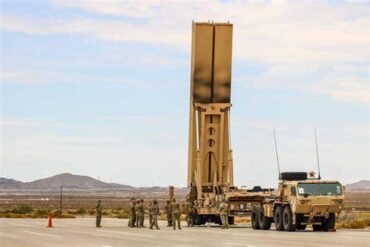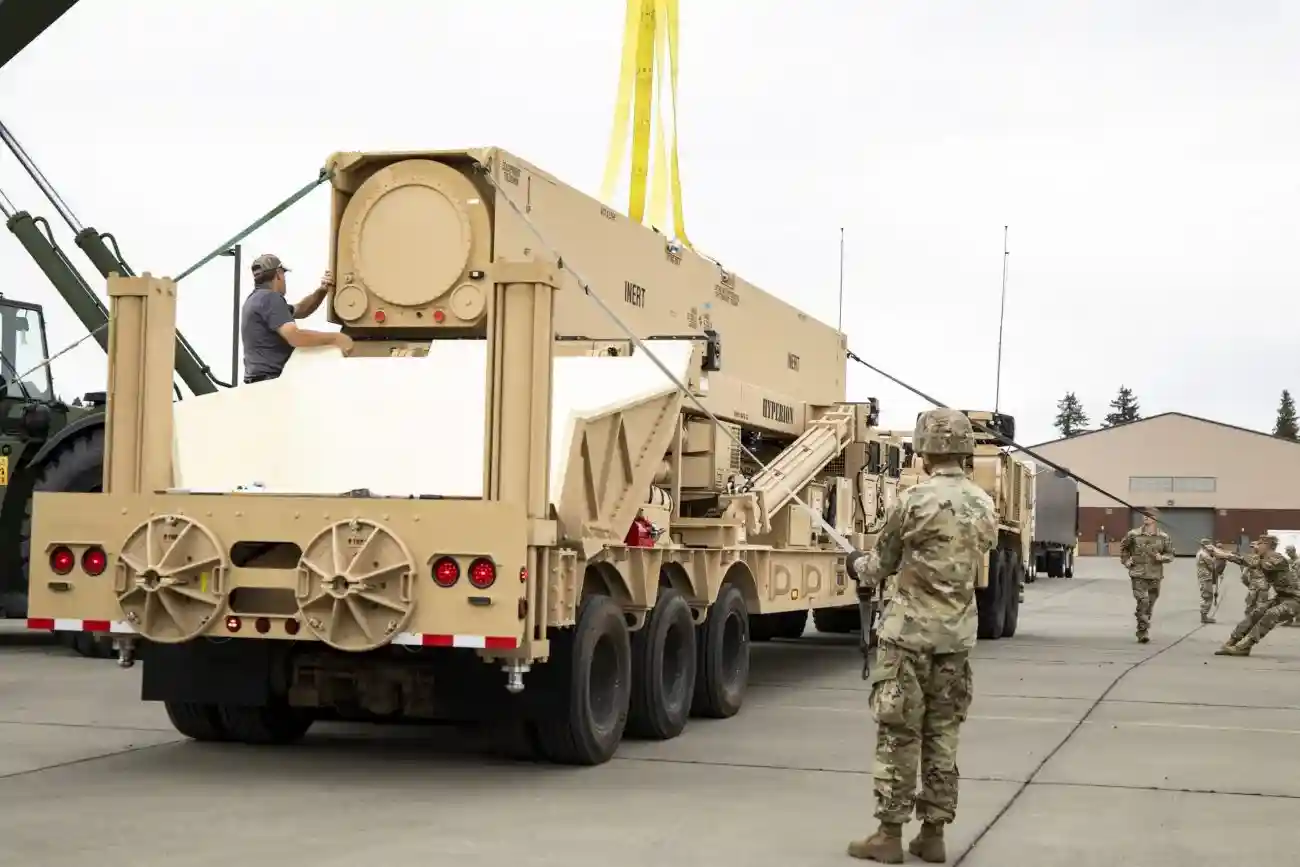
The United States has made a bold leap in hypersonic warfare with the introduction of the Dark Eagle Long-Range Hypersonic Weapon (LRHW)—a missile system engineered not just to match, but to decisively outclass the formidable Russian S-400 and S-500 air defense systems. With reported capabilities of reaching speeds in excess of Mach 10 and a strike range of 3,500 km, the Dark Eagle fundamentally reshapes the balance of power in modern strategic warfare.
A Technological Breakthrough in Hypersonic Arsenal
On December 12, the U.S. Army and Navy jointly completed integrated testing of the Dark Eagle, signaling a new era of precision strike capabilities. As Lt. Gen. Robert A. Rush of the Rapid Capabilities and Critical Technologies Office stated, hypersonic systems bring unmatched responsiveness, maneuverability, and survivability to the battlefield.
This missile system operates as a boost-glide weapon, launching via a powerful booster rocket that propels the Common Hypersonic Glide Body (C-HGB) to high altitudes. Once at the appropriate altitude and velocity, the glide body detaches and begins a high-speed descent toward its target. The Dark Eagle’s terminal phase is where it achieves hypersonic velocities, enabling it to outmaneuver and evade even the most advanced tracking and interception technologies.
Mach 10+ Capability: Speed that Redefines Global Strike Reach
What sets the Dark Eagle apart is not just its speed—but the implications of that speed. If the missile can cover its full 3,500 km range in under 20 minutes, it means it must cruise at sustained velocities approaching or exceeding Mach 10, not merely achieving Mach 5 as a terminal speed. By comparison, Mach 5 at lower altitudes would require at least 35–38 minutes to complete the same journey.
The missile’s lethal reach allows it to strike Beijing from Guam, Moscow from London, or Tehran from Qatar—a geographic dominance that few other missile systems can rival. This radically reduces enemy response time, compresses engagement windows, and offers the United States the option of first-strike precision capability in conflict scenarios.
Kinetic Destruction over Explosive Power
Unlike traditional cruise or ballistic missiles that rely on large warheads, the Dark Eagle harnesses kinetic energy as its primary destructive force. The missile’s warhead reportedly contains only about 30 pounds (13.6 kg) of explosives, but its sheer speed and wide dispersal of high-velocity fragments make it devastating.
Estimates place the missile’s weight at 15–16 tonnes, with a length between 11–14 meters and a diameter of around 0.876 meters. This compact yet lethal package is designed to inflict maximum damage across a broad area. The blast-fragmentation warhead, paired with high-velocity impact, can neutralize critical assets like S-400 batteries, hardened command centers, or mobile missile units with surgical precision.
Defying the S-400 & S-500 Defense Umbrellas
Both the S-400 Triumf and S-500 Prometey are elite air defense systems designed to detect and intercept enemy missiles, aircraft, and drones across varying altitudes and distances. Yet the Dark Eagle’s operational profile deliberately undercuts these systems:
- High cruising speed compresses detection-to-engagement time.
- Low-altitude flight reduces radar visibility.
- Unpredictable glide phase maneuvers render interception highly improbable.
Combined with mobile launch systems, the Dark Eagle can be deployed with stealth and speed, complicating any preemptive strike or surveillance efforts. This capability adds layers of tactical surprise and strategic ambiguity, both of which are highly valuable in any high-stakes military engagement.
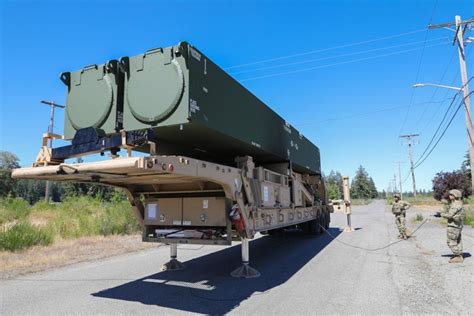
Naval & Land Integration: Multiplying Strategic Options
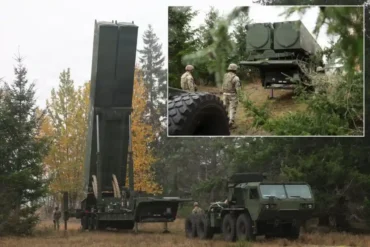
The Dark Eagle is being developed in two variants: a land-based system for the U.S. Army and a sea-based version called Conventional Prompt Strike (CPS) for the Navy. While the Army variant is mounted on semi-trailer launchers, allowing for rapid mobility and airlift deployment, the CPS system will be deployed on surface vessels and submarines, turning entire naval fleets into hypersonic strike platforms.
This multi-platform integration means the U.S. military can unleash hypersonic strikes from virtually any domain—land, sea, or potentially air—and from any region on Earth. It enables dynamic targeting with the ability to update mission profiles in real-time, even in-flight.
Precision in the Age of Strategic Deterrence
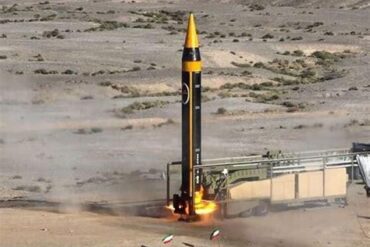
While Russia’s Oreshnik or China’s DF-17 hypersonic platforms present formidable challenges, the Dark Eagle represents a conceptual evolution. The Russian system is ballistic and optimized for saturation via MIRVs. The Chinese DF-17, while maneuverable and fast, lacks the range and deployment flexibility of the Dark Eagle.
In contrast, the Dark Eagle embodies pinpoint precision, not just overwhelming firepower. Its goal is to degrade or eliminate high-value deterrence assets—command bunkers, anti-air systems, radar installations—without relying on nuclear force. It allows the U.S. to wage conventional war under the umbrella of strategic nuclear deterrence, a critical doctrine in maintaining credible defense postures in Eastern Europe and the Indo-Pacific.
Strategic Implications: A Shift in Global Power Calculus
The existence of a weapon capable of striking targets like Beijing or Moscow in under 20 minutes, without warning and with near impunity, sends a powerful message. It alters the strategic time horizon of adversaries and forces recalculations of risk, readiness, and diplomacy.
Nations reliant on air defense for deterrence now face the prospect of undefendable, precise, rapid decapitation strikes. The Dark Eagle is more than a missile—it’s a strategic lever capable of reshaping international relations, military doctrines, and threat response frameworks.
Conclusion: A Weapon Designed for Preeminence
The Dark Eagle is not merely another hypersonic missile—it is the centerpiece of America’s bid to maintain military dominance in the era of near-peer competition. By combining mobility, speed, stealth, and kinetic lethality, it stands poised to defeat even the most advanced air defense systems, and do so with surgical precision.
From the fog of battlefield deployment to the delicate choreography of geopolitical deterrence, the Dark Eagle gives the U.S. an edge that no adversary can currently match. Its ability to strike from anywhere to anywhere, in minutes, with little warning, redefines what strategic readiness looks like in the 21st century.
The future of warfare is hypersonic—and the Dark Eagle leads the charge.