India’s long-standing defense partnership with Russia appears to be at a historic crossroads. The recent commissioning of INS Tamal, the last foreign-built warship for the Indian Navy, signals more than the end of an era of Russian shipbuilding for India—it underlines New Delhi’s strategic pivot towards self-reliance and diversification in defense acquisitions.
For decades, Russia has been India’s principal defense supplier, providing everything from fighter jets to tanks and advanced missile systems. Yet, despite high-profile offers such as the Su-57 ‘Felon’ fifth-generation stealth fighter, the formidable S-500 Prometey air defense system, and the Voronezh early warning radar, India seems determined to chart a new course, distancing itself from Moscow’s defense sector while enhancing domestic capabilities and fostering ties with Western allies.
INS Tamal – The Last Russian-Built Warship Joins Indian Navy
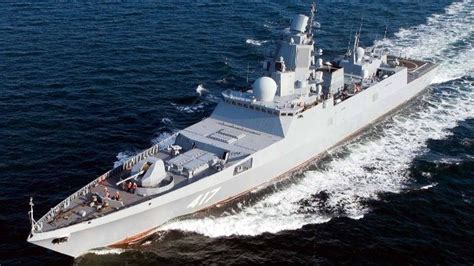
Commissioned on July 1, 2025, at the Yantar Shipyard in Kaliningrad, INS Tamal, a 3,900-ton Admiral Grigorovich-class multi-role stealth guided missile frigate, embodies the culmination of years of Indo-Russian naval cooperation. The ship is set to bolster India’s Western Naval Command, safeguarding the Arabian Sea and the broader Western Indian Ocean.
The INS Tamal is more than a mere addition to the fleet. It represents a technological milestone, equipped with:
- BrahMos supersonic cruise missiles, capable of striking both land and sea targets with deadly precision.
- The advanced ‘SHTIL’ vertical launch air defense system, integrating short- and medium-range surface-to-air missiles for intercepting aircraft, cruise missiles, and ballistic threats.
- Improved 100mm naval guns, EO/IR targeting systems, heavyweight torpedoes, and anti-submarine warfare (ASW) rockets.
- State-of-the-art surveillance radars, fire control systems, and an advanced Electronic Warfare suite.
- Integration with Air Early Warning and Multi-Role helicopters, enhancing operational reach.
Notably, Tamal features 26% indigenous systems, reflecting India’s growing shipbuilding expertise. Powered by Ukrainian engines—a result of deft diplomatic negotiations amidst the Russia-Ukraine conflict—the vessel boasts a top speed exceeding 30 knots and a crew of over 250 trained under harsh Arctic conditions.
With Tamal’s induction, the curtains fall on India’s foreign warship acquisitions. Going forward, all naval platforms will be constructed domestically, reinforcing the country’s “Atmanirbhar Bharat” (Self-Reliant India) defense doctrine.
S-400 Triumph – Game-Changer or the Last Russian Missile India Will Buy?
India’s acquisition of the S-400 Triumf air defense system remains one of the most consequential defense deals in recent memory. Despite intense U.S. pressure and the threat of CAATSA (Countering America’s Adversaries Through Sanctions Act) penalties, New Delhi proceeded with the $5.4 billion contract inked in 2018.
Deployed successfully during the 2019 India-Pakistan military standoff, the S-400 significantly enhanced India’s air defense network, with capabilities to intercept aircraft, cruise missiles, and ballistic threats up to 400 kilometers away.
Yet, the future of additional S-400 purchases or its successor—the S-500 Prometey, remains uncertain. Despite reports of interest, Indian Defense Secretary Rajesh Kumar Singh has publicly dismissed any formal negotiations for these high-end systems.
The S-500’s advertised capability to intercept hypersonic weapons, satellites, and ballistic missiles up to 600 kilometers in space could theoretically shield India against evolving threats from China and Pakistan. However, India appears resolute in avoiding new mega-deals with Moscow, signaling a shift in defense procurement philosophy.
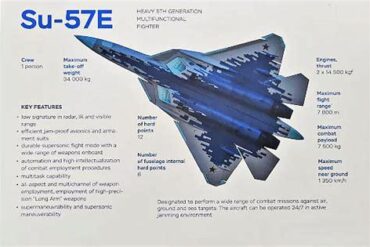
The Elusive Su-57 ‘Felon’ – Stealth Fighter India Is Unlikely to Buy
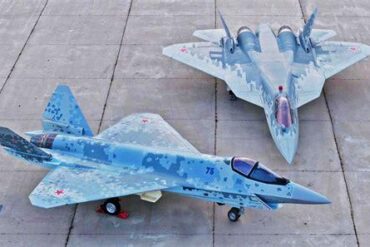
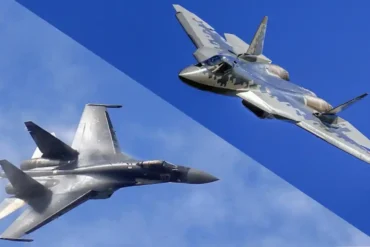
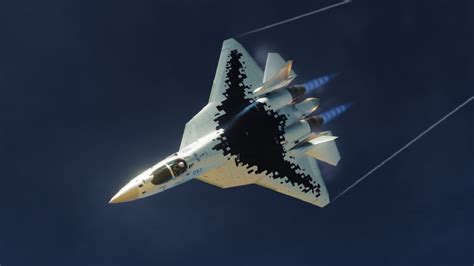
Moscow’s repeated offers to co-develop or transfer the Su-57 Felon, Russia’s answer to the American F-35, have failed to entice India. Official statements confirm that New Delhi is not in “formal talks” for the stealth jet, favoring its indigenous Advanced Medium Combat Aircraft (AMCA) project instead.
The Su-57 boasts radar-evading capabilities, supercruise performance, and advanced avionics. Yet, India’s disillusionment with earlier joint fighter programs like the FGFA (Fifth Generation Fighter Aircraft), coupled with concerns over reliability, technology transfer limitations, and strategic autonomy, have cooled enthusiasm.
India’s pivot towards self-reliance and partnerships with the U.S. and France for cutting-edge aerospace technology has all but sidelined the Su-57 offer.
Voronezh Radar Deal – A $4 Billion Gamble That May Never Materialize
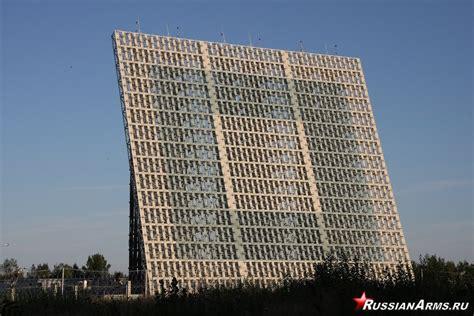
India’s reported negotiations for the Voronezh-M early warning radar, with its over 6,000-kilometer detection range, could be a game-changer for strategic situational awareness. Currently, only Russia, China, and the U.S. operate radars with such reach, critical for ballistic missile defense and long-range surveillance.
A successful deal would vastly improve India’s ability to monitor missile launches and airborne threats across vast swathes of Asia, including deep into Chinese and Pakistani territory. However, no tangible progress has emerged, and geopolitical calculations may doom this prospective $4 billion agreement.
India’s Defense Realignment – The Decline of Russian Influence
The data underscores Russia’s diminishing role in India’s defense ecosystem. According to SIPRI, Russia’s share of India’s defense imports plunged from 76% in 2009 to just 36% by 2024, marking the lowest figure since the 1960s.
Simultaneously, U.S. defense exports to India have surged, exceeding $20 billion since 2018. Recent milestones include:
- Procurement of 31 MQ-9B long-endurance drones from General Atomics, worth $3 billion.
- Joint production of advanced jet engines by Hindustan Aeronautics Ltd. (HAL) and General Electric, powering India’s future fighter fleet.
France has also emerged as a pivotal defense partner, especially through the Rafale fighter jet program and submarine collaborations.
Smaller Indo-Russian defense contracts persist, largely focused on spare parts and maintenance for legacy Russian platforms like T-90 tanks, MiG-29 aircraft, and small arms. But major weapons purchases—ships, fighters, missile systems—are increasingly rare.
Energy Ties and Geopolitical Headwinds
While defense ties cool, India remains economically entwined with Russia through energy imports. As of May 2025, India ranked as the second-largest buyer of Russian fossil fuels, purchasing an estimated €4.2 billion in crude oil, liquefied natural gas, and coal.
This energy relationship has become a geopolitical flashpoint. Influential U.S. Senator Lindsey Graham is spearheading new sanctions legislation targeting nations engaging in commerce with Russia. Graham’s proposed “economic bunker buster” sanctions could strain India-U.S. relations, already complicated by New Delhi’s neutral stance on the Ukraine war.
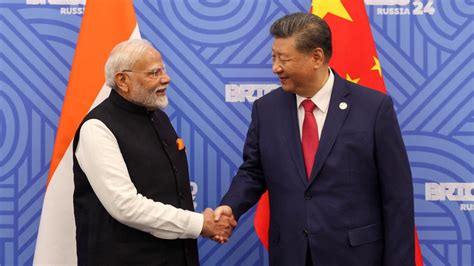
The ongoing diplomatic balancing act raises critical questions: Will U.S. pressure push India closer to Russia? Or will India’s long-term strategic objectives and indigenous defense ambitions prevent a return to large-scale Russian arms deals?
Conclusion – The Curtain Falls on India’s Russian Arms Dependence?
The commissioning of INS Tamal and final deliveries of the S-400 air defense system may mark the last major chapters of India’s historic defense partnership with Russia. Despite enticing offers of Su-57 jets, S-500 batteries, and Voronezh radar, India’s defense trajectory is unmistakably shifting towards domestic production and diversification.
As India asserts itself as a regional power, its defense policy reflects a deliberate strategy of reducing reliance on any single foreign supplier, be it Russia, the U.S., or others. The future of Indo-Russian military cooperation may hinge not on massive hardware deals but on niche collaborations, technology support for legacy systems, and geopolitical necessity.
For now, INS Tamal sails not just as a formidable warship but as a symbol of a bygone era—a final salute to the profound yet waning defense ties between Moscow and New Delhi.