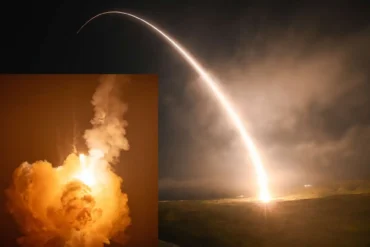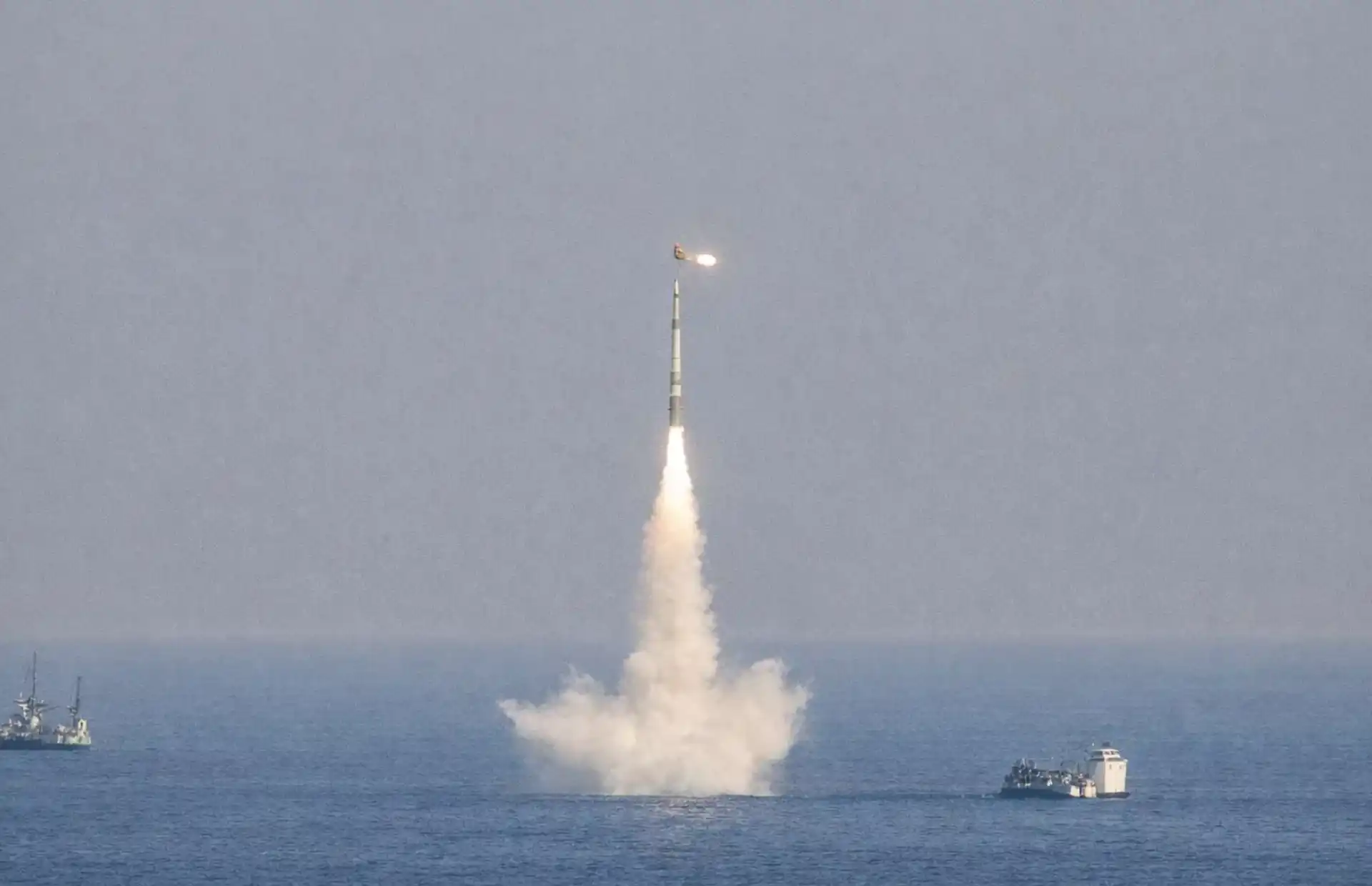
India has conducted a milestone test of its K-4 submarine-launched ballistic missile (SLBM) from the newly commissioned nuclear-powered submarine INS Arighaat, reinforcing the credibility and survivability of its sea-based nuclear deterrent. The launch took place on December 25, 2025, in the Bay of Bengal, off the coast of Visakhapatnam. Though not officially confirmed by the Indian Ministry of Defence, credible national sources report that this marks the first time K-4 has been fired from Arighaat, signaling an operational leap in India’s second-strike capability.
Strategic Leap: K-4 Missile Enhances Second-Strike Posture
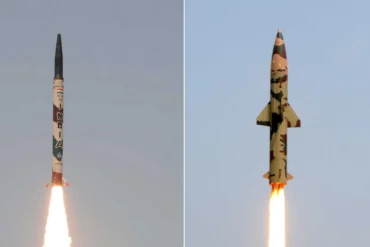
The K-4 missile represents a significant advancement in India’s nuclear triad. A solid-fueled, two-stage SLBM with a range of approximately 3,500 kilometers, K-4 gives India the ability to launch nuclear strikes from safer distances deep within the Indian Ocean. This range significantly outclasses the earlier K-15, which had a range of only 700–750 km, requiring submarines to operate dangerously close to enemy shores to be effective.
K-4’s range and payload capabilities fundamentally shift the strategic dynamics:
- It allows Arihant-class submarines, like Arighaat, to stay far from hostile anti-submarine warfare patrols.
- The solid-fuel propulsion ensures rapid response and minimal preparation time.
- Capable of carrying a nuclear payload of up to two tonnes, K-4 is designed for deep-strike strategic deterrence, not tactical use.
From a doctrinal standpoint, this aligns with India’s “No First Use” policy and emphasis on credible minimum deterrence. The survivability of SLBMs is a cornerstone of second-strike capability, and K-4’s deployment ensures that India’s retaliatory assets remain intact, even in the event of a first strike.
The Platform: INS Arighaat Comes of Age
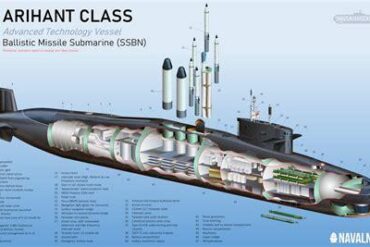
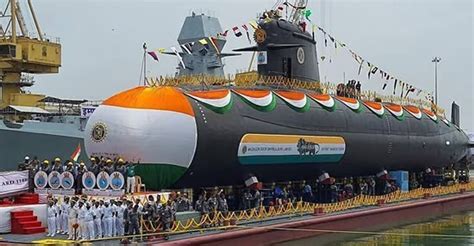
Commissioned on August 29, 2024, INS Arighaat is the second ballistic missile submarine (SSBN) in the Arihant class. The platform incorporates significant design refinements over its predecessor, INS Arihant, including improved stealth features, advanced control systems, and higher levels of indigenous content.
Operated by the Strategic Forces Command, Arighaat is not just a naval platform—it is a national strategic asset. With four launch tubes capable of carrying either:
- Four K-4 SLBMs (one per tube), or
- A mix of smaller K-15 missiles (up to three per tube),
Arighaat offers flexibility between high-value strike and salvo saturation, depending on mission objectives. With the successful K-4 test, Arighaat now steps firmly into the operational role of ensuring deterrence patrols that are credible and resilient.
Redefining Sea-Based Nuclear Deterrence
India’s nuclear triad consists of:
- Land-based missiles: The Agni series (Agni-V and Agni-VI) with ranges beyond 5,000 km.
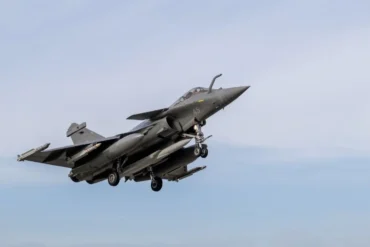
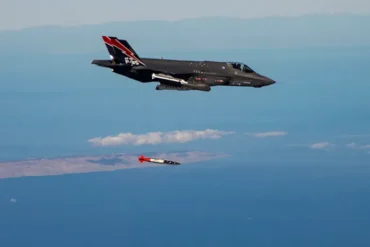
- Air-based platforms: Nuclear-capable aircraft like the Su-30MKI, Mirage 2000, and Rafale.
- Sea-based assets: The emerging K-series SLBMs and Arihant-class submarines.
While land and air legs have existed for years, the undersea leg has long been considered the most survivable. Given India’s geographical and geopolitical realities—bordering two nuclear-armed states—the imperative for survivable, retaliatory strike capabilities is critical. Submarines patrolling undetected in vast oceanic zones represent the ultimate insurance against a disarming first strike.
The K-4’s range dramatically increases the safe patrol zones for Indian SSBNs, which can now operate without venturing close to contested regions. This makes detection and tracking by adversary navies far more difficult, and enhances India’s assured retaliation capability.
The Strategic Context: Regional Nuclear Dynamics
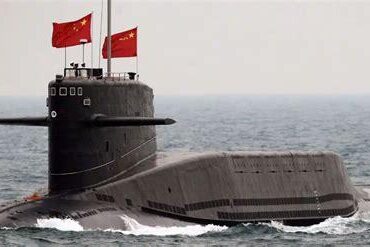
India’s test comes amid evolving strategic tensions in Asia. With China advancing its Type 094 Jin-class submarines and Pakistan maintaining tactical nuclear weapon programs, India’s decision to deploy K-4 reflects its intent to maintain a technological and doctrinal edge.
Regional dynamics also dictate that India must:
- Dissuade adventurism during conventional confrontations.
- Reinforce nuclear signaling without destabilizing escalation dynamics.
- Ensure command and control over survivable second-strike platforms.
India has consistently emphasized restraint, No First Use, and minimum deterrence, but all these depend on the credibility of retaliation. A well-patrolled SSBN force equipped with long-range SLBMs like K-4 ensures this credibility.
Future Trajectory: INS Aridhaman and K-5/K-6 Missiles
The test of K-4 is not an isolated event—it is part of a broader modernization program that includes:
- INS Aridhaman, the next submarine in the Arihant class, is expected to join active service soon with more missile tubes and extended patrol range.
- Development of K-5 and K-6 SLBMs, projected to have ranges beyond 5,000 km, bringing intercontinental reach to India’s underwater forces.
- Expansion of indigenous sonar, stealth, and navigation technologies, allowing for longer and more autonomous SSBN patrols.
India’s strategic community sees these developments as vital to long-term deterrence stability. With increasing investments in underwater communication, satellite-enabled tracking, and real-time command relays, future deterrent patrols will operate with greater flexibility, responsiveness, and survivability.
Conclusion: A Turning Point in India’s Nuclear Strategy
The successful K-4 missile launch from INS Arighaat is a watershed moment in India’s nuclear deterrent posture. It signals a matured sea-based second-strike capability that reflects both technological sophistication and strategic foresight. As New Delhi quietly enhances the most survivable leg of its triad, it projects stability through strength, and deterrence through resilience.
India’s ability to deploy long-range nuclear weapons on stealthy platforms in the vast Indian Ocean significantly reduces vulnerabilities and raises the cost of potential aggression. As the Indian Navy and Strategic Forces Command move toward seamless integration of future SSBNs and next-generation SLBMs, the message to both allies and adversaries is clear: India is ready to defend its strategic autonomy, anytime, anywhere.