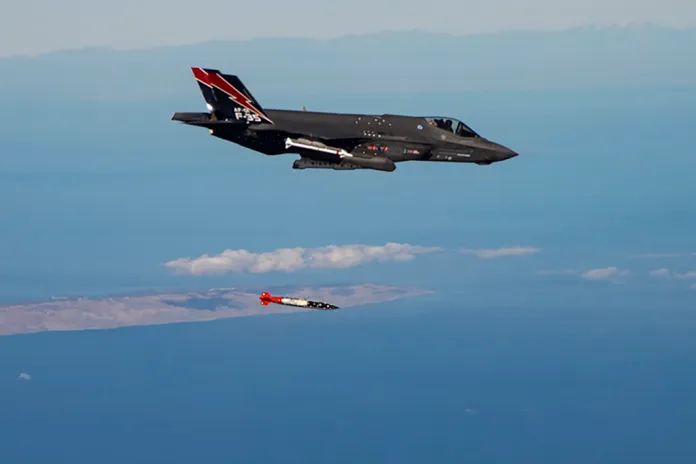
The United States has once again reaffirmed its technological edge in nuclear deterrence and stealth aviation with the successful test of the B61-12 tactical thermonuclear bomb from the F-35A stealth fighter. This landmark trial, conducted in August 2024 by the U.S. Department of Energy’s Sandia National Laboratories, not only underscores the operational compatibility between the bomb and the aircraft, but also advances the nation’s strategic deterrent posture in a rapidly evolving global threat landscape.
Unprecedented Testing Success With F-35A and B61-12
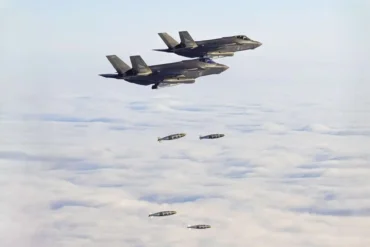
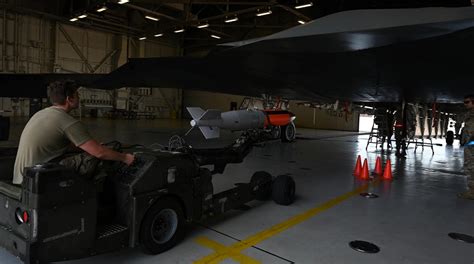
Between August 19 and 21, at a designated test site in Nevada, the U.S. executed a comprehensive set of non-nuclear testing exercises that involved F-35A Lightning II fighter jets dropping inert B61-12 nuclear gravity bombs. These exercises, carried out under the guidance of the National Nuclear Security Administration (NNSA), were intended to assess the bomb’s aerodynamic performance, release mechanics, and overall reliability under realistic operational conditions.
The results were unequivocally successful. According to Jeffrey Boyd, surveillance lead for both the B61-12 and B61-13, the test series served as the culmination of years of planning and interagency coordination. Notably, the effort marked the most extensive B61-12 flight testing surveillance scope completed in a single year—an achievement unlikely to be matched in the foreseeable future.
Key Technical Innovations: Thermal Preconditioning Milestone
One of the standout accomplishments of the test series was the first-ever thermal preconditioning of a Joint Test Assembly (JTA) for an F-35 aircraft. This process subjected the inert bomb to extreme environmental conditions mimicking those it would encounter during a live mission—from ground storage through to flight.
Thermal preconditioning is essential to validate how a weapon system endures transitions from hot tarmac storage to high-altitude subzero conditions. This component of the test ensured that the B61-12 not only meets its performance metrics in ideal scenarios but also in hostile, real-world environments.
A Strategic Leap: F-35A Becomes a Dual-Capable Aircraft
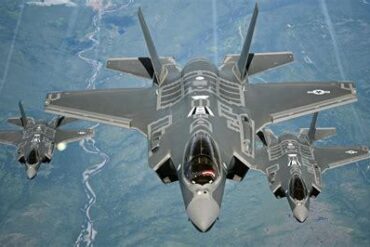
With these successful tests, the F-35A has officially entered the elite category of dual-capable aircraft, meaning it can now execute both conventional and nuclear missions. The certification was officially announced by the F-35 Joint Program Office spokesperson Russ Goemaere on March 8, 2024, confirming that the aircraft had met all necessary operational criteria by October 12, 2023—well ahead of the NATO-mandated timeline.
This development is monumental, not just for the U.S. Air Force but for NATO as a whole, as it provides the alliance with a stealth-enabled, fifth-generation nuclear delivery platform.
Goemaere emphasized the significance by stating, “The F-35A is the first 5th generation nuclear-capable aircraft ever, and the first new platform (fighter or bomber) to achieve this status since the early 1990s.” This positions the F-35A as the most modern and advanced aircraft capable of delivering nuclear payloads—a stark contrast to legacy systems like the B-2 Spirit or F-15E Strike Eagle.
Exclusion of Other Variants: A Focused Certification
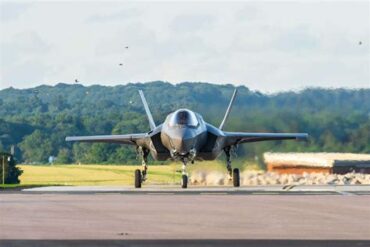
It is important to note that this certification currently applies only to the F-35A variant, which is designed for conventional takeoff and landing (CTOL). The F-35B (short takeoff and vertical landing) and F-35C (carrier-based operations) are not included in this nuclear certification program. This focused approach highlights the Air Force’s intent to optimize a specific variant for tactical nuclear strike, rather than dilute operational integrity across all models.
Strategic Advantage Over Global Competitors
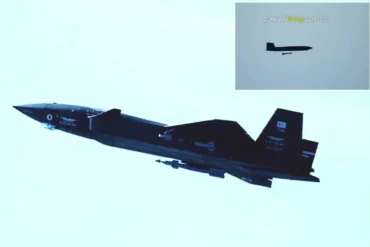
While Russia’s Su-57 and China’s J-20 stealth fighters are touted as capable adversaries in terms of radar evasion and supermaneuverability, neither has been certified for nuclear strike capabilities. This leaves the F-35A uniquely positioned in the global arena, providing the U.S. and its allies with a deterrence advantage unmatched by any current or near-peer adversary.
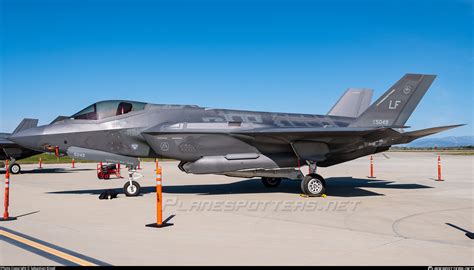
The integration of nuclear capability within the F-35 platform also ensures the U.S. remains NATO’s premier security guarantor, especially as tensions rise in Eastern Europe, the Indo-Pacific, and the Arctic. Allies relying on U.S. nuclear deterrence can now count on a stealth-enabled, precision-strike aircraft that is not only survivable but also extremely agile.
B61-12: Evolution of an Iconic Nuclear Arsenal
The B61-12 nuclear gravity bomb is a modernized version of the B61 series, originally developed in the 1960s. The B61-12 combines features from earlier models (including the B61-3, -4, -7, and -10) into a single, highly versatile weapon. Key enhancements include:
- Tail-kit assembly for improved accuracy
- Variable-yield warhead, allowing mission-specific customization
- Reduced collateral damage, due to precision-guided targeting
This modernization effort, led by Sandia National Laboratories in coordination with Los Alamos National Laboratory and NNSA, is designed to extend the bomb’s service life by 20 years, ensuring that it remains a cornerstone of U.S. deterrence strategy well into the 2040s.
Operational Readiness and Future Implications
The significance of these successful tests goes beyond technical metrics. The fusion of the B61-12 with the F-35A represents a major doctrinal shift in how the U.S. envisions tactical nuclear warfare in contested airspaces. The stealth capabilities of the F-35 enable it to penetrate advanced enemy air defenses, delivering strategic payloads without triggering early-warning systems.
With the addition of networked warfare tools, AI-assisted targeting, and sensor fusion, the F-35A enhances command and control capabilities across allied battle networks, making it a force multiplier not just for the U.S., but for every NATO member state operating the platform.
Conclusion: Redefining Deterrence in the 21st Century
The successful tests of the B61-12 nuclear bomb from an F-35A stealth fighter mark a watershed moment in U.S. military aviation and nuclear strategy. By achieving dual-capability status, the F-35A becomes the first 5th generation aircraft able to carry and deploy nuclear weapons—pushing the boundaries of what is possible in modern warfare.
This milestone not only extends the relevance of the B61 arsenal but also places the F-35A at the very heart of future joint operations. With rising global threats, great power competition, and the potential for nuclear escalation in various theaters, the combination of stealth, speed, precision, and deterrence provides the U.S. and its allies with a powerful strategic advantage that will shape defense doctrines for decades to come.
The message is unmistakable: the United States retains its edge in nuclear deterrence, both in capability and readiness.