The United Kingdom has entered a new era of strategic air power with the announcement that RAF Marham will host a fleet of 12 nuclear-capable F-35A Lightning II jets, marking the most significant enhancement to the country’s nuclear deterrence capabilities in over a generation. This high-profile decision, revealed by Prime Minister Sir Keir Starmer during the NATO summit in the Netherlands, elevates Britain’s role in NATO’s airborne nuclear mission and reflects deepening cooperation with the United States.
UK Aligns with NATO’s Nuclear Doctrine Through the F-35A
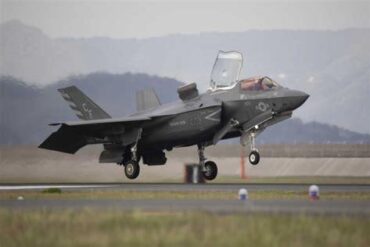
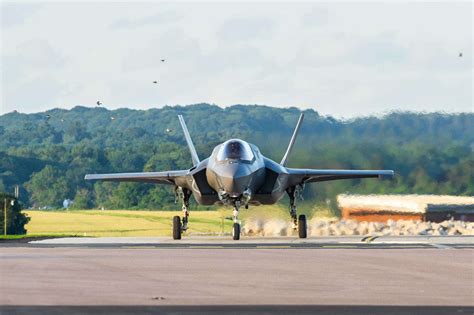
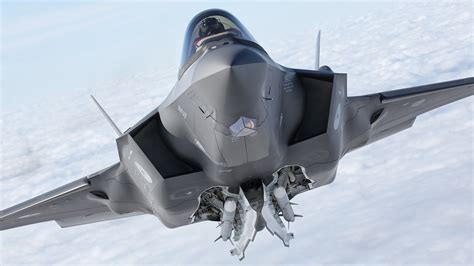
The selection of the F-35A variant, the only Lightning II model cleared to carry US-made B61-12 tactical nuclear bombs, signals Britain’s commitment to reinforcing NATO’s nuclear sharing strategy. While the Royal Air Force and Royal Navy have operated the F-35B, which is capable of short take-off and vertical landing (STOVL), that variant is not certified to deploy nuclear weapons. This limitation has long constrained the UK’s ability to fully participate in NATO’s nuclear mission.
The F-35A, primarily used by the United States Air Force, offers not only nuclear capability but also greater range, payload, and mission flexibility than the B variant. Seven NATO countries — including the US, Germany, and Italy — already integrate the F-35A into their dual-capable fighter (DCF) fleets. With this acquisition, the UK joins this elite circle of allies.
RAF Marham: Strategic Revival and Infrastructure Expansion
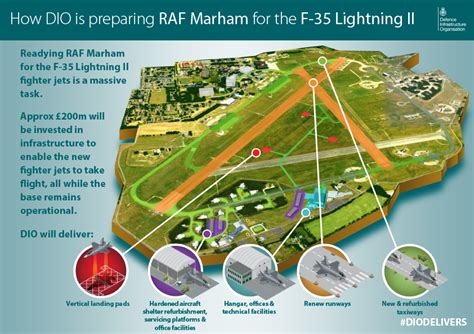
Located in Norfolk, RAF Marham is already home to the UK’s existing fleet of F-35Bs. The station will now be further upgraded to accommodate the F-35A, including the specialized nuclear security protocols and hardened facilities required for handling, storing, and maintaining nuclear-capable aircraft. This upgrade will ensure operational readiness for rapid deployment in coordination with NATO nuclear assets across Europe.
A Victory for the RAF’s Modernization Agenda
The decision is widely seen as a strategic win for the RAF, which has long advocated for a longer-range, higher-capacity platform than the F-35B could offer. The F-35A is capable of deploying a broader range of precision-guided munitions, enabling it to conduct a wider spectrum of operations — from conventional strike missions to nuclear deterrence.
Moreover, the F-35A’s conventional runway takeoff capability allows it to integrate more seamlessly with NATO partners who do not operate aircraft carriers. Unlike the UK’s F-35Bs, which were tailored to the Royal Navy’s HMS Queen Elizabeth and HMS Prince of Wales, the F-35As will operate primarily from land bases, enabling strategic basing across European and NATO airfields.
The B61-12: Precision Nuclear Deterrent
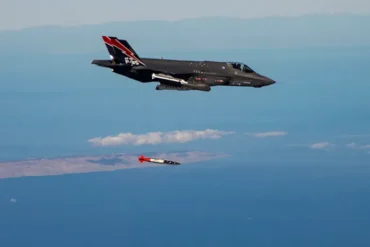
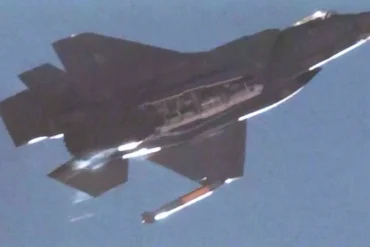
The integration of the B61-12 nuclear gravity bomb is central to the F-35A’s role in NATO’s nuclear deterrence posture. These bombs are currently stored at secure U.S. military facilities across Europe. Their deployment aboard dual-capable aircraft, such as the F-35A, would occur only under authorization by NATO’s Nuclear Planning Group, with final decision-making resting jointly between the U.S. President and the British Prime Minister.
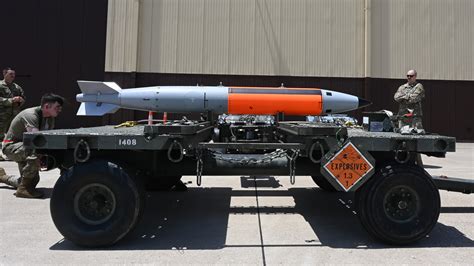
The B61-12 incorporates tail-kit guidance for improved accuracy and offers variable yield options, allowing for mission flexibility and escalation control in deterrence scenarios. This precision gives NATO additional credibility in its deterrent posture while minimizing collateral damage potential.
Economic and Industrial Impact: Jobs, Innovation, and Sovereignty
Starmer emphasized the economic dimension of this defense investment, projecting support for over 100 businesses and 20,000 jobs across the UK defense and aerospace sectors. The deal underscores the UK’s continuing stake in the Lockheed Martin-led F-35 global supply chain, with key British companies such as BAE Systems, Rolls-Royce, and Leonardo UK involved in component production and systems integration.
This step also strengthens the sovereignty of British defense capabilities, ensuring that the UK can project power and deter adversaries independently when required. While the B61-12 bombs are U.S.-produced, the hosting and delivery systems on British soil reassert national control within the NATO framework.
Strategic Context: Rebuilding Nuclear Resilience
The reintroduction of airborne nuclear capability to the RAF represents a pivotal transformation in UK nuclear doctrine. Since the retirement of the WE.177 free-fall bombs and the Tornado GR1 strike role, the UK has relied solely on its submarine-based Trident ballistic missile system for nuclear deterrence. That single-prong approach is now being diversified.
This move adds a flexible second-strike option to the UK’s nuclear deterrent portfolio, enhancing resilience in crisis scenarios where submarine deployment might be compromised. It also reflects an evolving threat environment characterized by rising geopolitical tensions, strategic competition with Russia, and concerns about China’s nuclear expansion.
NATO Cohesion and Signaling to Adversaries
The timing of the F-35A announcement during the 2025 NATO Summit is deliberate and symbolic. It projects allied unity and resolve in the face of persistent threats on the alliance’s eastern flank. Russia’s ongoing aggression in Ukraine and recent nuclear sabre-rattling have heightened NATO’s alertness to deterrence credibility.
Britain’s alignment with NATO’s airborne nuclear mission sends a powerful message: that nuclear deterrence remains central to European security. By contributing dual-capable aircraft to the alliance, the UK assumes a leadership role in collective defense and burden-sharing, bolstering deterrence without resorting to escalation.
Technical Superiority: F-35A vs F-35B
The F-35A Lightning II distinguishes itself in several ways:
- Combat Radius: Approximately 1,000 km, compared to the F-35B’s 833 km.
- Weapons Load: Internal payload of 2,200 kg, larger than the F-35B.
- Maximum G-Load: The A variant can withstand up to 9 Gs, versus the B’s 7 Gs, allowing for more dynamic combat maneuvering.
- Cost: While more affordable per unit than the B variant, the F-35A requires longer runways and more robust infrastructure.
These advantages make the F-35A a more formidable air-to-air and deep-strike platform, ideal for scenarios demanding nuclear delivery or operations in contested airspace.
Looking Ahead: Deployment Timeline and Strategic Integration
While the full operational capability timeline has not been disclosed, initial integration and training activities at RAF Marham are expected to begin within the next 18 months. Pilots currently flying the F-35B will undergo transition training, and new procurement cycles for support infrastructure, munitions, and mission systems will be initiated.
Additionally, the UK may pursue bilateral arrangements with the United States to ensure synchronized command and control systems for nuclear release protocols. Cooperation with NATO’s Strategic Airlift Capability and air-to-air refueling assets will further ensure that the F-35A fleet is both flexible and strategically mobile.
Conclusion: A Defining Moment for UK Military Posture
The introduction of the F-35A nuclear-capable fighters at RAF Marham is more than a hardware upgrade; it represents a strategic recalibration of Britain’s defense priorities. With Sir Keir Starmer’s administration doubling down on nuclear readiness in the face of global instability, the UK has taken a bold step toward reinforcing its deterrent capabilities and fulfilling its NATO commitments.
This move not only enhances the RAF’s role within NATO’s nuclear doctrine but also positions Britain to shape the future of European collective defense in a world where nuclear balance is again becoming a central theme in geopolitical calculus.