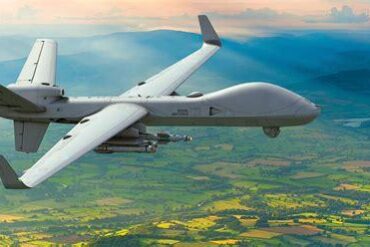
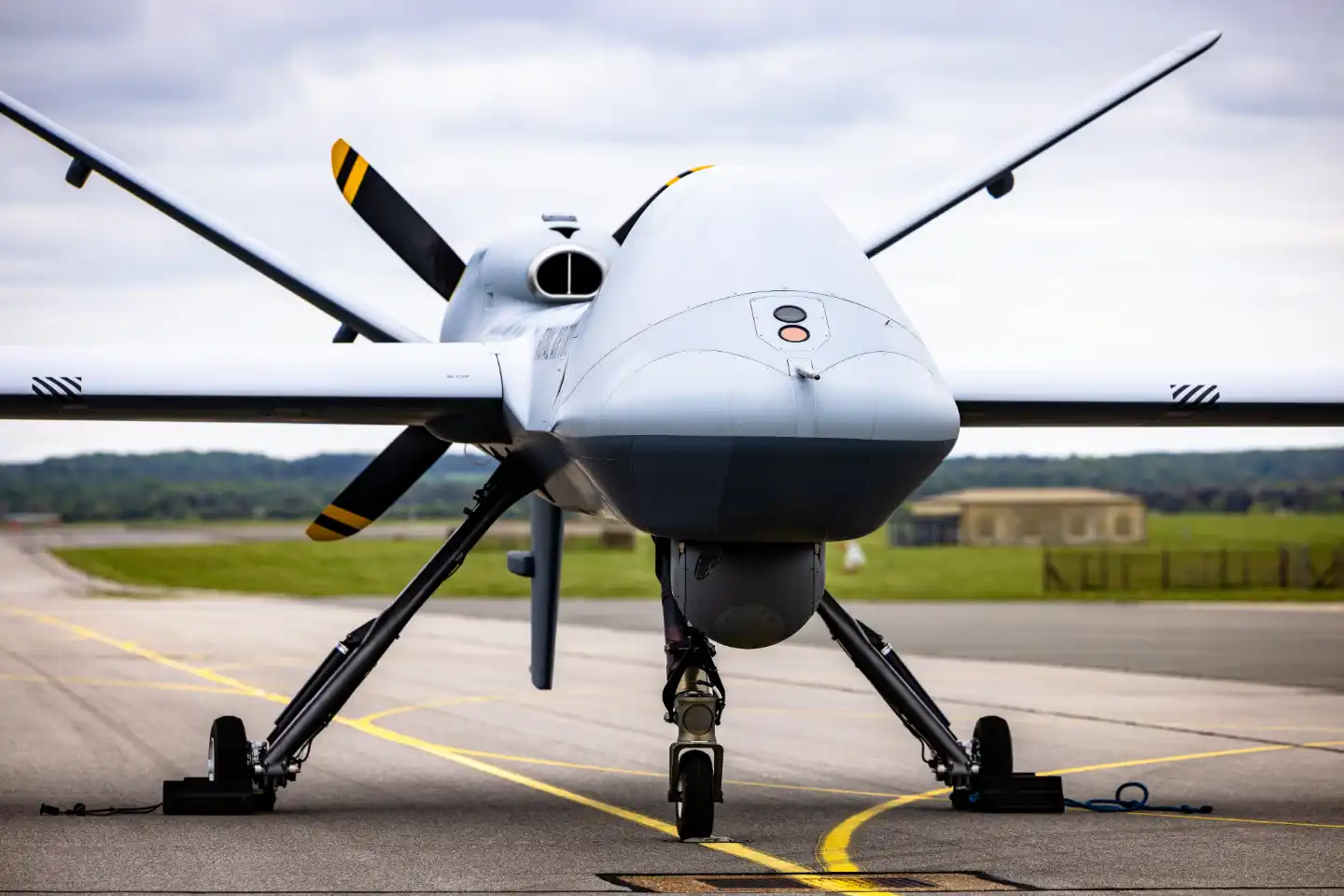
The Protector RG Mk1, the Royal Air Force’s most advanced Remotely Piloted Air System (RPAS), has reached a pivotal milestone in its Test & Evaluation Programme by completing a landmark cross-country flight through controlled UK airspace. This achievement not only validates Protector’s ability to integrate seamlessly with civilian and military aviation infrastructure but also establishes critical groundwork for its full operational deployment by the end of 2025.
Departing from its Main Operating Base (MOB) at RAF Waddington in Lincolnshire, the air vehicle made a fully coordinated flight to RAF Marham in Norfolk. The successful transit and landing marked the first instance of a certified RPAS of this scale flying autonomously within the complex airspace systems of the United Kingdom.
A Technological Breakthrough for UK Airspace Integration
What sets this flight apart is its demonstration of Protector’s airworthiness and regulatory compliance, marking the first time a remotely piloted aircraft with this level of sophistication and endurance has been integrated into UK skies without restriction. The flight was enabled through comprehensive coordination with the National Air Traffic Service (NATS), Swanwick Military Air Traffic Control, and the UK Civil Aviation Authority (CAA).
The mission demanded a high degree of cross-agency cooperation. Engineering teams from 31 Squadron, which will operate Protector operationally, were deployed to RAF Marham to support the arrival. Meanwhile, 56 Squadron managed flight execution, forming the test team at the core of this operation. The ISTAR Air Wing, responsible for Intelligence, Surveillance, Target Acquisition, and Reconnaissance (ISTAR) capabilities, also played an essential role in the mission’s success.
A Landmark in RPAS Operational Flexibility
The successful diversion of Protector to RAF Marham signals a strategic enhancement in RPAS operational flexibility. This capability ensures that Protector can safely land away from its home base during emergencies or tactical redirections, a critical factor for global deployment scenarios.
According to Wing Commander Williamson, Officer Commanding Operations Wing at RAF Marham:
“The arrival of Protector at RAF Marham represents a step change in RAF capability. We are now able to receive, refuel and rearm Protector whenever required, away from its home base.”
The ability to conduct these procedures securely and efficiently demonstrates not just the RPAS’s technological edge but also the RAF’s logistical maturity in handling next-generation unmanned systems.
Enhancing RAF’s Global ISTAR Capabilities
Once fully operational, the Protector RG Mk1 will replace the RAF’s aging MQ-9 Reaper fleet. It introduces a significantly upgraded suite of sensors and armaments, allowing it to conduct sustained ISTAR missions, as well as precision strike operations. With an operational ceiling of 40,000 feet and endurance exceeding 30 hours, it is uniquely positioned to deliver persistent surveillance across vast geographical areas.
Protector’s modular design also enables global deployment with minimal personnel footprint, making it suitable for operations in both contested environments and humanitarian support missions.
Training Infrastructure and Mission Readiness
RAF Waddington is not only the MOB for Protector but also hosts the Protector Training Facility, which includes elements of the UK NATO Flight Training Europe (NFTE) program. This facility is managed by 54 Squadron, which oversees the standardization and development of training programs for RPAS crews across NATO.
The collaborative exercise leading to Protector’s landing at RAF Marham also served as a live rehearsal for 31 Squadron, the first operational Protector unit. Wing Commander Maccoll, Officer Commanding 31 Squadron, highlighted the opportunity this event provided:
“Today’s land away was an opportunity for 31 Squadron to exercise our engineering and support functions, ahead of future deployments.”
The event enabled 31 Squadron engineers to handle real-world logistics, including maintenance oversight, hangar accommodation, and mission turnaround procedures, essential for their upcoming transition into full operational status.
A Model for Future RPAS Airspace Integration
The test flight further establishes the UK’s regulatory and operational framework for RPAS operations in shared airspace. Achieving regulatory compliance for a flight of this scale required the RAF to work alongside civil aviation authorities and build airspace deconfliction procedures, ensuring RPAS activity can coexist with commercial and general aviation traffic without compromising safety.
Officer Commanding 56 Squadron underscored the significance of this cross-stakeholder success:
“It has been another cross-stakeholder effort involving the test team at 56 Squadron, ISTAR Air Wing especially 31 Squadron who have led the engineering and logistical elements, and both Marham and Waddington Air Bases facilitating procedure implementation alongside airspace leads.”
Preparing for the Reaper to Protector Transition
With the RAF’s MQ-9 Reaper fleet nearing the end of its service life, the Protector RG Mk1 is poised to assume and expand those responsibilities. The summer of 2025 will be a defining phase as the RAF continues with extensive validation and verification flights, further testing Protector’s resilience in varying weather, altitude, and mission configurations.
Operationalization of Protector will bring with it new protocols in command and control, weapons deployment, and real-time data intelligence dissemination—all of which are being systematically tested and refined during the current Test & Evaluation Programme.
Looking Forward: Strategic Autonomy and Allied Interoperability
As NATO allies continue to develop unmanned force multipliers, Protector offers a glimpse into the future of coalition-based aerial operations. Its compliance with NATO STANAGs and its role within the UK NATO Flight Training framework ensures that British RPAS doctrine remains aligned with allied tactics and interoperability standards.
This milestone flight from RAF Waddington to RAF Marham is not just a triumph of aviation engineering—it is a blueprint for the next era of autonomous and integrated defense strategy.
Through sophisticated coordination, advanced systems architecture, and rigorous multi-agency testing, the RAF is steadily unlocking a new paradigm in airpower, one where long-endurance, unmanned systems can decisively shape the outcomes of both peacetime surveillance and wartime engagement.