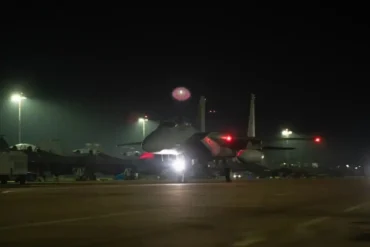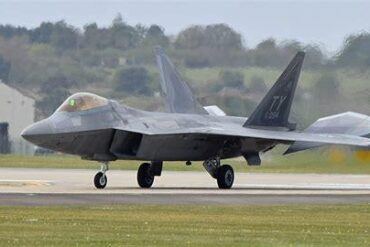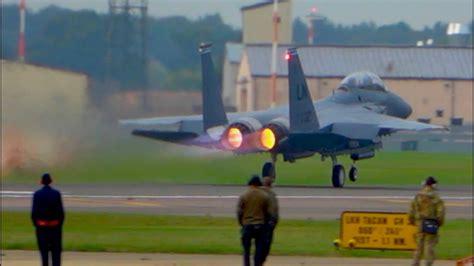
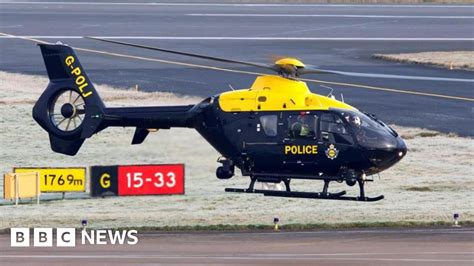
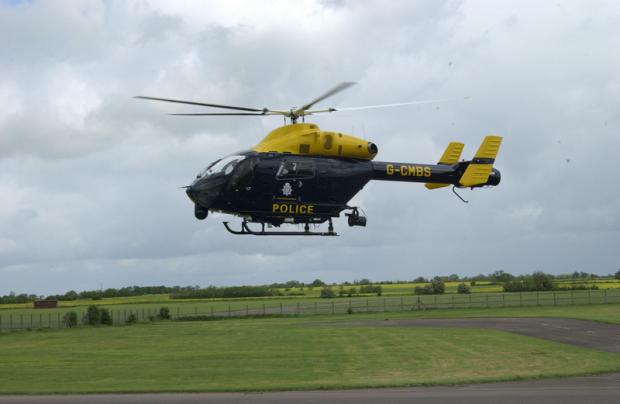
In a startling incident that underscores the complexities of modern aerial operations, a UK police helicopter narrowly avoided a mid-air collision with a USAF F-15 fighter jet after mistaking the jet’s red navigation lights for those of a drone. The episode, which took place near RAF Lakenheath on the night of Friday, November 22, has raised serious concerns about airspace coordination, situational awareness, and communication between military and civilian aviation units.
The Incident: Red Lights, Rising Altitudes, and Misidentification
According to the UK Airprox Board, which investigates air proximity incidents, the police helicopter was conducting a late-night patrol following reports of “small unmanned aerial systems”—drones—operating in the vicinity of RAF Lakenheath and RAF Mildenhall. These reports had already heightened security concerns, especially given both bases’ strategic importance as hubs for United States Air Force operations in Europe.
Shortly after takeoff, the police aircrew noticed red flashing lights over the Lakenheath Aerodrome Traffic Zone (ATZ). Believing the lights were from unauthorized drones, the helicopter crew climbed to approximately 4,000 feet and began tracking what they thought was one such UAV toward Bury St Edmunds. The situation escalated when the supposed drone appeared to match the helicopter’s flight path and speed, even overtaking them in mid-air.
As they altered their flight course westward and climbed further to 5,500 feet, one of the objects converged with their aircraft, positioning itself directly above and in front of them. The minimum recorded separation between the two aircraft was 1,900 feet (579 meters)—a dangerously close distance given the speeds and altitudes involved.
A Night Without Clear Vision: Challenges of Perception
One of the most telling aspects of the incident was the failure of the Traffic Collision Avoidance System (TCAS) onboard the helicopter to register the F-15. TCAS, which plays a critical role in preventing mid-air collisions, is designed to alert pilots of nearby transponder-equipped aircraft. However, in this case, it failed to detect the presence of the F-15 Strike Eagle, likely due to a combination of aircraft configuration, speed differential, and possibly transponder settings.
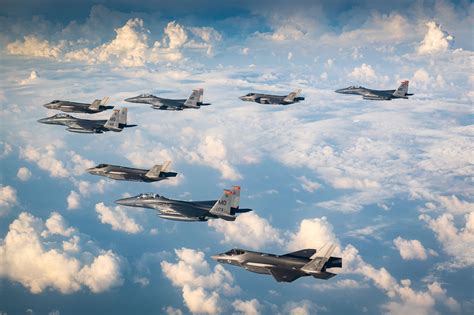
RAF Lakenheath, home to the 48th Fighter Wing, operates multiple F-15 squadrons, and such flights are not uncommon. Yet, the police aircrew had not been informed of the presence of F-15 operations in the area, leaving them vulnerable to misidentifying the fast-moving fighter jet. Further complicating matters was the lack of Night Vision Devices (NVDs) aboard the helicopter, which limited their ability to gauge size, distance, and altitude of nearby objects in the dark.
Investigators later concluded that the red lights perceived to belong to a close-proximity drone were, in fact, the anti-collision and position lights of a fast-moving F-15 at a significant distance. The report noted that human perception and cognitive biases played a crucial role in how the situation was interpreted. Due to the absence of spatial reference points and fatigue-induced errors common during night operations, the helicopter crew assumed the aircraft was a small drone flying nearby.
Context of Heightened Tension: Drone Reports Around Military Bases
This near-miss did not occur in isolation. At the time, RAF Lakenheath, RAF Mildenhall, and RAF Feltwell had all been subject to a spate of drone sightings. These unverified incursions had sparked speculation about espionage attempts, unauthorized hobbyists, or even hostile surveillance activity near sensitive US military installations.
The National Police Air Service (NPAS) was actively monitoring the region as part of broader airspace security measures. Their operational mandate included identifying, tracking, and assessing potential threats from unauthorized drones, making them more likely to interpret any ambiguous aerial object as a UAV.
Response and Investigation Findings
Following the incident, both the NPAS and the United States Air Forces in Europe (USAFE) launched internal reviews. The USAFE clarified that their air traffic control (ATC) procedures complied with UK law and that the F-15 pilot was visually aware of the police helicopter throughout the event. However, the police aircrew remained unaware of the true nature of the aircraft until after the incident had concluded.
The Airprox Board found that while no actual risk of collision occurred—thanks to vertical separation and pilot actions—the event highlighted glaring deficiencies in real-time communication and operational awareness between civil and military aviation units. The crew’s decision to exit the area reflected prudent judgment under uncertainty, particularly given their concern that the object might exhibit erratic drone-like behavior.
Implications for Airspace Coordination and Policy
The event throws into sharp relief the challenges of shared airspace, particularly in zones where civilian law enforcement aircraft operate alongside military training sorties. RAF Lakenheath is one of the busiest USAF bases in Europe, with F-15s often operating in high-performance, low-visibility scenarios. While ATC protocols exist to minimize airspace conflicts, this incident illustrates that procedural compliance does not always equate to effective risk mitigation.
Among the critical takeaways from this near-miss are:
- The urgent need for improved inter-agency communication, especially during joint operational environments.
- The importance of equipping civilian aircraft with advanced night vision and tracking tools.
- A renewed emphasis on pilot training in aerial object recognition, particularly under night conditions.
Human Factors and the Limits of Technology
A significant finding in the report was the role of human perception errors in the unfolding of the event. The red lights on the F-15, which are meant to enhance visibility and prevent collisions, paradoxically contributed to the misidentification. The relative lack of context and sensory feedback in the dark night sky—compounded by adrenaline, mission urgency, and the expectation of drones—set the stage for a chain of misinterpretations.
While automation and sensor-based systems like TCAS are essential safety nets, they are not foolproof. Their efficacy is bounded by settings, ranges, and interconnectivity with transponder-equipped aircraft. When these systems fail—or when military aircraft operate in modes that reduce detectability—the burden shifts back to human operators, who must rely on instinct, visual cues, and communication.
The Bigger Picture: Airspace Integration in the Drone Era
As drone technology becomes more ubiquitous and sophisticated, both military and civilian aviation are entering a new era of airspace complexity. Incidents like this underscore the need for real-time drone identification systems, better military-civilian airspace coordination, and even AI-assisted situational awareness tools capable of interpreting ambiguous airborne phenomena.
The proximity of this event to three US military bases also raises geopolitical questions. If drones—real or suspected—continue to appear near strategic installations, distinguishing between benign hobbyist activity and deliberate surveillance becomes increasingly critical. Misidentification could trigger overreactions, or worse, prevent authorities from recognizing a real threat.
Conclusion: A Wake-Up Call for Shared Skies
The near-collision between a UK police helicopter and a USAF F-15 fighter jet over RAF Lakenheath serves as a powerful reminder that in shared skies, perception can be just as dangerous as reality. The incident may not have resulted in physical damage or loss of life, but it highlights systemic gaps in communication, awareness, and technology that demand urgent attention.
With airspace becoming more congested and technologically diverse, this event must catalyze changes in how military and civilian agencies share information, manage expectations, and operate safely in increasingly complex aerial environments. Safety is not just a matter of procedure—it’s a matter of shared understanding, mutual awareness, and foresight.