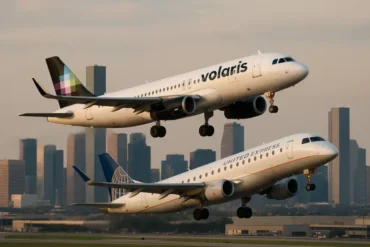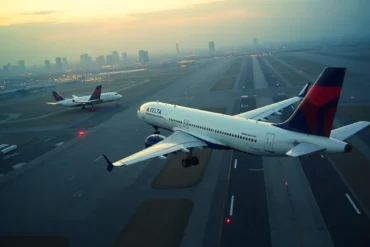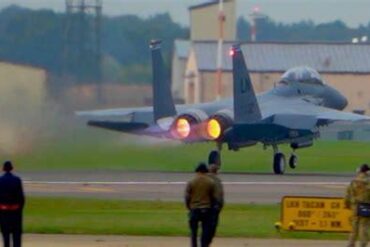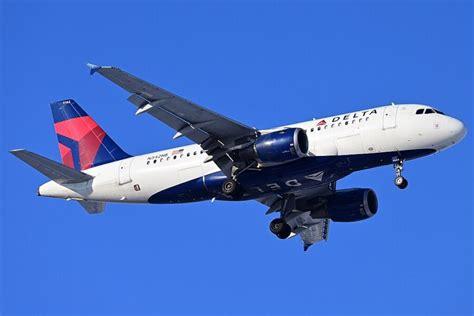
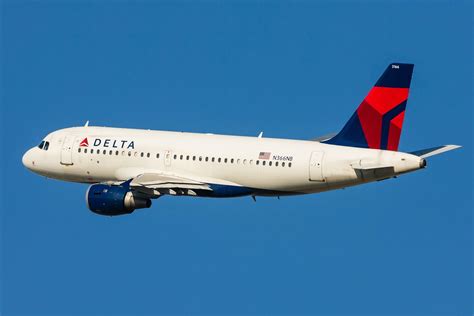
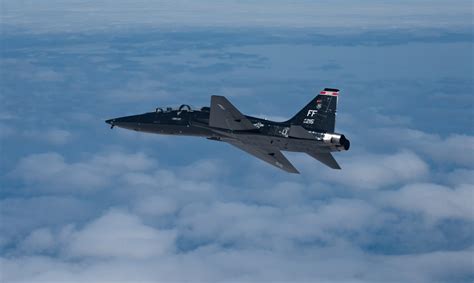
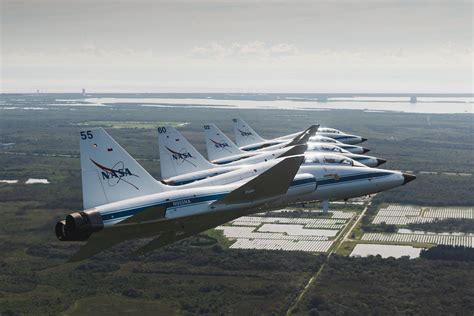
On March 28, 2025, what was supposed to be a routine flight for Delta Air Lines Flight DL2983 turned into a nerve-rattling near catastrophe in the skies above Virginia. The Airbus A319, bound for Minneapolis–St. Paul International Airport, came alarmingly close to colliding with four US Air Force T-38 Talon jets engaged in a ceremonial flyover. The incident has now become a lightning rod for aviation safety debate, triggering investigations and sparking urgent calls for systemic reform.
Climbing Into Peril: A Commercial Jet Meets Military Steel
Delta Flight DL2983 took off from Ronald Reagan Washington National Airport at 3:15 p.m. Eastern, climbing swiftly through 1,300 feet just two minutes before a scheduled airspace lockdown to accommodate the military formation. Unbeknownst to the passengers, a dramatic conflict was unfolding overhead as four sleek T-38 jets, flying in tight formation, entered the same flight corridor.
What happened next nearly altered the course of the flight—and lives—forever. A chilling alert from the jet’s Traffic Collision Avoidance System (TCAS) warned of an imminent danger: another aircraft was just 500 feet below. The collision risk was real, immediate, and terrifying.
A Brush With Disaster: Seconds From Impact
In the controlled chaos of the cockpit, Delta pilots reacted instantly. According to a preliminary report from the NTSB, the aircraft passed within 100 feet vertically and 0.7 nautical miles horizontally of the military jets. These distances fall far below the FAA’s required separation standards, representing a near-miss of the highest order.
Air traffic controllers, scrambling to fix what had already gone wrong, issued urgent corrective instructions. Pilots executed precision evasive maneuvers under intense pressure, averting what could have been a catastrophic mid-air collision.
Safe Landing, Unanswered Questions
Miraculously, DL2983 landed safely in Minneapolis. Passengers, largely unaware of the adrenaline-fueled rescue mission playing out in the sky, disembarked into a normal evening. But the FAA, NTSB, and aviation insiders were already deep into damage control.
The central question loomed large: how did a commercial airliner end up on a collision course with military jets during an officially coordinated flyover?
Breakdown in Communication: What Went Wrong?
The NTSB’s July 3 preliminary report reveals a startling confluence of human error and systemic failure:
- At 3:17 p.m., a mandatory “hard stop” for all departures was scheduled to begin—intended to clear airspace for the T-38 flyover.
- However, DL2983 was cleared for takeoff at 3:15 p.m., due to conflicting interpretations of when that stop took effect.
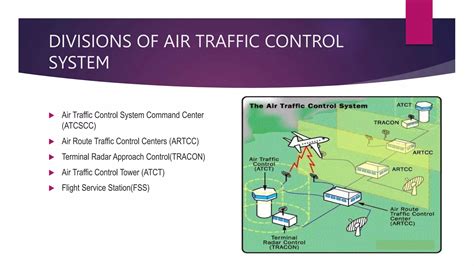
- Tower controllers attempted to delay or recall the flight, but it had already transferred communication to another control facility, Potomac Consolidated TRACON, resulting in radio silence during the crucial handover.
This handoff gap, mere seconds in duration, allowed the Delta jet to unknowingly ascend into military-controlled airspace, sparking the near miss.
Short Staffing Heightened the Crisis
Compounding the danger was the thinly staffed air traffic control team. The Operations Supervisor at Reagan National had just concluded their shift, leaving a Controller-in-Charge (CIC) alone to manage a highly complex situation. At TRACON, staffing was equally minimal.
Aviation experts agree that while technology handles much of modern air navigation, human oversight remains critical—especially when dealing with fast-evolving conflicts like this one. And on March 28, that oversight was stretched to the breaking point.
Clear Skies, Clouded Procedures
Interestingly, weather conditions were not a contributing factor. Visibility stretched 10 miles. Winds were mild. Air traffic was moderate. The skies were clear—but the underlying protocols were anything but.
This near-miss laid bare a gaping vulnerability: even ideal flying conditions offer no guarantee of safety when communication lapses and protocol confusion reign.
FAA and NTSB Launch Reviews
In the days following the event, the Federal Aviation Administration (FAA) and the National Transportation Safety Board (NTSB) initiated parallel investigations. Their aim: determine how such a breakdown occurred and how to ensure it never happens again.
Experts are now urging tighter synchronization between military and civilian aviation operations, particularly near congested airspace like that surrounding D.C.
Military Flyovers: Majestic but Risk-Laden
Patriotic flyovers are a staple of national celebrations and high-profile events. But the addition of high-speed military aircraft into busy civilian corridors demands absolute precision. Coordination failures like the one that unfolded over Arlington on March 28 pose unacceptable risks.
This event has reignited debate over the appropriateness of conducting ceremonial flyovers in commercial flight zones. Advocates of stricter controls argue that the spectacle is never worth the gamble of potential disaster.
Industry Reckoning: Trust and Safety on the Line
In the wake of the incident, airlines are pushing for:
- Clearer coordination protocols with military entities
- Mandatory buffer zones for civilian traffic during military exercises
- Redundancy in control tower staffing during sensitive operations
The FAA is reviewing procedural frameworks, and legislative pressure is building to mandate reforms ensuring enhanced airspace deconfliction.
Meanwhile, the psychological impact on pilots and flight crews cannot be understated. The pilots of DL2983 performed under extraordinary stress, executing evasive actions with split-second precision. For them, this flight became a permanent reminder of just how close disaster can come in a profession where even minor deviations can be fatal.
The Invisible Threat: How Close Is Too Close?
For the average traveler, aviation feels seamless. Planes take off and land with rhythmic certainty. But this near-miss reveals the invisible lattice of human coordination and technological vigilance that underpins every flight.
Even with redundant safety systems, 100 feet of vertical separation is a terrifyingly thin margin. At jet speeds, that distance can evaporate in less than a second. And in shared skies, one faulty clearance or a late command can spark a chain reaction that ends in tragedy.
Final Thoughts: A Call for Relentless Vigilance
The near miss between Delta’s Airbus A319 and the U.S. Air Force’s T-38 jets was not just a one-off mishap. It was a systemic failure, born from procedural confusion, understaffed control rooms, and the complex overlap of military and civilian aviation operations.
This event is a stark reminder that even in one of the world’s safest airspaces, safety is not automatic—it’s earned daily through discipline, investment, and unyielding attention to protocol.
For passengers, it’s a chilling but important wake-up call. And for aviation authorities, it is a mandate: reform coordination or risk catastrophe.
The sky is not the limit. It’s a shared responsibility.