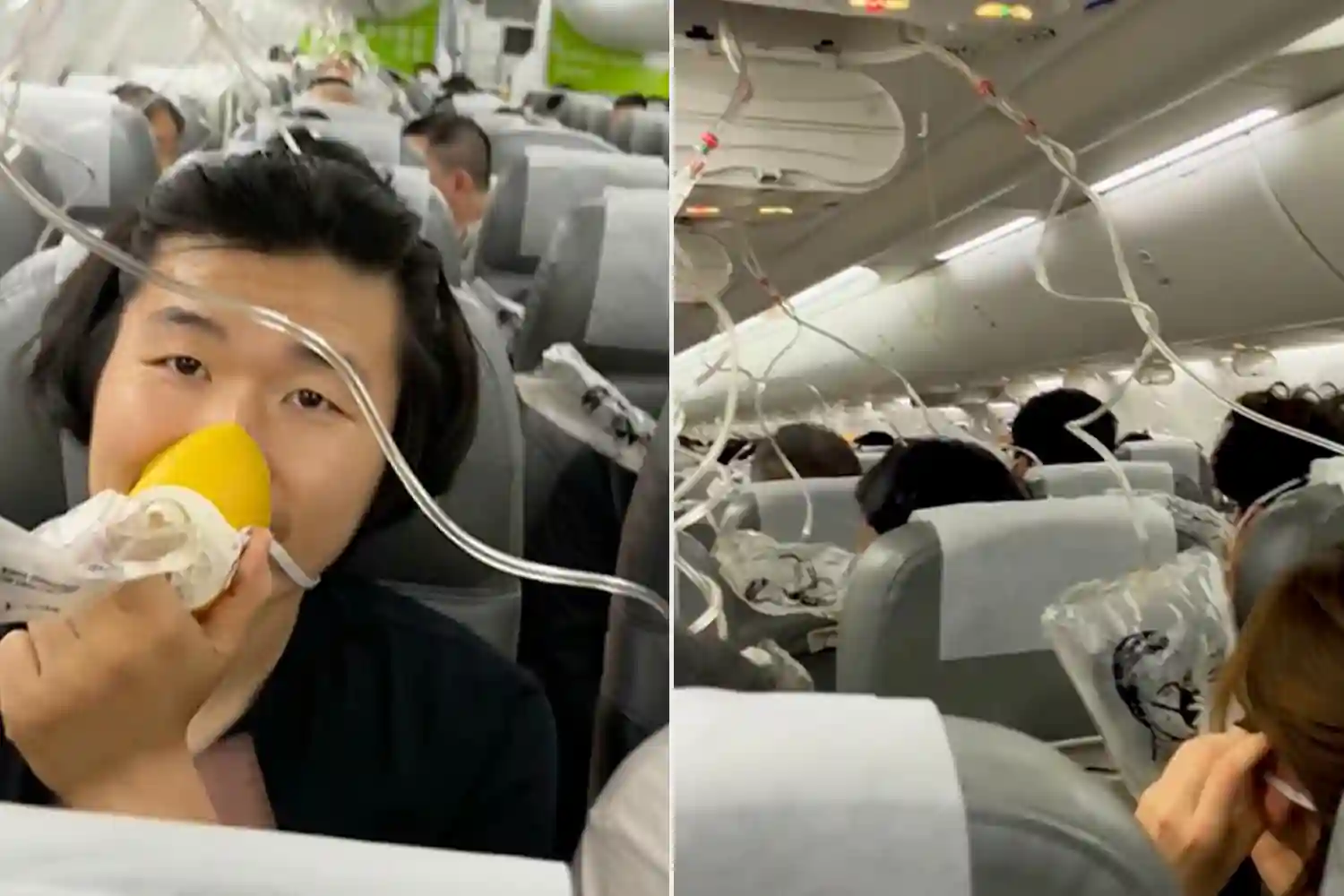
What was supposed to be a routine flight from Shanghai Pudong Airport to Narita International Airport in Tokyo turned into a nightmare for passengers aboard Japan Airlines flight JL8696. On the evening of June 30, the aircraft, operated by Japan Airlines’ low-cost branch Spring Japan, suddenly descended by nearly 26,000 feet in a harrowing 10-minute period, causing widespread panic among the 191 people onboard, including crew members. The Boeing 737 was cruising at 36,000 feet when it experienced a rapid drop in cabin pressure. The sudden change in altitude forced the plane to drop to just under 10,500 feet, causing the oxygen masks to deploy automatically. Passengers were instructed to put on the masks immediately as a safety measure.
Panic in the Cabin: Passengers Speak Out
Witnesses from inside the cabin described a chaotic scene. Video footage showed visibly distressed passengers, some clinging to their seats while others tried to remain calm despite the overwhelming panic. A flight attendant could be heard urging everyone to follow the safety instructions. In one of the more dramatic moments, a passenger recalled hearing “a muffled boom” before the oxygen masks dropped from above. “I heard a muffled boom, and the next thing I knew, oxygen masks dropped from above. A flight attendant cried and shouted for everyone to wear their masks, saying there was a malfunction,” said one passenger, who described the experience to the Associated Press. Another passenger shared a similarly traumatic experience, saying, “I was jolted awake when the masks fell, and I was on the verge of tears.” In a particularly harrowing account, one passenger revealed that they feared for their life so intensely that they felt compelled to write their will during the ordeal, preparing for what they feared could be the worst outcome.

Mechanical Failure and Emergency Landing in Osaka
Japan’s Ministry of Land, Infrastructure, Transport, and Tourism later confirmed that a failure in the pressurization system had triggered the emergency. In response to the malfunction, the pilot immediately declared an emergency and began diverting the aircraft to Kansai International Airport in Osaka. The plane landed safely at approximately 8:50 PM local time, just two hours after the frightening descent. Fortunately, no injuries were reported during the emergency landing. Following the event, the airline arranged accommodations for the stranded passengers at local hotels, offering each of them 15,000 yen (approximately $100 or £80) for transportation costs. Japan Airlines has yet to release a detailed official statement explaining the cause of the pressurization failure, but authorities are investigating the mechanical issue thoroughly.
An Investigation Underway
As is standard protocol, Japan’s aviation authorities have initiated a full investigation into the mechanical failure that caused the rapid cabin pressure loss. The airline has worked with the Ministry of Land, Infrastructure, Transport, and Tourism to assess the situation and to ensure such an incident does not happen again. The safety of passengers is paramount, and the airline has promised to enhance its maintenance and safety procedures moving forward. “We take our responsibility for passenger safety very seriously,” a Japan Airlines representative stated, expressing gratitude for the professionalism of the flight crew during the emergency.
The Aftermath: Rebuilding Trust with Passengers
The incident on flight JL8696 is yet another reminder of the risks and challenges that airlines must manage, especially as they work to maintain trust and confidence among travelers. Japan Airlines, which has long had a solid reputation for reliability, will likely face scrutiny as investigators work to determine the exact cause of the mechanical failure. This event comes at a time when the airline is already focused on rebuilding its reputation, which took a hit due to several issues during the COVID-19 pandemic. Although the incident is undoubtedly unsettling for many, it also highlights the importance of aviation safety protocols and the professionalism of flight attendants and crew members in managing such emergencies. For the passengers who survived the ordeal, the experience is one they will never forget, but it also serves as a testament to the resilience of the human spirit in the face of fear and uncertainty.
Passenger Experiences: What Travelers Can Learn from the Incident
While the outcome of this event was fortunate, the emotional toll on the passengers is undeniable. The fear and panic experienced during the flight underscore how unpredictable air travel can be, despite modern technological advancements. As passengers, it’s essential to understand the importance of following safety protocols, such as wearing oxygen masks, and to remain calm during emergencies, even when faced with a terrifying situation. Here are some key takeaways for travelers, should they ever find themselves in a similar situation:
- Stay Calm: In moments of panic, it’s crucial to stay as calm as possible. Breathing deeply and following crew instructions can make a difference in maintaining composure during an emergency.
- Know Your Safety Procedures: Familiarize yourself with the safety protocols outlined at the beginning of your flight, including the use of oxygen masks, seatbelt fastenings, and emergency exits.
- Trust the Crew: Flight attendants and pilots are trained professionals who are equipped to handle emergencies. Listen to their instructions and follow them closely.
- Report Any Concerns Immediately: If you notice something unusual during your flight, alert the flight attendants right away. Their priority is your safety, and early action can prevent more serious issues.
Conclusion: A Wake-Up Call for Air Travel
As the investigation into this shocking incident continues, Japan Airlines and other carriers worldwide are likely to review their safety procedures and aircraft maintenance systems to ensure that such an event never happens again. For travelers, it’s a sobering reminder that air travel, while one of the safest modes of transportation, still involves inherent risks that require constant vigilance and preparedness.