Why Spokane International Airport Is Rewiring Its Entire Terminal Around One Missing Connection
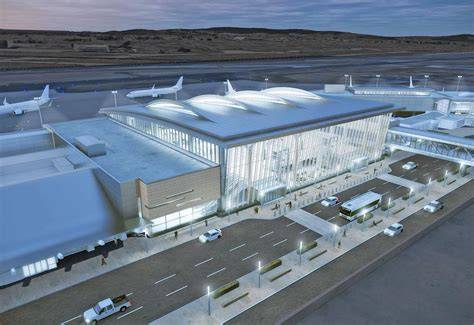
Spokane International Airport has spent years asking passengers to perform a small, exhausting ritual that most travelers never expect at a modern airport: leave the secure area, walk back into the public terminal, and queue at TSA screening a second time just to reach a departure gate in another concourse. That ritual, invisible to anyone flying point-to-point from Spokane, is the hidden tax on every connecting itinerary in the Inland Northwest. The airport’s answer is Central Hall, a 255,000-square-foot building estimated at $335 million that will consolidate security screening, centralize baggage claim, and stitch Concourses A, B, and C into a single post-security ecosystem. It is the centerpiece of Spokane’s Terminal Renovation and Expansion (TREX) program, and it will arrive only after roughly four years of construction that has already reshaped the way vehicles and luggage move through the airport.
The disruption is not theoretical. On October 21, 2026, a substantial portion of the main terminal’s curbside closed to vehicles and pedestrians, pushing all traffic onto a temporary two-lane bypass road expected to remain in place until 2030. The airport previously offered three inbound lanes, so the new configuration trims capacity precisely where departing passengers are most time-sensitive. Baggage claim operations are being relocated, and crews are preparing the ground for a building that does not yet exist. Everything visible today is preparation for an outcome passengers cannot enjoy until the end of the decade.
How GEG’s Split Concourse Layout Forces Passengers Back Through Security
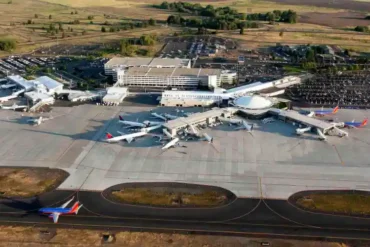
The root cause of Spokane’s second-screening problem is geography. Concourse C sits physically apart from the main terminal complex that serves Concourses A and B, and the existing infrastructure connecting them does not deliver the fully integrated airside circulation the airport wants. Passengers can move between the areas, but not in the frictionless, post-security way travelers experience at larger hubs where a single checkpoint feeds every gate. For a connecting passenger with a tight layover, that gap translates into extra walking, an unpredictable TSA queue, and the risk of a missed flight because the terminal’s layout, rather than the airline’s schedule, decided the outcome.
That weakness has real consequences for airlines as well as travelers. Carriers scheduling connections through Spokane must build buffer time into itineraries to account for re-screening, and inbound travelers unfamiliar with the airport can misjudge how long the walk and the second checkpoint will take. Spokane is not one of America’s largest connecting hubs, so the problem rarely dominates national travel coverage, but the airport’s leadership recognizes that convenience is now a competitive asset. A region that wants to attract business travel, convention traffic, and connecting itineraries cannot afford a terminal design that penalizes anyone transferring between gates. The solution had to be structural rather than cosmetic, which is why the airport’s official TREX plans make Central Hall the mechanism that brings security, baggage claim, and passenger circulation under one roof.
What the $335 Million Central Hall Actually Delivers for Connecting Travelers
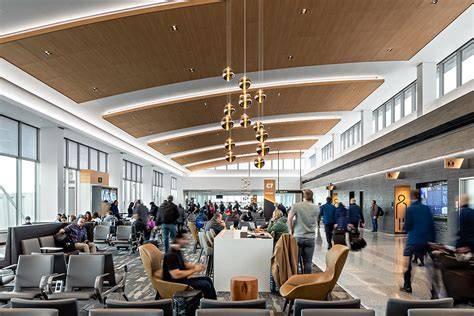
Central Hall changes the airport’s operating logic rather than merely expanding its footprint. The new building will house a centralized security checkpoint serving all airlines, replacing the fragmented screening arrangements that currently force some passengers to exit and re-enter the secure area. Once through that single checkpoint, travelers can reach Concourses A, B, and C without ever returning to the public side of the terminal. Baggage claim facilities will be consolidated in the same structure, giving arriving passengers a straightforward path from aircraft to carousel to curb instead of navigating a patchwork of separate arrivals areas. Concessions and passenger amenities will also be pulled toward the center of the airport, where they can serve the maximum number of travelers regardless of which concourse their flight uses.
Airport CEO Dave Haring has framed the project around a principle passengers understand immediately: giving travelers “one place to go.” That phrase is more strategic than it sounds. The current layout asks passengers to decode the airport, to know that Concourse C behaves differently, and to anticipate a second screening they may never have encountered elsewhere. Central Hall replaces that hidden complexity with a single obvious route, which matters enormously for first-time visitors, older travelers, families with children, and anyone connecting on a tight schedule. The investment also protects the airport’s future: a terminal that is intuitive to navigate can absorb growth in traffic without proportional growth in anxiety.
Why the Main Terminal Curbside Closed Until 2030
Building Central Hall requires moving more than passengers. Crews must first relocate underground utilities, including water, sewer, and gas infrastructure, before the site can support the new structure. That work brings heavy construction into the area immediately around the main terminal, and it is the reason the airport reorganised vehicle access on October 21, 2026. All vehicle traffic now flows through a newly built two-lane bypass road, and that bypass is expected to operate until 2030. With one inbound lane lost compared with the previous three-lane approach, peak departure and arrival periods are the moments when congestion is most likely to bite.
Passengers are being asked to adapt in concrete ways. Updated signage directs motorists to the available drop-off and pickup zones, and pedestrians using the parking facilities must reach the terminal through the sky bridges rather than their usual routes. The airport has explicitly advised travelers to allow extra time, and that advice is not boilerplate when the terminal’s main approach has been narrowed. The construction program also involves demolishing the existing hallway that connects the main terminal with Concourse C and with Concourses A and B, so passengers will use temporary pathways between those areas until the permanent infrastructure is finished. As KXLY reported on October 20, 2026, the airport expects the temporary traffic and passenger arrangements to remain in place through 2030.
The operational challenge is substantial. Spokane must keep flights moving while dismantling pieces of the infrastructure those flights depend on, and every temporary route becomes a small test of wayfinding. The airport is effectively running two projects at once: the long-term transformation of its passenger experience and the short-term preservation of a functioning terminal. That balance is the defining reality of TREX Phase 2, and it explains why the project’s communication strategy matters as much as its engineering.
Alaska, Allegiant, and American Passengers Face the Biggest Changes
The changes hit Concourse C travelers hardest. Passengers flying Alaska Airlines, Allegiant Air, and American Airlines will find that the existing baggage claim facility serving Concourse C is being decommissioned and demolished to clear the way for redevelopment. Instead of collecting checked luggage in the previous arrivals area, these passengers will be directed to a temporary baggage claim facility in the Concourse C plaza, which The Spokesman-Review reports is expected to remain in use through 2030. For travelers arriving on those carriers, particularly those unfamiliar with Spokane, the practical instruction is simple: follow the signage after landing rather than muscle memory.
Parking has shifted too. The airport’s hourly lot has closed for construction staging, so motorists must choose alternative facilities based on how long they intend to stay. Spokane recommends that visitors making stops of less than two hours use the short-term parking area on the first floor of the parking garage, while people collecting arriving passengers are encouraged to wait in the Cell Phone Lot until their friends or family are ready for pickup. Further details are published through the airport’s official parking information. Airport management also recommends arriving at least two hours before domestic departures, advice that carries more weight than usual given that familiar routes through the terminal may no longer be available.
Special assistance deserves particular attention. Travelers who need wheelchair support, unaccompanied minor services, or help with heavy baggage should build additional margin into their plans, because the temporary pathways and relocated facilities add time to every journey through the building. Spokane’s traditional reputation for simplicity remains an advantage, but it is not a guarantee during a construction program of this scale.
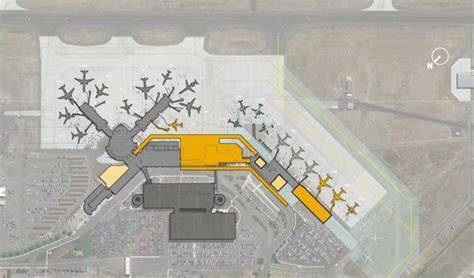
How TREX Phase 1 Expanded Concourse C Before the Big Rebuild
Central Hall is the second major component of TREX, and its feasibility rests on work already completed. Before the airport could contemplate rebuilding its central passenger facilities, it finished an extensive expansion of Concourse C that began in 2022 and was completed in June 2026. According to the airport’s official TREX program overview, that expansion added approximately 144,000 square feet (13,378 square meters) to the existing terminal, delivering three new gates, six additional ticket counters, and a range of passenger amenities.
The first phase also improved the quality of the passenger experience in ways that are easy to overlook but matter daily. It introduced a nursing mothers’ suite, companion care rooms, and upgraded amenities for travelers requiring additional assistance. Construction was delivered through two major packages, Concourse C West and Concourse C East, managed by a joint venture between Garco Construction and Q&D Construction, with Architectural Alliance International Group leading the architectural design. The sequencing was deliberate: build capacity first, then tackle the harder problem of reconfiguring the airport’s core.
That distinction is crucial to understanding the $335 million figure. Additional gates alone cannot fix a connectivity gap, because more parking spaces for aircraft do nothing about the checkpoint that stands between two concourses. Central Hall is transformative precisely because it changes the relationship among the concourses rather than simply enlarging each one. The airport’s published schedule places the start of Central Hall construction in the second quarter of 2027, after the current utility relocation and site preparation work concludes.
The Groundbreaking Date, the 2030 Deadline, and What Comes Next
The next milestone is the anticipated groundbreaking in Q2 2027, with temporary traffic arrangements and relocated baggage claim facilities expected to persist until 2030. Those dates frame the passenger experience for the remainder of the decade: a terminal that is simultaneously under construction and fully operational, with narrower curbside access, temporary pathways, and a relocated baggage belt for three major carriers. Travelers who plan for that reality, arriving early, using the Cell Phone Lot, and following signs rather than habit, will move through Spokane with far less friction than those who assume nothing has changed.
The airport’s official TREX program also identifies potential future modernization of Concourses A and B, though those improvements remain subject to additional funding. Central Hall is therefore a foundation rather than a finish line. If the project succeeds, Spokane will have eliminated a longstanding structural weakness in its terminal design and created an airport that treats connection as a first-class experience rather than an afterthought. For a mid-sized airport competing for the loyalty of Inland Northwest travelers, that is a meaningful declaration of intent.
What Spokane’s Investment Means for the Future of Regional Air Travel
The value of Spokane’s $335 million bet will ultimately be measured in the minutes and uncertainties it removes from a journey. A single centralized checkpoint, a genuinely post-security path between all three concourses, and consolidated baggage claim address problems that passengers feel but rarely articulate: the anxiety of a tight connection, the annoyance of re-screening, the confusion of an unfamiliar arrivals area. Regional airports across the United States face the same constraints Spokane is now confronting, and few can solve them without years of visible disruption. Spokane’s willingness to endure that disruption is what makes the project credible.
For now, the airport must balance ambition with the practical needs of airlines and the people who fly them. Temporary routes will change again, construction will move, and signage will be updated. The measure of success arrives when a connecting passenger lands at Spokane, walks from one gate to another without ever touching the public side of the terminal, and never learns that the old airport would have made them clear security twice. Until 2030, the journey will be harder. After it, Spokane hopes the airport will simply feel obvious, which is the highest compliment a terminal can earn.