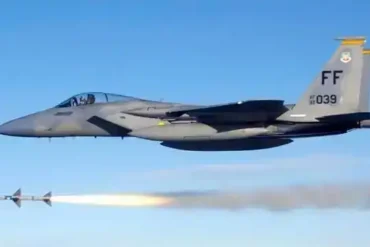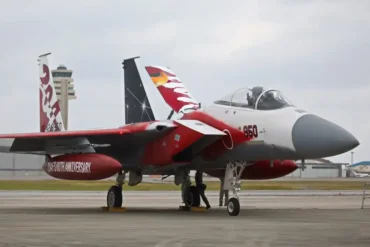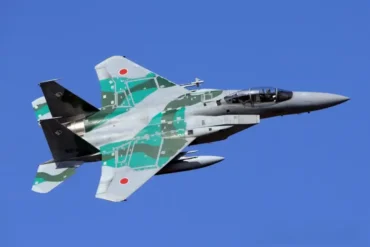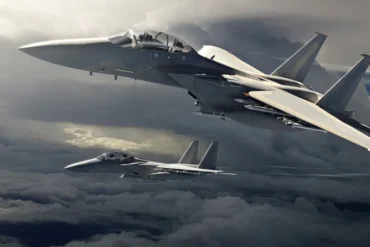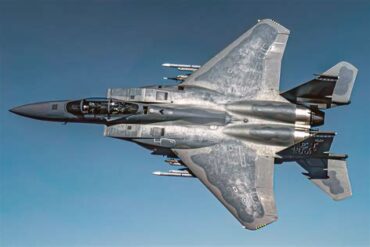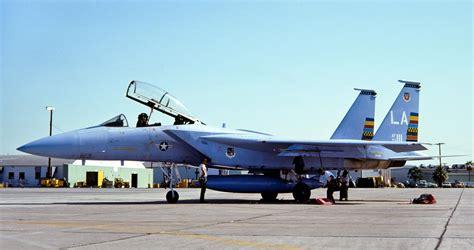
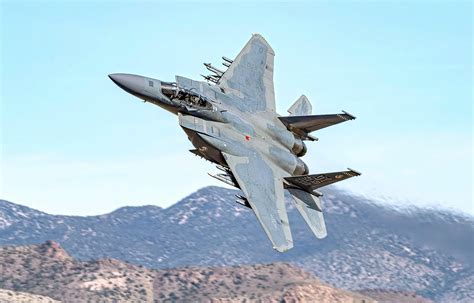
The decision by the United States Air Force (USAF) to select the F-15 Eagle over the North American NA-335 during the F-X program marked a defining moment in modern military aviation history. At a time when the Cold War stoked intense technological competition, the Air Force’s choice signaled a strategic alignment of capability, risk mitigation, and institutional confidence in proven defense contractors. Although the NA-335 proposed several superior performance characteristics on paper, its untested and unconventional design left decision-makers wary, especially amid the political and financial scrutiny following earlier procurement missteps.
The Cold War Pressure and USAF’s Tactical Urgency
The 1960s were dominated by a heightened sense of urgency across the Pentagon. With the Vietnam War raging and the Soviet Union rapidly advancing aerospace capabilities, American military leadership was under immense pressure to produce an air superiority fighter that could dominate in every conceivable engagement. The F-4 Phantom, then the mainstay fighter of both the USAF and US Navy, had shown weaknesses—particularly in close-range dogfighting due to its bulk and lack of an internal gun. These vulnerabilities had been exposed in combat over Southeast Asia, spurring calls for a next-generation aircraft built from lessons learned.
Amid this backdrop, the F-X program was launched. Its goal was to create a fighter capable of surpassing Soviet aircraft such as the MiG-21 and the feared MiG-25 Foxbat, the latter of which was thought to be an invincible Mach 3 interceptor. The Air Force demanded speed, maneuverability, firepower, and endurance in one package. This mission profile would ultimately set the stage for the F-15 Eagle’s ascendancy.
The NA-335’s Bold Promise and Technical Risk
North American Aviation’s NA-335 was a compelling alternative. It promised higher speed thresholds, cutting-edge design features, and overall superior aerodynamic performance. Its structure included a single tail and large folding ventral fins, design choices that pushed the envelope but raised concerns over stability at high angles of attack. This innovation, while admirable, introduced uncertainty. In contrast, McDonnell Douglas’s twin-tail F-15 borrowed heavily from established aerodynamic principles, making it a safer bet for the Air Force’s tight schedule and limited appetite for risk.
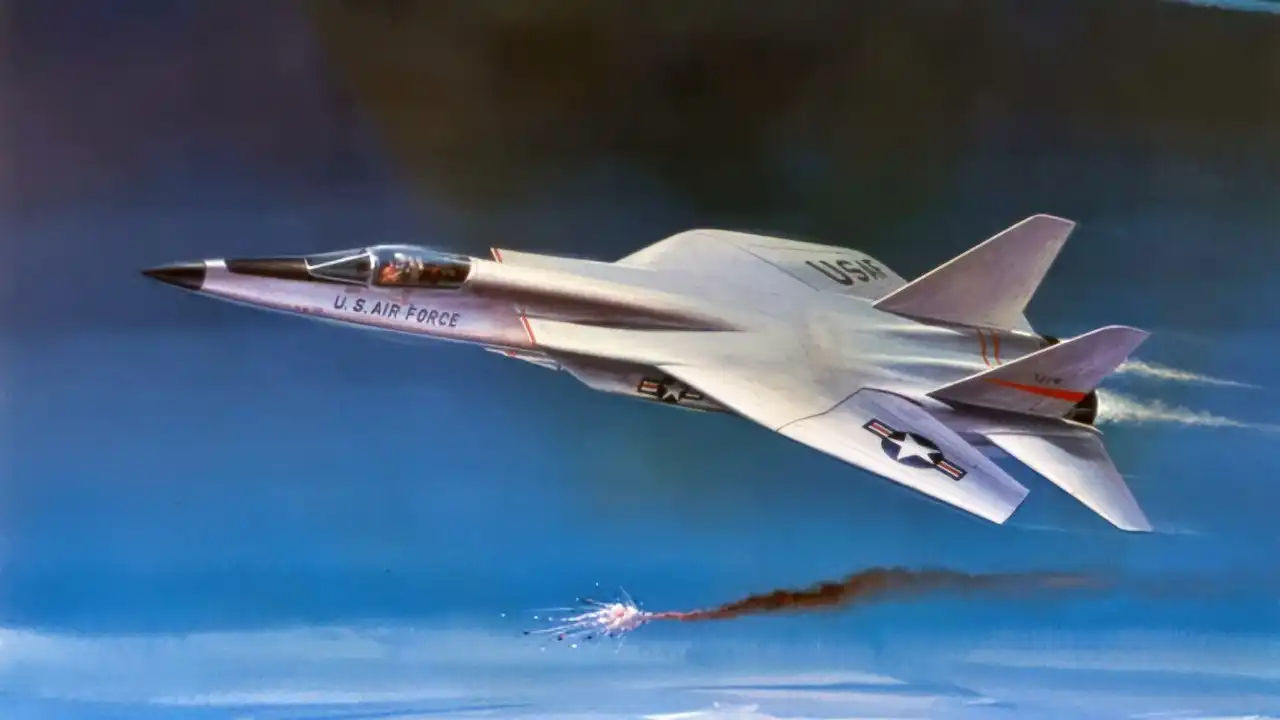
At the time, North American was still reeling from several setbacks, including the fallout from the Apollo 1 fire and the cancellation of numerous high-profile projects such as the F-107, F-108, and XB-70 Valkyrie. Despite their legacy of innovation—particularly in supersonic and carrier aviation—their internal bandwidth was strained. Their concurrent involvement in the B-1 Lancer bomber under the AMSA program likely further diluted their focus on the NA-335.
Institutional Momentum and the McDonnell Advantage
Another major force working against North American was institutional entrenchment. McDonnell, having recently merged with Douglas, came to the table with a vast portfolio of successful military and commercial aircraft. The F-4 Phantom was already battle-proven, and confidence in McDonnell’s reliability was high. The USAF had already experienced cost overruns and design delays with the F-111 and C-5 Galaxy programs, making them cautious of unproven concepts.
The Government Accountability Office (GAO) became directly involved, urging cost reductions in all final proposals. McDonnell Douglas shaved $500,000 off their unit cost—below the GAO’s requested $1.5 million per unit reduction—making their offer more attractive despite slightly trailing the NA-335 in performance metrics. The F-15’s final selection on December 23, 1969, reflected a blend of technological capability, cost management, and strategic trust in an established supplier.
The Shadow of the Fighter Mafia and Design Philosophy Shifts
The decision wasn’t made in a vacuum. The influential Fighter Mafia, an informal group of Pentagon insiders and fighter pilot theorists, championed John Boyd’s energy-maneuverability (E-M) theory, which emphasized agility and efficiency over brute force. While this group favored lightweight fighters—eventually birthing the F-16 Fighting Falcon—their design ethos did influence aspects of the F-15’s final form. Though heavier, the F-15 incorporated E-M principles, resulting in an aircraft that could out-turn and out-climb adversaries while retaining strategic reach and payload capacity.
The NA-335, although aligned with these ideas in some respects, remained mired in technical uncertainties. Its resemblance to the Soviet T-10 prototype (later the Su-27 Flanker) suggested high performance but also echoed design philosophies that the USAF did not fully understand or trust at the time.
The Legacy of North American and the NA-335’s Quiet Demise
North American would continue to experiment with exotic fighter designs, such as the NA-247 Retaliator and NR-349, incorporating rocket engines and multiple turbojets for enhanced high-altitude interception roles. However, none of these designs ever progressed beyond mock-up stages. The company’s final military aviation successes came in the form of the OV-10 Bronco and the B-1 Lancer, both of which endured in operational service.
By the time North American merged with Rockwell and eventually became part of Boeing Defense, its role in fighter innovation had faded. The NA-335, once a bold proposition poised to redefine air combat, now lingers only in archives and speculative aviation forums.
Conclusion: Calculated Choices and Enduring Dominance
In retrospect, the Air Force’s choice of the F-15 Eagle over the NA-335 underscores the delicate balance between innovation and reliability. While the NA-335 offered tantalizing glimpses of what might have been, the F-15 delivered a proven, adaptable, and enduring platform that continues to serve well into the 21st century. With over 100 confirmed kills and zero air-to-air losses, the Eagle stands not just as a tactical success, but as a symbol of strategic prudence and engineering excellence.
The story of the F-15’s selection is a reminder that success in aerospace defense is rarely about raw potential alone—it’s about vision tempered by feasibility, ambition matched by execution, and most critically, trust built through past performance.