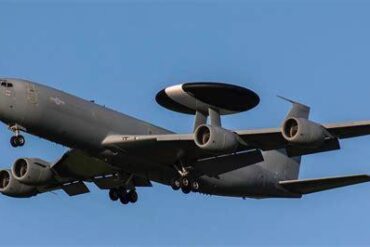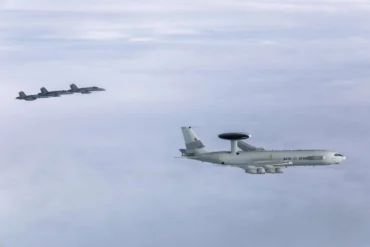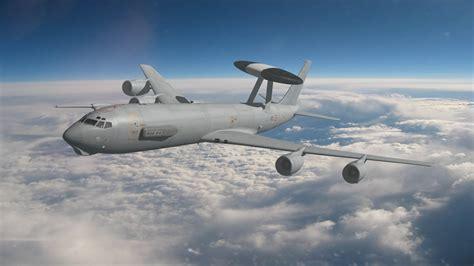
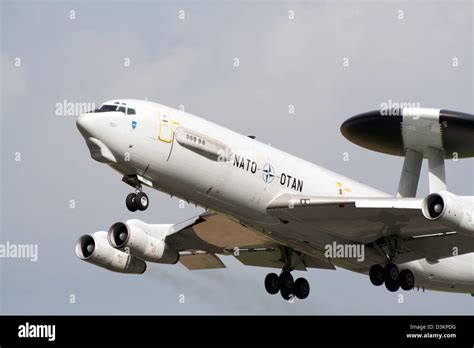
For nearly half a century, the Boeing E-3 AWACS has acted as the United States military’s airborne nervous system — detecting threats, directing fighters and coordinating multi-domain engagements with the signature radar dome that has become both symbol and sentinel. Yet legacy cannot stop the march of time. AWACS rides on an aging Boeing 707 frame, supported by a supply chain that grows thinner and more brittle by the year, while its once world-leading radar can no longer see deeply into the invisible battlespace modern war presents. The Pentagon expects to retire the fleet no later than 2035. Replacement was not just logical — it was urgent.
Then reality folded in on itself.
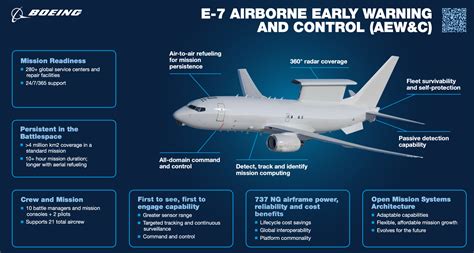
For years, the Boeing E-7 Wedgetail looked like the obvious future. Built on the widely supported 737 airframe and equipped with an advanced electronically-scanned array instead of a spinning dish, it offered more power, more efficiency, fewer maintenance nightmares and the benefit of real-world service with Australia, South Korea and Turkey. What could have been a smooth handoff instead spiraled into policy reversals, inter-branch fragmentation, and geopolitical buyer’s remorse.
The Pentagon Pulls Back — Then Looks to Space
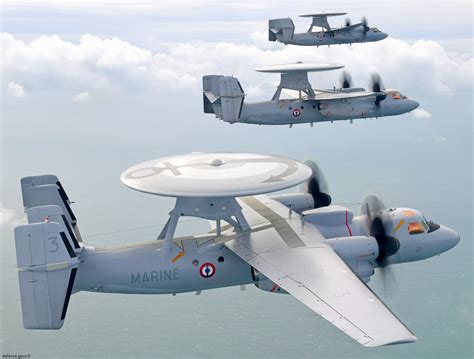
June delivered the first shock. The Department of Defense abruptly halted E-7 procurement over cost and survivability concerns, proclaiming the age of the large radar plane too vulnerable for future high-threat airspace. The interim replacement? More E-2D Hawkeyes — smaller, carrier-borne platforms designed for naval task forces, not continental battle management. Longer term, the Pentagon’s eye turned upward, to constellations of surveillance satellites operated by U.S. Space Force, promising global tracking without the risk of losing a billion-dollar jet to a hypersonic missile.
In theory, it sounds bold — the sky becomes optional, orbit becomes the new command deck. In practice, satellites cannot yet replace the flexibility and decision-density of an airborne battle manager. And critically, nobody can say when the future arrives. Satellites take years, budgets balloon, and classified capability gaps linger behind closed doors.
Air & Space Forces Association Pushes Back Hard
The Pentagon may want to wait for space, but the U.S. Air & Space Forces Association refuses to gamble on hope. In a pointed letter signed by six former Air Force Chiefs of Staff, the organization warned Congress that abandoning the E-7 leaves an operational vacuum. The E-2D, capable as it is, cannot manage multi-theater combat or coordinate the kind of massed engagements a peer conflict requires. Wedgetail, they argue, is not just sufficient — it is superior to the retiring AWACS. Choosing to shrink rather than upgrade risks a dangerous capability cliff.
Warfare no longer rewards the slow. Surveillance must be elastic, survivable and instantly networked. Every lost year widens vulnerability.
Congress Funds What the Pentagon Cancels
Then came the twist. While the Department of Defense walked away from E-7, Congress funded it anyway. Appropriations pushed development forward, writing money into the budget multiple times, culminating in $200 million dedicated to prototyping even after internal cancellation. The U.S. military has found itself in a surreal posture — branches disagreeing, strategies diverging and procurement limbo defined not by lack of options, but by competing visions of what war becomes.
In an era where Washington agrees on little, both parties appear aligned in keeping Wedgetail alive. Yet alignment does not equal clarity.
Global Buyers Are Walking Away
Even as domestic funding lurches forward, international enthusiasm evaporates. South Korea scrapped its future orders, pivoting toward an L3Harris-built platform despite operating four Wedgetails already. Weeks later, the Dutch Ministry of Defense announced NATO would no longer pursue E-7, clearing space instead for a push toward European systems such as the Saab GlobalEye, built on Bombardier’s Global 6000/6500 business jet.
This shift signals more than procurement preference. Allies increasingly wish to reduce reliance on American hardware, diversify industrial capability and secure sovereign technology pathways rather than funneling investment back into Boeing’s troubled aerospace ecosystem. Europe now senses an opportunity — a new flagship AEW aircraft anchored not in Seattle, but in Stockholm.
A Capability Gap Forming Beneath the Clouds
Between aging AWACS, delayed satellite readiness and a wavering Wedgetail pipeline, the United States approaches an uncomfortable truth: airborne early warning dominance — once unquestioned — is slipping toward ambiguity. War in the Pacific or Europe will not wait politely for procurement schedules or inter-department tug-of-war. Command and control is oxygen. Without it, aircraft become deaf, missiles blind and sorties chaos. The clock ticks louder than the politics.
There is still time to right this path. The technology exists. The need is undeniable. What remains missing is unambiguous direction — a strategic choice reflected not in contradictory memos and mixed budgets, but in a unified blueprint for the next era of battle management.
A radar plane need not spin to find the storm ahead. But indecision creates clouds that even the best sensor cannot see through.