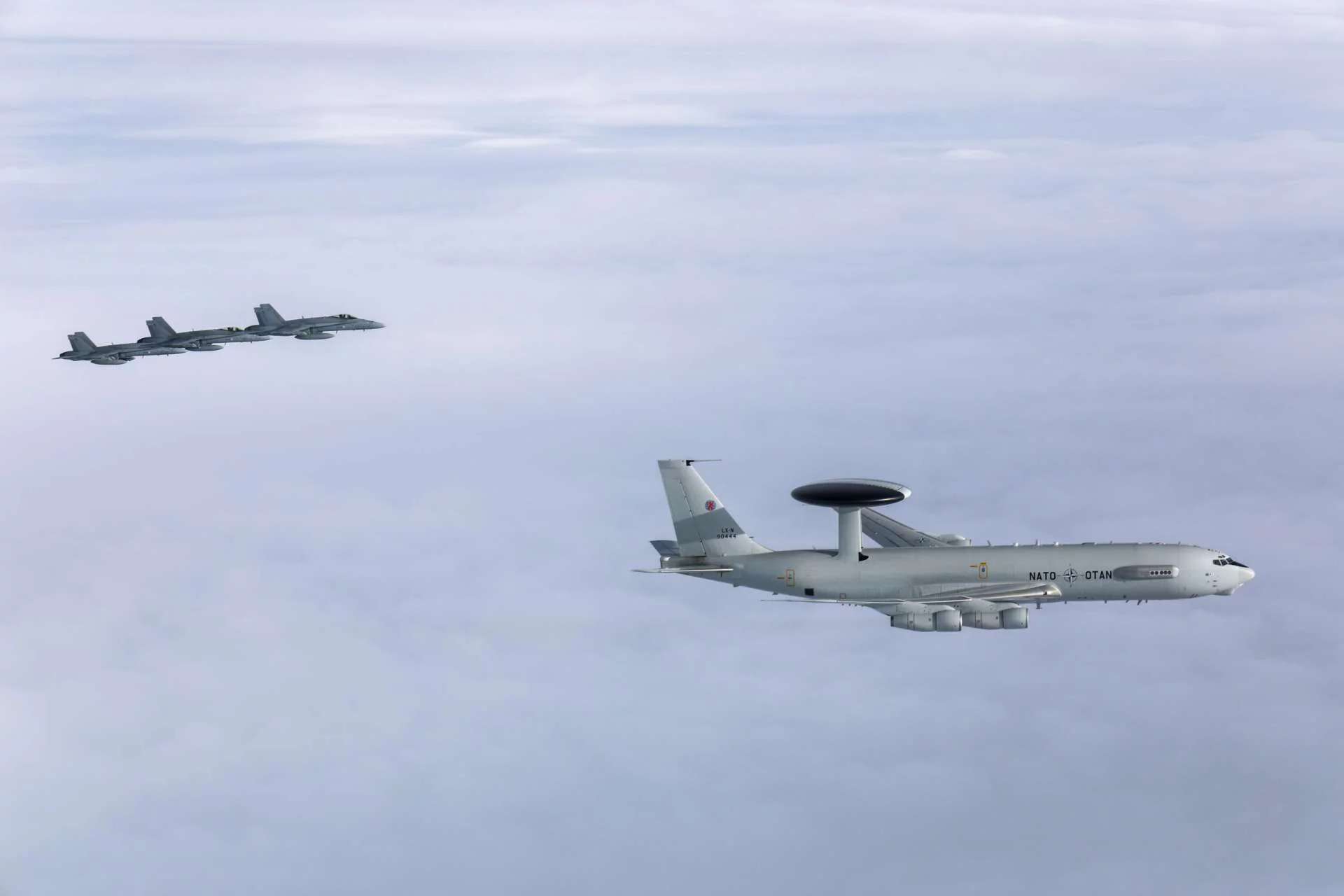
Finland’s integration into NATO’s military command structure took another tangible step forward when a NATO E-3A Sentry Airborne Warning and Control System (AWACS) aircraft carried out its first operational mission over Finnish airspace. The sortie, conducted with escort from three Finnish Air Force F/A-18 Hornet fighters, demonstrated the practical implementation of NATO’s air battle management network across one of the Alliance’s most strategically sensitive regions.
The operation highlighted how Finland’s air defense assets are increasingly synchronized with NATO’s airborne surveillance architecture. By linking Finland’s national radar infrastructure with NATO’s airborne command platform, the mission enhanced the Alliance’s ability to monitor and coordinate air activity across the High North, the Baltic Sea region, and areas bordering Russia. This integration enables faster threat detection, quicker fighter interception, and a unified operational picture across multiple allied command centers.
Beyond its symbolic significance, the mission served as a technical validation of real-time interoperability between Finnish fighter units and NATO’s airborne command network. Finnish interceptor aircraft were able to receive targeting information and tactical updates directly from the AWACS aircraft, dramatically extending the operational reach of Finland’s defensive radar systems.
NATO’s E-3A Sentry: The Alliance’s Flying Command Center
The E-3A Sentry AWACS remains one of NATO’s most critical airborne command platforms. Built on the airframe of the Boeing 707, the aircraft is instantly recognizable by its large rotating radar dome mounted above the fuselage, which houses the powerful radar system responsible for wide-area air surveillance.
Operating typically above 30,000 feet, the E-3A can monitor airspace across hundreds of kilometers in every direction. Its radar system can detect and track low-flying aircraft, cruise missiles, and multiple airborne contacts simultaneously, even in environments where ground-based radar coverage is limited or obstructed by terrain.
Inside the aircraft, a mission crew of approximately 16 to 19 specialists manages the airborne command system. These personnel include:
- Surveillance operators monitoring radar tracks
- Weapons controllers directing fighter aircraft
- Tactical coordinators overseeing the air battle picture
- Communications technicians maintaining data links with allied forces
Together, they build a real-time recognized air picture, shared across NATO networks through systems such as Link 16, allowing aircraft, ships, and ground units across the Alliance to operate with synchronized situational awareness.
The E-3A fleet is operated by the NATO Airborne Early Warning and Control Force, headquartered at Geilenkirchen Air Base in Germany. Crewed by personnel from more than a dozen NATO member states, the fleet represents one of the Alliance’s most multinational operational capabilities.
Finnish F/A-18 Hornets Escort NATO AWACS Over National Airspace
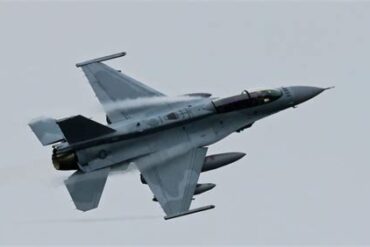
During the historic mission, three Finnish Air Force F/A-18 Hornet fighters escorted the NATO AWACS aircraft, illustrating how Finland’s combat aviation units now operate seamlessly within the Alliance’s command framework.
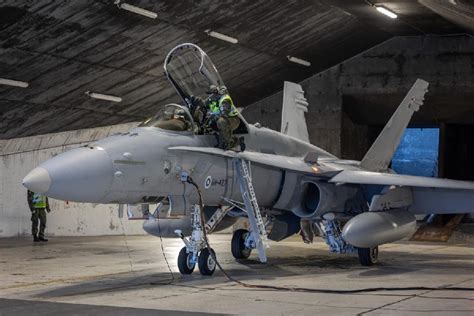
The Hornets represent the backbone of Finland’s current air defense capability. Operated by the Karelia Air Wing and Lapland Air Wing, these aircraft conduct daily air policing and defensive counter-air missions to protect Finnish airspace.
Finland has invested heavily in upgrading its Hornet fleet. Modernization programs have significantly enhanced their operational performance through the integration of advanced systems including:
- AN/APG-73 radar, improving target detection and tracking capabilities
- Upgraded electronic warfare suites designed to counter modern threats
- Link 16 tactical data links, enabling secure real-time communication with NATO platforms such as AWACS aircraft
These networked capabilities allow Finnish pilots to receive interception vectors and target coordinates directly from AWACS weapons controllers, dramatically improving response times when unidentified aircraft are detected.
The Hornets are armed with AIM-120 AMRAAM beyond-visual-range air-to-air missiles, allowing them to engage threats well beyond the range of traditional dogfight scenarios. This combination of long-range radar guidance and advanced missiles forms a powerful defensive umbrella across Finland’s extensive airspace.
A Finnish Weapons Controller Joins the AWACS Crew
One of the most notable aspects of the mission was the presence of Master Sergeant Aleksi Härkönen, the first Finnish crew member assigned to the NATO E-3A fleet.
Serving as a weapons controller, Härkönen played a central role in directing fighter operations during the flight. Weapons controllers are responsible for monitoring radar tracks, evaluating potential threats, and assigning interception tasks to fighter aircraft. Their instructions guide pilots toward airborne contacts and ensure that air defense missions are executed with precision.
The participation of a Finnish controller aboard the aircraft illustrates the growing integration of Finnish personnel into NATO’s multinational command structure. Instead of operating solely as a partner nation providing aircraft or territory, Finland is now contributing directly to the operational management of NATO air defense missions.
Such integration strengthens the Alliance’s ability to coordinate air operations across multiple countries and ensures that personnel from different nations operate using shared procedures, communication protocols, and tactical doctrine.
Finland’s Strategic Geography in NATO’s Northern Defense
Finland’s geographic position significantly enhances the operational value of NATO’s airborne surveillance missions.
The country shares a 1,340-kilometer border with Russia, making it one of NATO’s longest direct land frontiers with the Russian Federation. Its territory also lies between the Baltic Sea region and the Arctic, two areas that have grown increasingly important in modern security planning.
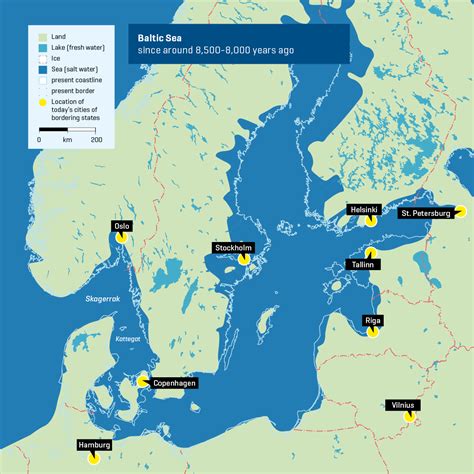
From high-altitude patrol positions above Finland, AWACS aircraft can monitor air activity across:
- Large sections of the Baltic Sea
- The Gulf of Finland, a vital maritime corridor
- Airspace near northwestern Russia
Depending on radar coverage and flight positioning, these surveillance missions provide insight into movements across areas linked to Russia’s Northern Fleet and Arctic military infrastructure.
Particularly significant is the Kola Peninsula, located not far from Finland’s northeastern border. The region hosts major Russian military installations including:
- Bases of the Russian Northern Fleet
- Long-range naval aviation units
- Advanced surface-to-air missile systems protecting strategic facilities
Monitoring activity around this region has long been a priority for NATO surveillance missions, and Finnish airspace provides an advantageous vantage point for such operations.
Expanding NATO’s Air Surveillance Network Since 2022
Since Russia’s full-scale invasion of Ukraine in 2022, NATO has significantly expanded airborne surveillance operations along its eastern flank. AWACS aircraft have regularly conducted patrols above Poland, Romania, the Baltic states, and the Black Sea region, providing continuous monitoring of military activity near NATO borders.
The introduction of AWACS missions over Finland extends this surveillance network further north. This expansion strengthens NATO’s ability to detect and track military aircraft operating in areas that previously lay outside the Alliance’s routine airborne patrol zones.
The mission over Finland also served as a rehearsal for deeper integration expected in the coming years as Finland continues modernizing its air force.
Preparing for the Future Arrival of Finland’s F-35A Fleet
Finland is currently preparing for one of the most significant modernization programs in its military history: the introduction of the F-35A Lightning II stealth fighter under the HX fighter replacement program.
The F-35 is designed to operate as part of a network-centric combat ecosystem, sharing sensor data with allied aircraft, ships, and command platforms. When integrated with NATO AWACS systems, the F-35’s sensors and stealth capabilities will dramatically expand the Alliance’s air surveillance and strike potential.
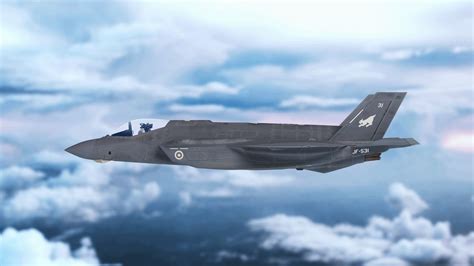
Once operational later this decade, Finnish F-35s will be able to exchange targeting data with AWACS aircraft in real time while operating deep within contested airspace. This capability creates a powerful combination: AWACS aircraft providing strategic oversight and command coordination while stealth fighters execute tactical missions on the front line.
The operational mission flown in March 2026 therefore represents an early building block in a much larger transformation of NATO’s northern air defense architecture.
A New Era of Integrated Nordic Air Defense
The successful AWACS mission over Finland demonstrates that NATO’s airborne command platforms can now operate seamlessly within Finnish airspace while coordinating directly with Finnish interceptor forces.
As cooperation deepens among Finland, Sweden, Norway, and other NATO allies in the Nordic region, the Alliance is steadily building a highly integrated network of radar systems, fighter aircraft, and airborne command platforms capable of monitoring and defending the vast northern frontier.
For NATO strategists, the significance is clear. The northern flank—once a peripheral theater during the Cold War—has reemerged as a central component of European security. With Finland now fully integrated into the Alliance’s surveillance and command network, NATO’s ability to maintain continuous airspace awareness across the Arctic and Baltic regions has entered a new phase.
The first operational AWACS mission over Finnish territory was not merely a demonstration flight. It was a signal that NATO’s air defense system now extends deeper into the north, supported by new allies, new infrastructure, and a rapidly evolving network of airborne command capabilities.