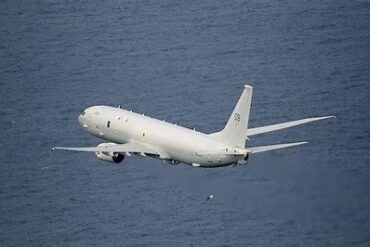
On December 29, 2025, the U.S. State Department formally approved a substantial $1.8 billion Foreign Military Sale (FMS) of P-8A Poseidon maritime patrol aircraft to Denmark, marking a pivotal advancement in transatlantic defense alignment. As geopolitical tensions rise across the Arctic and Baltic regions, the deal underscores Denmark’s strategic ambition to modernize its maritime capabilities and fortify NATO’s northern defense perimeter.
Denmark’s Strategic Leap into Advanced Maritime Surveillance
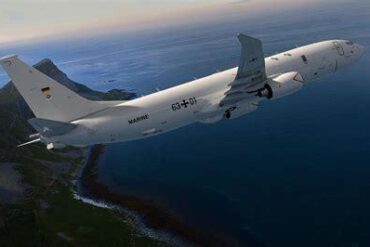
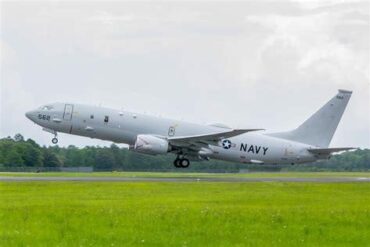
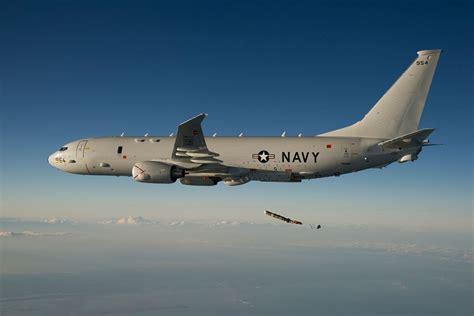
The P-8A Poseidon represents a transformative leap in Denmark’s defense posture. Developed by Boeing and derived from the Boeing 737-800 airframe, the P-8A is a multi-mission maritime patrol and reconnaissance aircraft engineered for superior performance in anti-submarine warfare (ASW), anti-surface warfare (ASuW), intelligence gathering, and search-and-rescue (SAR) operations.
Denmark’s acquisition request includes:
- Three P-8A aircraft
- Advanced communication and encryption systems
- AN/APY-10 multi-mode radar
- MX-20HD electro-optical/infrared (EO/IR) sensor suite
- Electronic warfare equipment and mission software
This robust technological stack ensures Denmark’s defense forces are equipped with real-time situational awareness, operational reach, and interoperability with NATO and U.S. forces, especially critical in dynamic threat environments like the North Atlantic.
Reinforcing NATO’s Northern Maritime Backbone
The Poseidon’s deployment from Danish territory will extend NATO’s undersea and surface surveillance footprint from the strategic Greenland-Iceland-UK (GIUK) gap to the increasingly contested Baltic Sea. In doing so, Denmark moves from a supporting role to a front-line maritime state, equipped to monitor Russian naval activity, protect undersea infrastructure, and support allied task forces.
The approval comes amid heightened Arctic interest and increasing Russian maritime assertiveness. With new shipping lanes emerging due to melting polar ice and vital seabed cables and energy routes exposed to sabotage, the P-8A is viewed as a necessary tool for both deterrence and rapid maritime response.
A Platform Proven Among Allies
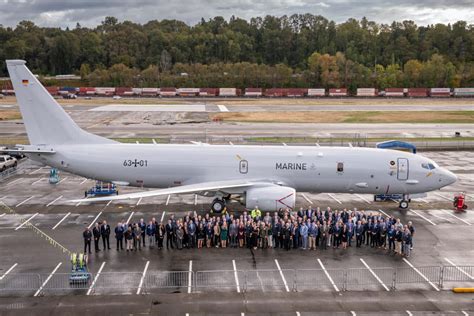
Originally built to replace the P-3 Orion, the P-8A has been operational in the U.S. Navy since 2013 and is now widely fielded by NATO allies and strategic partners including:
- Australia
- United Kingdom
- Norway
- India
- South Korea
The platform’s modular open systems architecture allows frequent software and sensor upgrades, making it future-proof and adaptable to changing missions. Its compatibility with Link 16 tactical data links, NATO C2 frameworks, and high-altitude weapons deployment capabilities elevates its status as a core maritime asset.
Superior Maritime Technology
The Poseidon’s onboard systems make it a standout among its peers. Its radar, the AN/APY-10, is capable of maritime, littoral, and overland surveillance, while the MX-20HD EO/IR turret delivers enhanced ISR performance. Additionally, systems like the AN/AAQ-24(V)N laser warning receiver and electronic support measures give it deep electronic warfare utility.
Compared to rival systems such as the Franco-German C-295 MPA or Japan’s Kawasaki P-1, the P-8A boasts:
- Longer operational range
- Higher weapons payload
- Proven deployment record in high-stakes missions
The Poseidon can carry sonobuoys, torpedoes, depth charges, and air-to-surface missiles, giving Denmark both defensive and offensive reach in contested waters.

Denmark Aligns with Nordic Neighbors
This procurement aligns Denmark with its Nordic peers, notably Norway, which already operates the P-8A. As part of a collective modernization effort across the region, the platform facilitates joint operations, training, and maintenance logistics, maximizing interoperability.
For Denmark, which has lacked a dedicated fixed-wing maritime patrol capability in recent years, the P-8A marks a significant capability regeneration milestone. It demonstrates Copenhagen’s recognition of the changing nature of security threats, particularly in submarine detection and undersea infrastructure protection, two areas increasingly targeted in hybrid warfare scenarios.
Economic and Industrial Dimensions of the Sale
At an estimated $1.8 billion, this deal is one of Denmark’s largest single defense procurements in recent memory. The package includes logistical support, pilot and crew training, maintenance infrastructure, and technical assistance over a multi-year implementation period.
Boeing, as the prime contractor, will lead program execution, working closely with Denmark’s Defense Acquisition and Logistics Organization (DALO). While no industrial offset agreements have been formally announced, these are expected to emerge in subsequent negotiations, likely involving Danish defense industry participation in supply or maintenance chains.
This move mirrors recent P-8A acquisitions by Germany (2023) and Canada (2024), positioning Denmark among a wave of NATO allies enhancing their maritime domain awareness via U.S. platforms.
Strategic Messaging in an Era of Maritime Contestation
The Poseidon deal is not merely a technical acquisition—it is a geopolitical statement. At a time when Arctic security is becoming a focal point of U.S.-NATO coordination and Russian submarine deployments are probing deeper into North Atlantic waters, Denmark’s decision aligns closely with U.S. interests in maintaining freedom of navigation and secure undersea domains.
Moreover, Denmark’s Poseidons will complement U.S. and allied operations at key strategic chokepoints and reinforce patrol coverage across Northern Europe’s critical maritime arteries.

Operational Readiness and Implementation Outlook
Once delivered, Denmark’s Poseidon fleet will require a fully integrated basing, support, and training ecosystem. This could involve upgrades to existing airbases, new maritime command centers, and close coordination with NATO’s Joint Force Command.
The timeline from approval to delivery typically spans 3–5 years, during which Danish crews will likely undergo extensive training programs hosted by Boeing and allied partners already familiar with the platform.
Given the urgency surrounding undersea threat detection and Arctic surveillance, Denmark may also negotiate interim support measures or joint operational rotations with allies such as Norway or the UK to accelerate initial readiness.
Conclusion: Denmark’s Poseidon Deal as a Strategic Inflection Point
The U.S. approval of Denmark’s purchase of P-8A Poseidon aircraft is not just a defense upgrade—it is a defining moment in Northern Europe’s evolving security architecture. The aircraft’s capabilities directly address the maritime challenges of the 21st century, particularly in the Arctic, North Sea, and Baltic domains.
Denmark’s decision reflects a clear-eyed recognition of its strategic geography and the responsibilities that come with it. As transatlantic security priorities increasingly shift toward undersea surveillance, hybrid maritime threats, and power projection across cold waters, Copenhagen is stepping forward with a platform that offers proven capability, alliance interoperability, and long-term strategic relevance.
In the coming years, the Poseidons soaring above Danish waters will symbolize more than just hardware—they will represent a nation’s renewed commitment to safeguarding NATO’s northern flank, protecting maritime lifelines, and reinforcing the credibility of allied deterrence in a contested era.