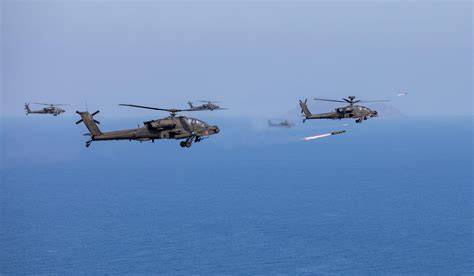
On January 8, 2026, the United States formally approved a $45 million Foreign Military Sale (FMS) to the Kingdom of Denmark, marking a strategic upgrade in Denmark’s maritime strike capabilities. The deal involves the transfer of AGM-114R Hellfire missiles, an advanced class of air-to-surface precision weapons, most likely intended for deployment aboard the Royal Danish Air Force’s MH-60R Seahawk maritime helicopters.
This sale reflects not only a deepening of transatlantic defense ties but also a modernization of Denmark’s aerial strike assets for naval operations. It comes at a time of increasing geopolitical volatility in the North Atlantic and Arctic regions, where Denmark maintains sovereign and strategic interests.
Denmark’s Hellfire Package: Details of the Missile Deal
The approved arms sale includes a comprehensive inventory of weaponry and support systems:
- Up to 100 AGM-114R Hellfire missiles
- Three AGM-114R captive air training missiles
- Six M299 Longbow launchers
- Two MHU-191/M trailers
- Three BRU-14 ejector racks
In addition, the package contains containers, training aids, maintenance and repair equipment, weapon software, documentation, spare parts, and logistics support from both U.S. Government and contractor entities. Importantly, the U.S. confirmed that no American personnel would be required in-country for implementation, and that the transfer will not compromise U.S. defense readiness.
Why the MH-60R Seahawk Is Denmark’s Prime Candidate
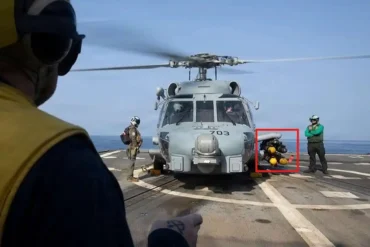
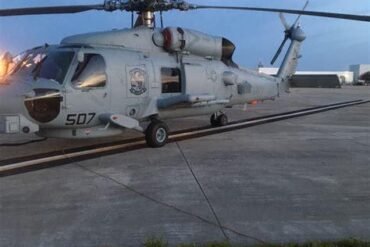
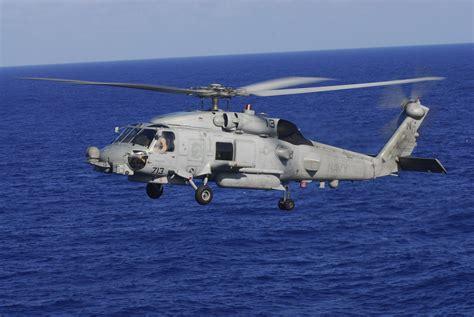
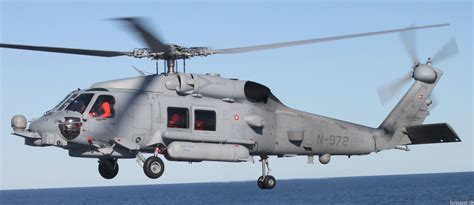
Denmark’s most logical and capable platform for employing the AGM-114R Hellfire is its fleet of MH-60R Seahawk helicopters. The country procured nine MH-60Rs in a 2012 agreement valued at $686 million, with final deliveries completed in 2018. These aircraft are now operational with 723 Squadron at Karup Air Base, supporting operations from Danish frigates and land bases.
Denmark’s Seahawk fleet plays a vital role in multiple mission profiles, including:
- Maritime surveillance
- Anti-submarine warfare (ASW)
- Anti-surface warfare (ASuW)
- Search and rescue (SAR)
- Arctic patrol and transport
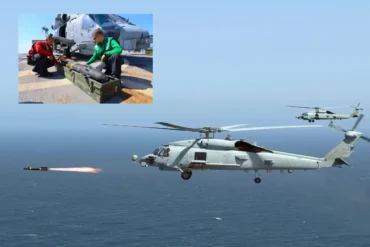
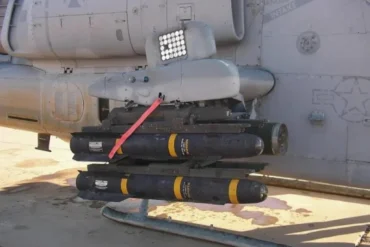
Operating regularly in harsh North Atlantic and Arctic environments, especially near Greenland and the Faroe Islands, the MH-60R offers the ideal launch platform for Hellfire integration. With its four-rail M299 launchers, the Seahawk can carry up to four AGM-114 missiles alongside Mark 54 lightweight torpedoes, forming a balanced and lethal anti-ship and anti-submarine loadout.
Inside the AGM-114R Hellfire: A Precision Strike Powerhouse
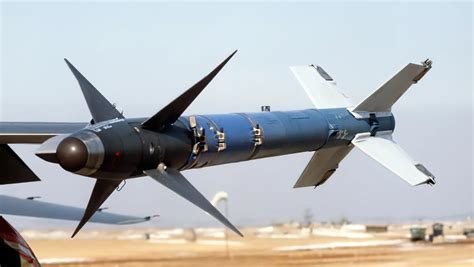
The AGM-114R, or “Romeo variant,” represents the most versatile and capable evolution of the Hellfire missile family. Designed to consolidate several specialized Hellfire II variants into a single, multi-mission system, the R-model offers unmatched operational flexibility.
Key features include:
- Multi-purpose warhead capable of defeating armored vehicles, bunkers, patrol craft, and personnel targets
- Lock-on before or after launch capability, increasing operator safety and tactical options
- Laser-guidance with target reacquisition, even through dust, smoke, water vapor, or sea spray
- Inertial Measurement Unit (IMU) that allows off-boresight engagements and advanced flight shaping
In terms of performance, the AGM-114R can engage targets up to 8.0 km away with a high trajectory or 7.1 km on direct path from a 914 m launch altitude. It weighs 49.4 kg, measures 163 cm in length, and retains the 17.8 cm diameter form factor compatible with existing Hellfire launch systems.
Legacy and Evolution: Hellfire’s Path to Maritime Dominance
Developed in the 1970s to counter the growing threat of Soviet armor, the original Hellfire entered service in the 1980s as a tank-killer. Over time, it evolved into a modular, multi-platform precision weapon adaptable to a wide array of targets.
The advent of Hellfire II in the 1990s introduced improved guidance, more resilient electronics, and diverse warheads. This adaptation enabled use against fixed positions, soft targets, and small boats, especially in asymmetrical combat environments.
With the development of the AGM-114R, Lockheed Martin streamlined logistics by consolidating warhead and guidance systems. Now, a single Hellfire variant can cover multiple mission requirements without switching munitions — a vital feature for fast-paced maritime operations where threats range from small patrol vessels to coastal fortifications.
The Seahawk-Hellfire Synergy: A Tactical Force Multiplier
When combined, the MH-60R Seahawk and the AGM-114R Hellfire form a potent maritime strike solution. The Seahawk’s integrated systems — including AN/APS-153 radar, AN/AQS-22 dipping sonar, and AAS-44C(V) EO/IR sensors — allow it to detect, identify, and engage threats at sea in all-weather conditions.
The helicopter’s AN/ALQ-210 electronic support suite, plus missile warning and countermeasure systems, offer survivability in contested environments. With an operational range of 454 km and a surface warfare mission endurance of over 3 hours, the MH-60R can project force well beyond Denmark’s coastal waters.
Arming the platform with Hellfire missiles equips it to:
- Eliminate fast attack craft or pirate skiffs threatening Danish or allied vessels
- Neutralize land-based radar and missile systems near contested littorals
- Support amphibious or special operations forces with precision close air support
- Deter adversarial activities in the Arctic and Baltic Sea regions
Strategic Significance: Denmark’s Growing Military Footprint
Denmark’s investment in Hellfire missiles is a calculated step to reinforce its maritime domain awareness and response capabilities. As NATO’s northern flank grows more critical amidst rising tensions in the Baltic and Arctic, nations like Denmark are expected to shoulder greater regional responsibilities.
This missile acquisition aligns with broader Danish defense modernization goals, especially in:
- Maritime security operations near the Greenland-Iceland-UK (GIUK) gap
- Counter-piracy patrols and expeditionary missions alongside NATO partners
- Arctic sovereignty assertions, particularly amid climate-induced route openings
- Participation in coalition task forces in global hotspots such as the Red Sea or Persian Gulf
By enhancing the firepower of its Seahawk fleet, Denmark ensures its ability to respond swiftly and decisively in such operations — either independently or as part of multinational naval groups.
U.S.-Denmark Defense Cooperation: A Trusted Alliance
The FMS agreement also underscores robust defense collaboration between Washington and Copenhagen. As two NATO allies with shared values and strategic interests, both countries continue to deepen cooperation in areas like intelligence sharing, Arctic security, and advanced technology integration.
Notably, Denmark’s procurement of interoperable U.S. platforms like the MH-60R Seahawk and now the AGM-114R missile ensures seamless coordination in joint operations. Furthermore, Denmark has demonstrated the logistical and operational infrastructure to absorb new systems quickly, increasing the credibility and readiness of its forces.

Conclusion: A Precision Leap in Denmark’s Defense Arsenal
The approval of this $45 million Hellfire missile deal is more than a weapons transfer — it is a clear affirmation of Denmark’s evolving defense priorities and the importance of allied readiness in an era of hybrid and high-intensity threats. With the AGM-114R Hellfire integrated onto MH-60R Seahawks, Denmark enhances its maritime strike options, bolsters its deterrent posture, and confirms its position as a capable and interoperable NATO force in northern European and Arctic theaters.
As tensions simmer across multiple fronts, strategic weapons like the Hellfire offer nimble, scalable responses — and for Denmark, that could make all the difference in tomorrow’s maritime conflicts.