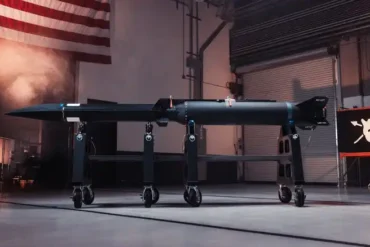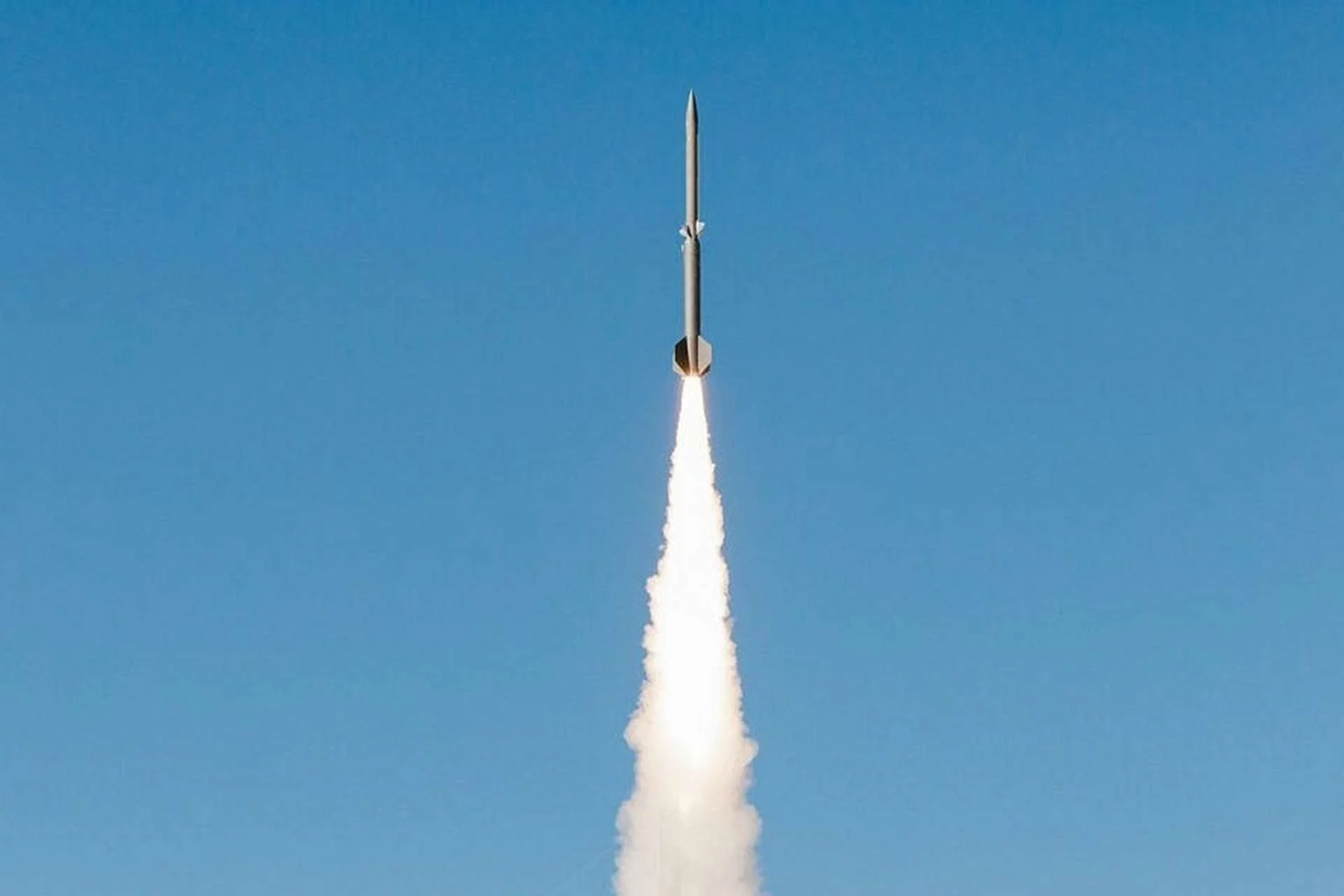
The U.S. Navy has committed nearly $50 million to accelerate development of the Blackbeard hypersonic missile, signaling a deliberate shift toward affordable, scalable strike weapons designed for rapid production and near-term operational deployment. The $49,998,005 firm-fixed-price award to Castelion Corp. funds full-scale prototypes, flight testing, and early fielding efforts through November 2027. More than a research milestone, the contract positions Blackbeard as a practical instrument of combat power—one engineered not only for speed, but for manufacturability and integration across existing U.S. launch platforms.
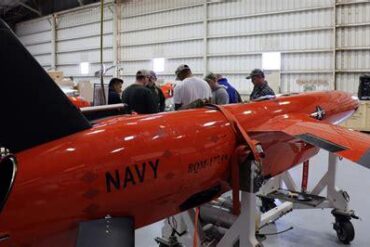
Awarded through the Naval Air Warfare Center Aircraft Division (NAWCAD) in Lakehurst, New Jersey, and executed in Torrance, California, the contract reflects the Navy’s growing emphasis on integrating hypersonic strike into established aviation and launcher ecosystems. NAWCAD’s involvement is particularly notable, as it anchors naval aviation integration and testing infrastructure. That choice suggests Blackbeard’s pathway may include air-launched configurations, aligning with earlier Navy explorations into lower-cost hypersonic strike alternatives following the halt of its HALO air-breathing hypersonic program.
Strategic Pivot Toward Affordable Hypersonic Mass
Hypersonic weapons—defined as systems traveling at speeds exceeding Mach 5 while maintaining maneuverability within the atmosphere—compress the defender’s decision cycle and complicate interception. Unlike traditional ballistic missiles that follow predictable arcs, hypersonic systems maneuver dynamically, reducing radar tracking stability and stressing interceptor kinematics. In practical terms, they move extremely fast and refuse to behave politely.
Yet speed alone is not the decisive variable. The Pentagon’s first-generation hypersonic programs have faced schedule delays, industrial bottlenecks, and integration friction. The Army’s Dark Eagle Long-Range Hypersonic Weapon battery, for instance, experienced multiple slips before projected fielding in early 2026. These realities have forced a reassessment: exquisite capability without scale risks operational fragility.
Blackbeard enters this environment as a counterpoint. Rather than competing with strategic-range hypersonic systems, it is positioned as a lower-cost, mid-tier precision strike option capable of engaging moving or hardened targets while remaining economically viable in meaningful quantities. Army budget documents describe Blackbeard Ground Launch as achieving roughly 80 percent of the planned Precision Strike Missile Increment 4 capability at substantially reduced cost. That tradeoff—slightly less performance for vastly improved scalability—may prove strategically transformative.
HIMARS Compatibility and Distributed Strike Doctrine
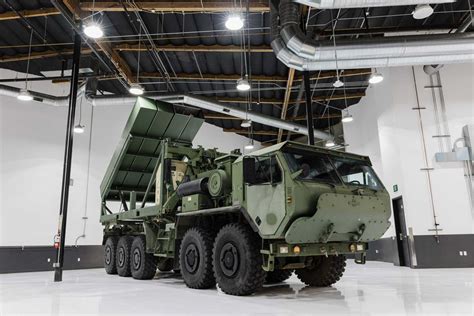
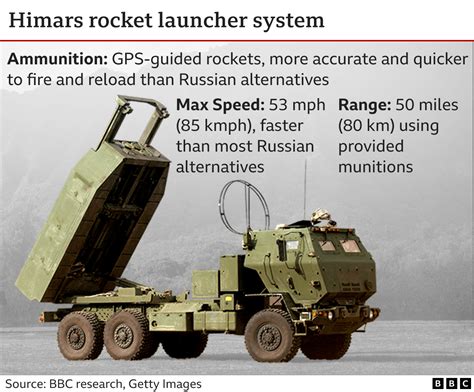
Blackbeard’s potential compatibility with HIMARS-class launchers and MLRS-family pods anchors its operational value in distributed warfare doctrine. Instead of relying on a limited number of strategic launch platforms, the missile is designed for dispersed ground units capable of rapid displacement. A launcher fires, relocates, and reloads before adversary counter-battery systems can respond. This shoot-and-scoot behavior enhances survivability and multiplies firing angles across a contested theater.
Reporting indicates that early demonstrations may involve firing an air-launched extended-range variant from a modified MLRS pod before transitioning to minimum viable ground-launched prototypes instrumented for HIMARS testing. By leveraging existing launcher interfaces and fire-control pathways, Blackbeard reduces integration friction—an engineering detail that often determines whether programs meet timelines or collapse into redesign cycles.
The emerging Common Autonomous Multi-Domain Launcher (CAML) concept further expands the missile’s relevance. Envisioned as an autonomous or optionally crewed platform family, CAML aims to reduce crew exposure and enhance survivability through rapid mobility and concealment. A hypersonic round tailored for such a launcher provides theater commanders with a blend of mobility, precision, and speed that complicates adversary targeting calculations.
Industrial Strategy: Production at Scale
Perhaps the most disruptive aspect of Blackbeard is not aerodynamic but industrial. Developed under a Small Business Innovation Research Phase III pathway connected to a U.S. Air Force topic on highly manufacturable long-range strike systems, the program emphasizes vertical integration of propulsion and guidance components. Castelion leadership has articulated an ambition to produce thousands of units annually at target costs measured in the hundreds of thousands of dollars per missile—a radical departure from multi-million-dollar hypersonic rounds.
This production philosophy borrows from commercial aerospace and space-launch sectors, where rapid iteration and high manufacturing cadence shorten development cycles. Hypersonics, traditionally treated as bespoke engineering marvels, are being reframed as industrial products. The implications extend beyond this single missile. A credible hypersonic deterrent demands depth of magazine, resilience of supply chain, and repeatable test throughput.
Operational Impact: Expanding Target Sets
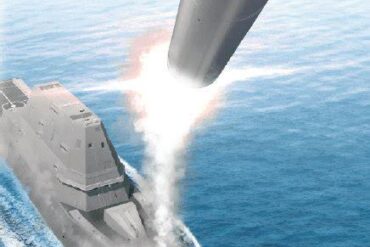
High-cost hypersonics are often reserved for the most heavily defended or strategic targets due to limited inventories. A more affordable system expands commander choice. Theater planners could employ hypersonic salvos for suppression of enemy air defenses, rapid strikes against mobile missile launchers, hardened infrastructure nodes, and maritime targets of opportunity.
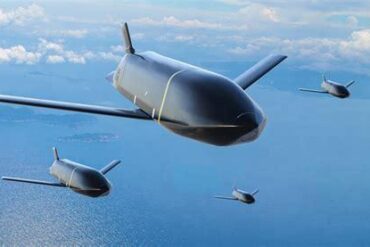
The tactical logic is straightforward. Hypersonic flight reduces time-to-target, leaving adversary command networks minimal reaction windows. Maneuvering profiles stress radar coverage gaps and interceptor engagement envelopes. Combined with dispersed launchers, the result is a layered strike architecture that multiplies uncertainty within adversary defensive planning.
Global Context: Competing Hypersonic Arsenals
The United States is not operating in a vacuum. China is assessed to possess the world’s leading hypersonic missile inventory, including the DF-17, a road-mobile medium-range system equipped with a hypersonic glide vehicle capable of reaching ranges between approximately 1,800 and 2,500 kilometers. The DF-17 is designed to pressure regional bases and naval forces by compressing warning timelines.
Russia continues to promote its Kinzhal air-launched ballistic missile, characterized as nuclear-capable and reportedly within a 1,500 to 2,000-kilometer range class. Moscow has also demonstrated the Zircon hypersonic cruise missile in high-profile exercises, reinforcing its deterrence messaging.
In this environment, qualitative parity is insufficient. Strategic resilience demands scalable capability. A small arsenal of high-end hypersonics may deter selectively, but it does not provide sustained operational leverage in protracted conflict scenarios. Blackbeard represents an attempt to close that gap—not by outpacing Mach numbers, but by multiplying launch opportunities and reducing cost barriers.
Technical Positioning and Program Risk
Technical specifics remain partially protected, but Blackbeard’s positioning suggests a system optimized for atmospheric maneuvering rather than maximum glide range. It is not intended to replace Dark Eagle, nor to compete directly with the Navy’s sea-based Conventional Prompt Strike. Instead, it occupies a tactical-operational niche: faster and more survivable than traditional ballistic or cruise missiles, yet engineered for distributed employment.
The primary risk lies in integration and test cadence. Hypersonic programs historically encounter bottlenecks in flight-test infrastructure, telemetry instrumentation, and range availability. The Navy’s own experience with cold-gas ejection systems for sea-based hypersonic launches illustrates how platform integration can dominate schedule performance. Success for Blackbeard depends on maintaining rapid iteration cycles and proving manufacturability alongside aerodynamic performance.
Toward 2027: Early Operational Fielding
The contract funds development through November 2027, indicating an ambition for early operational experimentation rather than distant conceptual maturity. If flight testing validates performance and integration milestones remain intact, Blackbeard could transition from prototype to deployable capability within the decade.
The strategic calculus is clear. Hypersonic strike is no longer defined solely by peak velocity records or engineering spectacle. It is defined by credible, repeatable availability across dispersed platforms. A missile that can be built in the thousands and launched from mobile units alters deterrence math more profoundly than a handful of record-setting prototypes.
By investing $50 million now, the Navy is betting that affordability and scale will prove as decisive as raw speed. In modern warfare, velocity without volume is a fleeting advantage. Blackbeard’s promise lies in merging both—creating a hypersonic strike option designed not just to outrun defenses, but to outnumber them.