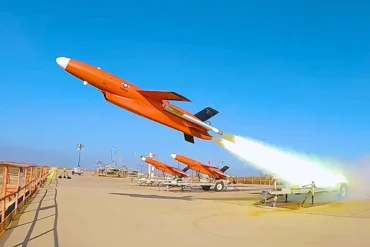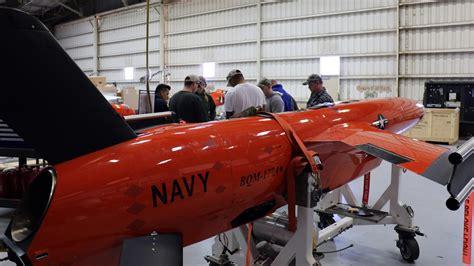
The U.S. Navy has awarded a $13.29 million contract to Kratos Unmanned Aerial Systems to sustain its advanced BQM-177A Subsonic Aerial Target System, reinforcing the backbone of realistic missile defense training. While modest in dollar value compared to major weapons procurement programs, this contract plays a decisive role in maintaining the operational readiness of U.S. naval forces facing increasingly sophisticated anti-ship missile threats.
At its core, the contract focuses on teardown, evaluation, and repair of existing BQM-177A drones, ensuring that these high-fidelity training assets remain available, reliable, and rapidly deployable. This sustainment effort complements the Navy’s recent procurement of 70 additional BQM-177A units, signaling a broader commitment not only to expand inventory but to build a resilient lifecycle support system around these critical training platforms.
The BQM-177A is far more than a target drone—it is a precision-engineered simulation tool designed to replicate the speed, trajectory, and electronic signatures of real-world anti-ship cruise missiles. Its continued sustainment ensures that U.S. Navy crews are not training against outdated or simplistic threats, but against highly realistic adversary profiles that reflect modern combat conditions.
Why the BQM-177A Matters in Modern Naval Warfare
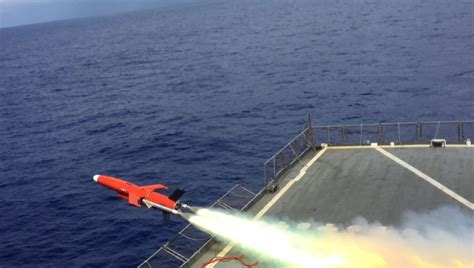
Modern naval combat is increasingly defined by the threat of low-flying, sea-skimming cruise missiles that can evade radar detection and compress response timelines to mere seconds. The BQM-177A was specifically developed to replicate these threats with exceptional fidelity, allowing naval crews to train under conditions that closely mirror real combat scenarios.
Derived from the earlier BQM-167X platform, the BQM-177A achieved full operational capability in 2022 and has since become a cornerstone of U.S. Navy missile defense exercises. Measuring approximately 194 inches in length with an 84-inch wingspan, the drone is capable of flying at speeds approaching Mach 0.95 while maintaining altitudes as low as 6.6 feet above sea level—a flight profile that challenges even the most advanced radar and tracking systems.
This capability transforms routine training exercises into high-stakes simulations, where crews must detect, track, identify, and engage a fast-moving, low-observable target under realistic constraints.
Advanced Threat Simulation Capabilities
What sets the BQM-177A apart is its ability to mimic not just the flight path, but the full sensory signature of an incoming missile. Unlike conventional target drones, it integrates a modular payload architecture that allows it to emulate complex threat environments.
Key configurable features include:
- Radio frequency (RF) signature augmentation to simulate enemy missile seekers
- Infrared plume simulation to replicate engine heat signatures
- Electronic countermeasures (ECM) to challenge defensive systems
- Chaff and flare deployment to mimic evasive tactics
- Tow targets and scoring systems for precise engagement evaluation
This level of realism ensures that shipboard systems—from radar arrays to missile interceptors—respond as they would in an actual combat situation. The drone essentially “tricks” defensive systems into treating it as a genuine threat, forcing crews to execute the full engagement cycle under pressure.
Integration with Aegis and Advanced Missile Systems
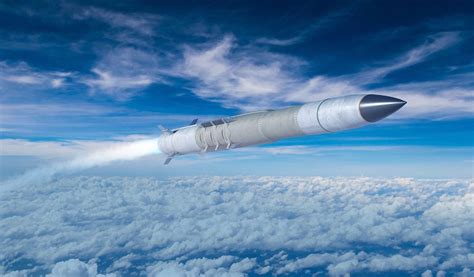
The BQM-177A plays a critical role in validating the performance of the Navy’s most advanced defensive systems, including the Aegis Combat System, SM-2, and SM-6 missiles. These systems form the backbone of U.S. naval air and missile defense, and their effectiveness depends heavily on rigorous, realistic testing.
By serving as a surrogate for hostile missiles, the BQM-177A enables end-to-end system validation, covering:
- Sensor detection and tracking accuracy
- Combat system processing and threat prioritization
- Launcher timing and missile guidance
- Crew coordination and decision-making
- Post-engagement assessment and data analysis
This comprehensive testing environment ensures that every layer of the defense architecture is stress-tested under operational conditions, revealing weaknesses that might otherwise remain hidden until real combat.
Operational Use in Joint and Coalition Exercises
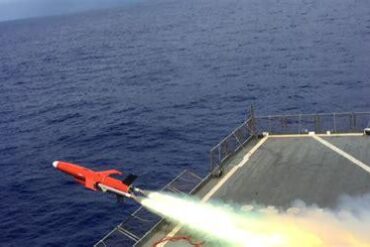
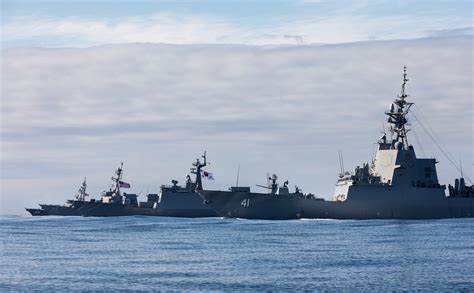
The value of the BQM-177A extends beyond U.S. Navy operations, playing a vital role in multinational exercises and coalition interoperability. One notable example is Pacific Vanguard 2022, where the drone was deployed in the Philippine Sea during a joint exercise involving U.S. and allied naval forces.
Targets launched from the USNS Alan Shepard were successfully engaged by ships including the USS Barry and Australia’s HMAS Perth, marking the system’s first operational use in the Western Pacific. This event demonstrated the drone’s effectiveness in enabling cross-national missile defense coordination, transforming theoretical interoperability into measurable combat capability.
Such exercises highlight the importance of having a shared, realistic threat environment, allowing allied forces to synchronize tactics, refine communication protocols, and validate joint operational readiness.
The Strategic Importance of Sustainment Over Procurement
While new hardware often captures headlines, the March 2026 contract underscores a less visible but equally critical aspect of military readiness: sustainment. Recoverable drones like the BQM-177A are designed to be reused, but their value depends on a robust maintenance and repair pipeline.
The teardown and evaluation process funded by this contract involves detailed post-mission analysis of airframes, propulsion systems, avionics, and mission payloads. Engineers extract performance data, identify wear and failure points, and implement improvements that enhance reliability and reduce lifecycle costs.
This continuous feedback loop ensures that the fleet of target drones remains mission-ready and technologically relevant, even as threat environments evolve. It also allows the Navy to maximize the return on investment for each unit, extending operational life while maintaining high performance standards.
Expanding Capacity and Industrial Readiness
The sustainment contract is closely tied to the Navy’s broader effort to scale up production and availability of realistic target systems. The recent procurement of 70 additional BQM-177A units, along with rocket-assisted takeoff kits, reflects a strategic push to increase both capacity and deployment flexibility.
By investing in sustainment infrastructure alongside production, the Navy ensures that its growing inventory does not become a logistical burden. Instead, it creates a self-sustaining ecosystem where drones can be rapidly cycled through training missions, recovered, repaired, and redeployed with minimal downtime.
This approach strengthens the industrial base, ensuring that manufacturers like Kratos can support not only production but also long-term maintenance and upgrades.
Funding Trends and Readiness Priorities
The importance of aerial target systems is reflected in broader defense spending trends. The U.S. Navy allocated approximately $197.5 million in FY2025 for aerial target procurement and research, development, testing, and evaluation (RDT&E). These investments address longstanding concerns about the availability of realistic, threat-representative targets for live-fire testing.
In an era where adversaries are fielding increasingly advanced missile systems, the ability to train against credible threats is no longer optional—it is a strategic necessity. The BQM-177A program directly addresses this need, ensuring that U.S. forces are prepared for the complexities of modern maritime warfare.
A Critical Component of Deterrence
Beyond its technical capabilities, the BQM-177A represents something more fundamental: the infrastructure of deterrence. Effective deterrence is not მხოლოდ about possessing advanced weapons, but about demonstrating the ability to use them effectively under realistic conditions.
By enabling rigorous training and honest testing, the BQM-177A helps the Navy:
- Identify and address vulnerabilities before they can be exploited
- Build confidence in weapons systems and operational doctrine
- Enhance crew proficiency under high-pressure scenarios
- Strengthen interoperability with allied forces
In this sense, the drone is not just a training tool but a force multiplier, ensuring that every missile system and every crew member is prepared for the realities of combat.
Conclusion: Readiness Built on Realism
The U.S. Navy’s $13.3 million investment in sustaining the BQM-177A fleet may appear modest, but its impact is profound. By prioritizing realism, reliability, and rapid turnaround, the Navy is reinforcing the foundation of its missile defense capabilities.
In a security environment defined by speed, precision, and complexity, training against realistic threats is the difference between theoretical capability and operational effectiveness. The BQM-177A ensures that when the moment comes, U.S. naval forces are not reacting to the unknown—they are executing against scenarios they have already mastered.