When people discuss fuel economy, the conversation usually focuses on cars, trucks, and hybrid vehicles. However, the same principle applies to commercial aircraft. Airlines spend billions of dollars every year on jet fuel, making fuel efficiency one of the most important factors when selecting a new aircraft. While aircraft do not advertise miles per gallon (MPG) in the same way automobiles do, the metric can still reveal fascinating differences between modern passenger jets.
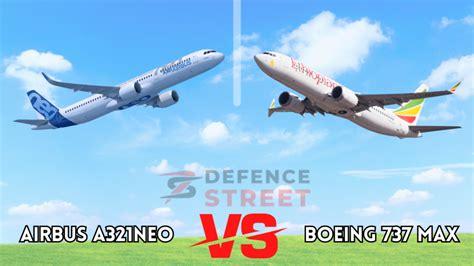
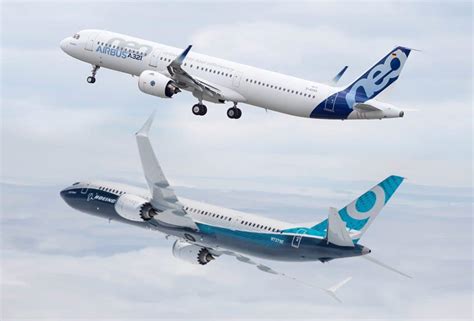
The Boeing 737 MAX and Airbus A321neo represent the latest generation of narrow-body aircraft designed to reduce fuel consumption while carrying millions of passengers worldwide. Both aircraft families use advanced composite materials, aerodynamic improvements, and highly efficient next-generation engines. Yet when fuel efficiency is measured per passenger rather than simply per aircraft, the larger Airbus A321neo often holds an advantage because it carries more passengers while using only slightly more fuel.
Understanding which aircraft gets better MPG per passenger requires looking beyond simple fuel consumption numbers. A smaller aircraft may burn fewer gallons on a flight, but a larger aircraft can transport more people using only a modest increase in fuel. For airlines, the most important question is not just “How much fuel does the aircraft burn?” but rather “How efficiently does the aircraft move each passenger?”
How Aircraft MPG Is Calculated Compared With Cars
For a traditional vehicle, MPG is straightforward: distance traveled divided by fuel consumed. A car traveling 400 miles on 20 gallons of gasoline achieves 20 MPG. Aircraft efficiency is more complicated because airlines must consider passenger capacity, payload, distance, and operational conditions.
The most meaningful aviation equivalent is fuel burn per available seat mile (ASM). This measures how many gallons of fuel are required to move one available seat one mile. A lower number indicates better efficiency.
Another useful way to understand aircraft fuel economy is passenger MPG. This calculation estimates how many miles one passenger can travel using one gallon of fuel. It combines several factors:
- Aircraft fuel consumption
- Number of seats installed
- Passenger load factor
- Flight distance
- Engine performance
- Aircraft weight
Because airlines operate aircraft with different cabin layouts, there is no single MPG number that applies to every Boeing 737 MAX or Airbus A321neo. A densely configured aircraft flying a full flight will always appear more efficient than the same aircraft flying with empty seats.
Airbus A321neo Fuel Efficiency: Why Size Matters
The Airbus A321neo is the largest member of Airbus’ A320neo family and has become one of the most popular narrow-body aircraft in the world. The aircraft entered service in 2016 and introduced improved aerodynamics, new engines, and increased fuel efficiency compared with previous-generation A321 models.
Depending on airline configuration, the A321neo can carry approximately 180 to 244 passengers. Its larger fuselage allows airlines to spread fuel consumption across more passengers, creating excellent economics on high-demand routes.
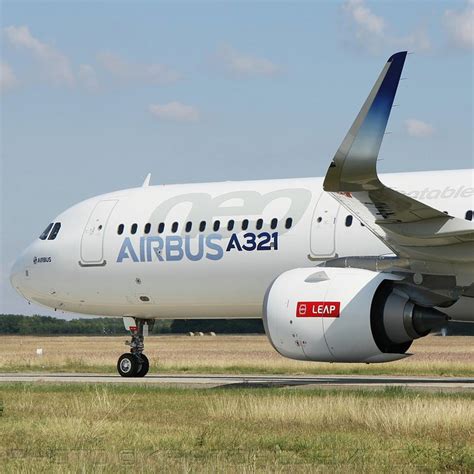
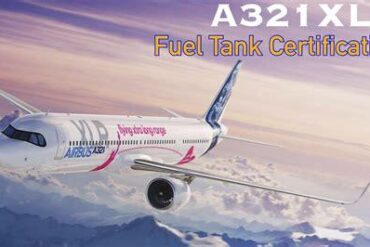
Airbus has demonstrated the aircraft’s long-range capability through test flights exceeding 4,700 nautical miles while carrying a passenger-equivalent payload. This capability has helped create the new long-range narrow-body category often called the “XLR market,” allowing airlines to replace larger wide-body aircraft on some routes.
Independent analysis comparing the A321neo with older aircraft shows that the A321neo can achieve approximately 31% to 39% better seats-per-gallon efficiency than the Boeing 737-800. Its advantage comes primarily from carrying more passengers rather than dramatically lower fuel burn.
The A321neo’s larger capacity is especially valuable on routes such as:
- Transcontinental flights
- Busy regional connections
- High-frequency business routes
- International narrow-body services
When an airline can consistently fill the aircraft, the A321neo’s fuel efficiency advantage becomes increasingly significant.
Boeing 737 MAX Fuel Economy: Efficient but Smaller
The Boeing 737 MAX family was designed as Boeing’s response to the Airbus A320neo family. The most common version, the 737 MAX 8, uses the CFM International LEAP-1B engine and incorporates new winglets, improved aerodynamics, and lightweight materials.
The 737 MAX 8 typically seats around 150 to 178 passengers, depending on airline configuration. Like the A321neo, it provides major fuel savings compared with previous-generation aircraft.

Compared with the Boeing 737-800, the 737 MAX 8 improves fuel efficiency by approximately 15% to 24% in seats-per-gallon measurements. While this is a significant improvement, it generally does not match the A321neo’s advantage because the Boeing aircraft carries fewer passengers.
However, the 737 MAX has a different operational philosophy. Boeing designed the aircraft to provide excellent economics for medium-demand routes where a larger aircraft may not be necessary.
For airlines operating routes with inconsistent demand, the 737 MAX can be more efficient in real-world operations because it avoids flying too many empty seats. An aircraft that burns slightly more fuel per passenger at full capacity may actually become less efficient when demand is weak.
Real Route Data: Boeing 737 MAX vs Airbus A321neo
A practical comparison can be seen on routes where both aircraft operate similar missions.
On the Boston to Toronto route, an Airbus A321neo equipped with CFM LEAP-1A engines carried approximately 170 seats and used around 1,060 gallons of fuel. The Boeing 737-8 carried about 150 seats and consumed roughly 989 gallons.
At first glance, the Boeing aircraft appears more efficient because it burned less fuel. However, once passenger capacity is considered, the Airbus aircraft achieved better fuel efficiency because it transported more passengers over nearly the same distance.
The same pattern appeared on the longer Boston to Seattle route. The A321neo carried more seats and more payload while producing lower fuel burn per available seat mile.
The important lesson is that total fuel consumption and passenger fuel efficiency are not the same measurement. A larger aircraft can consume more fuel overall but still use less fuel per passenger.
Estimated Passenger MPG: Which Aircraft Wins?
When converted into a car-style MPG measurement, modern narrow-body aircraft achieve surprisingly high numbers because they carry so many passengers.
A Boeing 737 MAX 8 flying with a full passenger load can achieve roughly 90 to 110 passenger miles per gallon, depending on route length, seating configuration, and operating conditions.
The Airbus A321neo, because of its larger seating capacity, can often achieve approximately 100 to 120 passenger miles per gallon under similar conditions.
These figures are estimates rather than official manufacturer ratings because airlines configure aircraft differently. A premium-heavy cabin with fewer seats will reduce passenger MPG, while a high-density economy layout will improve it.
For comparison, a typical passenger car carrying one person might achieve 30 to 40 miles per gallon. When aircraft efficiency is measured per passenger rather than per vehicle, modern commercial aviation is much more fuel-efficient than many people expect.
Why Airlines Still Choose The Boeing 737 MAX
Although the A321neo often wins in passenger fuel efficiency, airlines do not select aircraft based on MPG alone. Aircraft purchasing decisions involve thousands of operational factors.
The Boeing 737 MAX remains extremely popular because of several advantages:
Lower Trip Costs
A smaller aircraft generally burns fewer gallons on a flight. For routes where demand does not justify a larger aircraft, the MAX can provide lower total operating costs.
Fleet Commonality
Airlines already operating Boeing 737 aircraft can transition to the MAX with fewer expenses. Existing pilots, maintenance facilities, spare parts, and training systems reduce the cost of introducing a new aircraft.
Carriers including Southwest Airlines, United Airlines, and Ryanair have large Boeing 737 fleets, making the MAX family a natural continuation of their operations.
Airport Flexibility
The 737 MAX performs well at airports with shorter runways or challenging environmental conditions. Its smaller size can also make it easier to schedule during periods of lower demand.
Why The Airbus A321neo Continues To Gain Market Share
The A321neo has become especially attractive because airlines increasingly want aircraft that can replace older wide-body jets on medium-distance international routes.
Its advantages include:
- More passenger capacity
- Lower fuel burn per seat
- Longer range capability
- Strong revenue potential on busy routes
Airlines flying between major cities often prefer the A321neo because filling 200-plus seats allows them to maximize revenue while keeping fuel costs under control.
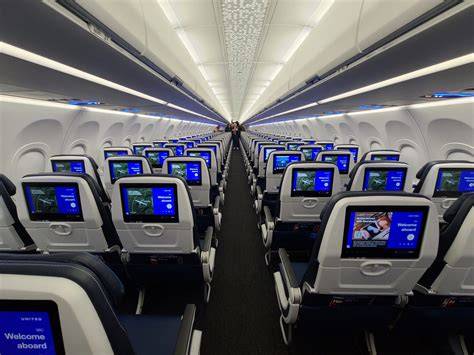
The aircraft has become a favorite among airlines seeking a balance between narrow-body efficiency and near-wide-body capability.
The Final Verdict: Airbus A321neo Wins MPG Per Passenger, But The 737 MAX Remains Competitive
When measuring fuel efficiency per passenger, the Airbus A321neo generally achieves better MPG than the Boeing 737 MAX. Its larger passenger capacity allows it to distribute fuel consumption across more travelers, creating stronger seat-mile economics.
However, the Boeing 737 MAX remains a highly efficient aircraft and can be the better choice for airlines operating lower-demand routes. A half-empty A321neo may be less efficient than a full 737 MAX, proving that aircraft economics depend heavily on network strategy.
The difference between the two aircraft highlights a key principle of modern aviation: the most fuel-efficient airplane is not always the one that burns the least fuel. It is the aircraft that moves the most passengers using the least fuel for the specific mission.
For airlines operating crowded routes, the Airbus A321neo’s passenger MPG advantage is difficult to ignore. For carriers prioritizing flexibility, lower trip costs, and fleet simplicity, the Boeing 737 MAX remains one of the most efficient narrow-body jets available today.