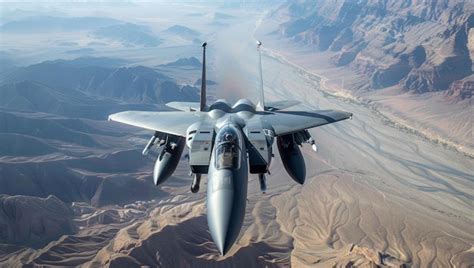
The McDonnell Douglas F-15 Eagle, a twin-engine, all-weather tactical fighter aircraft, is revered for its power, speed, and combat pedigree. But when it comes to fuel efficiency, the F-15 is a notoriously thirsty machine. Unlike passenger vehicles, where fuel economy is measured in miles per gallon (MPG), aircraft—especially military jets—typically calculate fuel in pounds per hour. However, for ease of public understanding, F-15 fuel consumption can be roughly converted into gallons per mile, revealing staggering numbers that underscore the logistical complexity of air superiority.
The F-15 Eagle: A Fuel-Guzzling Legend
Since its introduction in the 1970s, the F-15 has evolved through several variants—from the original air superiority-focused F-15A to the more versatile F-15E Strike Eagle and the cutting-edge F-15EX II. Powered by either Pratt & Whitney F100 or General Electric F110 engines, the F-15 was never designed with efficiency in mind. Its mission priorities are raw power, high-speed engagement, and survivability, not fuel economy.
Each F-15 comes equipped with two afterburning turbofans, delivering up to 58,000 pounds of thrust. The trade-off for this unmatched performance is a fuel burn rate that would make even the largest SUVs blush.
Fuel Consumption at Transonic Speeds: The ‘Sweet Spot’
At transonic speeds—approximately Mach 0.9 (600 mph)—the F-15 operates in its most efficient state. Flying at altitudes between 30,000 and 40,000 feet, and without afterburners, a clean-configured F-15 (without external fuel tanks or heavy weapons) burns about 900 gallons per hour, translating to 1.5 gallons per mile.
This consumption increases significantly when the jet is fully loaded. Add missiles, bombs, and external fuel tanks, and the hourly burn rate climbs to 1,080 gallons, or 1.8 gallons per mile. While this might seem relatively efficient for a jet fighter, it pales in comparison to commercial jets or turboprop aircraft.
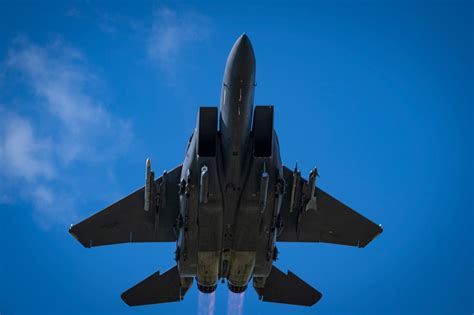
Supersonic Speeds: Speed at the Cost of Sanity
The situation changes drastically when the F-15 breaks the sound barrier. At Mach 1.5 (around 1,100 mph), the clean-configured F-15 drinks approximately 6,000 gallons of fuel per hour—or 5.45 gallons per mile. A max-loaded configuration spikes this to 7,200 gallons per hour, or 6.55 gallons per mile.
This immense rate of consumption is why fighter jets rarely sustain supersonic speeds in combat. Fuel capacity quickly becomes a limiting factor, curtailing the aircraft’s ability to stay on station or return to base without refueling.
Maximum Performance: Afterburners at Full Throttle
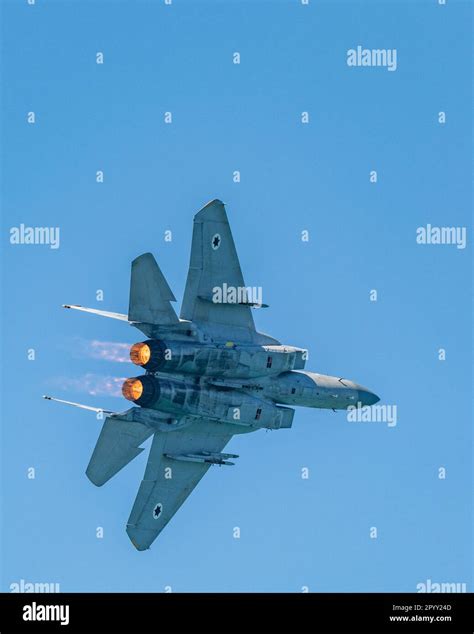
Activating afterburners unleashes the F-15’s full power, allowing it to hit Mach 2.5. However, this comes at an astronomical cost. With afterburners at full tilt, the F-15 consumes around 14,925 gallons per hour clean, or 9.05 gallons per mile. Fully loaded, those figures balloon to 17,910 gallons per hour and 10.85 gallons per mile.
These numbers highlight a critical operational reality: afterburners are used sparingly, typically during takeoff, supersonic dashes, or intense combat situations. The sheer volume of fuel consumed makes prolonged afterburner usage unsustainable even for the most advanced air forces.
Internal Fuel and Tanker Dependency
The F-15 features an internal fuel capacity of approximately 2,000 gallons. To extend operational range, it can carry external fuel tanks—including low-drag conformal tanks that hug its fuselage, each adding about 750 gallons. Despite these enhancements, the jet’s range remains limited when flying combat sorties, especially at higher speeds.
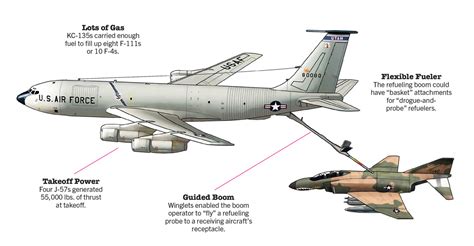
That’s where aerial refueling becomes indispensable. The U.S. Air Force’s massive tanker fleet—particularly the KC-135 Stratotanker and the newer KC-46A Pegasus—forms the backbone of long-range fighter operations. These tankers are the lifeline that allows F-15s to maintain presence over distant battlefields or to strike targets across continents.
Global Tanker Dominance
The United States possesses 605 tankers, accounting for 75% of the world’s aerial refueling capacity. In contrast, Saudi Arabia operates 22, Russia 19, France 16, and China just 10. This stark imbalance significantly limits other nations’ ability to conduct prolonged fighter operations over long distances.
The U.S. Air Force’s unmatched ability to refuel in midair is what enables assets like the F-15 to remain tactically viable across the globe. For adversaries with fewer tankers, jet range and loiter time are dramatically reduced.
Jet Engine Evolution: Thrust vs. Efficiency
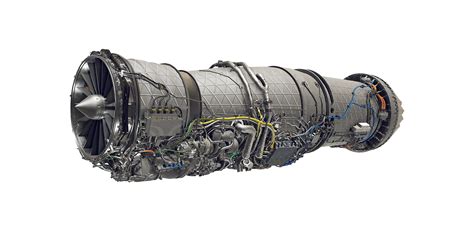
The thirstiness of the F-15 is inextricably linked to its engine architecture. The Pratt & Whitney F100-PW-229, a core engine variant in the F-15E, can produce 29,000 pounds of thrust per engine. The General Electric F110-GE-129, used in the latest F-15EX II, delivers similar thrust while enhancing durability and reliability.
These engines feature afterburning capabilities, wherein fuel is injected post-turbine to boost thrust. While this adds substantial speed, it dramatically increases fuel burn—making it a tactical choice rather than a standard flight mode.
Comparison with Other Fighters
The F-15’s fuel efficiency—or lack thereof—can be contextualized by comparing it to its contemporaries:
- The F-16 Fighting Falcon, a lighter and single-engine fighter, burns about 750 gallons per hour at transonic speeds, offering slightly better efficiency.
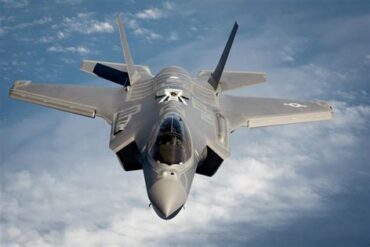
- The F-35 Lightning II, with stealth as its priority, uses around 850 gallons per hour at subsonic cruising speeds. Its design reduces radar visibility, but it sacrifices both speed and range in favor of survivability.
Interestingly, the F-22 Raptor, while stealthy and agile, is actually slower than the older F-15 in top speed. The F-22’s stealth shaping and materials make prolonged high-speed flight a detectability risk, thus imposing an operational ceiling despite its technological superiority.
Operational Realities and Combat Constraints
In real-world missions, F-15 pilots must make strategic fuel decisions based on mission profile, target location, enemy air defenses, and expected duration. When operating deep into enemy territory, external fuel tanks and multiple midair refuels become essential. Even then, mission planners must account for combat maneuvering, which can cause sudden spikes in fuel burn due to rapid altitude shifts and hard turns.
Pilots are trained to return to base with a pre-specified reserve of fuel. As a rule, jets return significantly lighter, having expended both munitions and a majority of their fuel. This lighter state also improves handling and landing safety.
Conclusion: A Champion of the Skies with a Bottomless Stomach
The F-15 Eagle remains a cornerstone of American air power. Its blend of speed, agility, and firepower has made it a feared and respected adversary for decades. But with such elite performance comes a cost—measured not just in dollars, but in gallons. Whether flying a clean transonic patrol or rocketing across the sky with afterburners ablaze, the F-15 consumes fuel at extraordinary rates.
With fuel economy ranging from 1.5 to over 10.85 gallons per mile, the F-15 epitomizes the high price of air dominance. It’s a reminder that air superiority is as much about logistics and support infrastructure as it is about aircraft design. And for every F-15 mission, there’s a tanker overhead making sure the eagle can stay aloft.