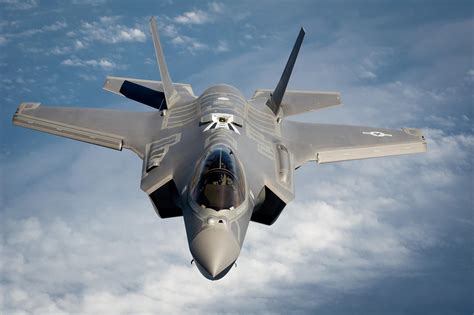
The Lockheed Martin F-35 Lightning II is among the most advanced fifth-generation multirole stealth fighters in service today. Designed not merely as a dogfighting machine but as a formidable networked combat asset, the F-35 prioritizes stealth, intelligence gathering, and multi-domain versatility. Yet, one aspect often overlooked is its fuel efficiency—a metric far more relevant in an era of global deployment and long-haul missions.
Despite not being designed with fuel economy in mind, understanding how many miles per gallon (MPG) the F-35 achieves offers insight into the broader trade-offs between combat power and energy efficiency. Let’s dive deep into the F-35’s fuel consumption figures, operational range, variant differences, and how it stacks up against older platforms.
The Fuel-Guzzling Nature of Fighter Jets
Unlike commercial airliners where fuel economy can make or break a fleet’s profitability, fighter jets like the F-35 are built around mission effectiveness rather than operating cost. These machines burn through fuel at alarming rates to support high speeds, quick altitude changes, and payload flexibility. While widebody airliners strive for 80+ miles per gallon per passenger, the F-35 operates at a fraction of that rate.
According to a widely referenced calculation based on operational data and flight scenarios, the F-35A achieves about 0.416 nautical miles per gallon (nmpg), or approximately 0.48 statute miles per gallon (mpg). This figure was derived from a mission profile involving a 1,180 nautical mile round-trip carrying two 2,000-pound JDAM bombs and two AIM-120 AMRAAMs. With 19,000 pounds of internal fuel (2,836 gallons), the efficiency works out to less than half a mile per gallon.
Real-World Fuel Efficiency and Combat Radius
Fuel efficiency varies considerably based on mission type, altitude, payload, and variant. The combat radius—the distance an aircraft can travel from base, complete a mission, and return without refueling—offers a more meaningful glimpse of operational practicality.
Demonstrated Combat Radius of F-35 Variants:
- F-35A: 669 nautical miles
- F-35B: 505 nautical miles
- F-35C: 670 nautical miles
These figures represent internal fuel use and do not account for additional fuel tanks, aerial refueling, or combat maneuvers. When factoring in the typical fuel load and mission range, a recalculated fuel efficiency for the F-35A based on Lockheed Martin’s older published data (1,520 nm range with 2,836 gallons) offers a higher estimate of 0.536 nmpg.
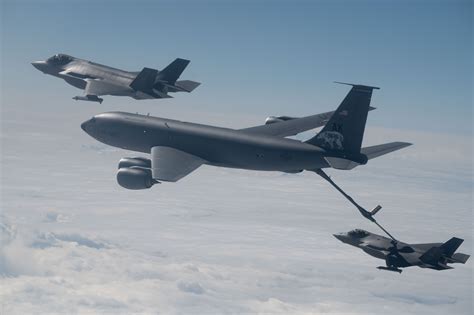
Technical Specifications and Fuel Profile
To further grasp fuel efficiency, it’s essential to understand the F-35’s fuel storage and propulsion system. Below are the baseline figures for the F-35A, the most commonly deployed variant:
- Fuel Capacity (Internal): 18,250 lbs
- Powerplant: 1 × Pratt & Whitney F135-PW-100 turbofan
- Dry Thrust: 28,000 lbf
- Afterburner Thrust: 43,000 lbf
- Max Speed: Mach 1.6
- Range: 1,500 nm (with internal fuel)
- Combat Range (Air-to-Ground): 669 nm
- Wingspan: 35 ft
- Service Ceiling: 50,000 ft
In simpler terms, the F-35 guzzles fuel rapidly due to a high-thrust afterburning turbofan and the weight added by avionics, sensors, and internal weapons bays designed for stealth.
Fuel Efficiency vs Legacy Fighters
To place the F-35’s numbers into historical context, consider the McDonnell Douglas F-4E Phantom II, an iconic Cold War-era jet that served until 1996. The F-4E has a ferry range of 1,457 nautical miles on 1,994 gallons of fuel, translating to about 0.731 nmpg—noticeably more fuel-efficient than the F-35A.
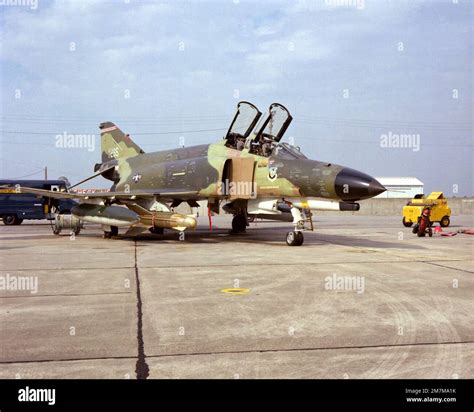
This disparity is expected. The Phantom lacked stealth shaping, advanced radar, and heavy electronic suites. The modern battlefield demands far more than raw speed, and so today’s fighters trade fuel economy for situational awareness, data fusion, and radar invisibility.
While the Phantom flew at Mach 2.23, nearly a full Mach faster than the F-35, it offered a smaller combat radius of just 370 nautical miles, versus the F-35A’s 669. So despite being more efficient per gallon, it couldn’t operate as far into enemy territory without support.
Design Trade-Offs: Performance vs. Efficiency
The F-35 isn’t just one jet but a trio of variants designed to accommodate different launch and recovery scenarios:
- F-35A: Conventional takeoff and landing (CTOL), for air force use.
- F-35B: Short takeoff and vertical landing (STOVL), ideal for marine operations.
- F-35C: Carrier-based (CATOBAR), with reinforced landing gear and larger wings.
Each variant features different fuel loads and airframe tweaks, contributing to efficiency variations:
- F-35A: 2,761 gallons of fuel
- F-35B: 2,015 gallons
- F-35C: 2,948 gallons
These changes reflect their mission envelopes and operating environments. The STOVL B variant trades internal fuel for vertical landing mechanisms, cutting down its range. Meanwhile, the C variant, with carrier support and larger fuel tanks, edges back up in range.
Efficiency in the Age of Long-Range Warfare
One of the most remarkable enhancements to F-35 capabilities lies not in how far it can fly—but how far it can strike. Long-range stealth-compatible munitions like the Joint Strike Missile (JSM) offer combat reach well beyond the aircraft’s radius. With a range of over 150 nautical miles, weapons like the JSM enable the F-35 to stay farther from defended airspace while still delivering precise strikes.
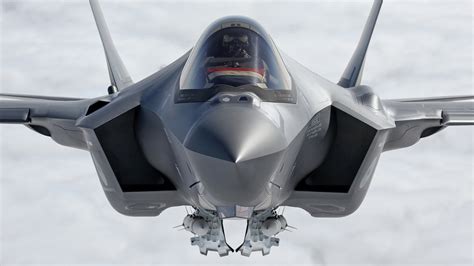
In this context, fuel efficiency becomes less about raw mileage and more about force projection. With aerial refueling assets like the KC-135R or KC-46 Pegasus, an F-35 can stay airborne indefinitely, provided it can rotate pilots and avoid mechanical limits.
Does Efficiency Even Matter for Stealth Fighters?
Ironically, for a fighter like the F-35, miles per gallon is a second- or third-tier concern. Designers are more concerned with how long the aircraft can loiter, whether it can avoid detection, and how accurately it can deliver its payload. As one aviation expert stated, “The only people who really care about fighter jet mileage are the people who design the fuel tanks.”
Even so, there’s evidence that fuel efficiency, at least within mission profiles, has improved. While total gallons burned might be higher than previous fighters, modern avionics reduce the time and fuel wasted in locating targets, navigating hostile airspace, or engaging threats. Every minute saved by onboard sensors and radar absorption means fewer gallons burned on the battlefield.
Final Verdict: Efficiency Is a Trade-Off, Not a Goal
So, how many miles per gallon does an F-35 get? Depending on the mission type, variant, and combat scenario, the number ranges from 0.416 to 0.536 nautical miles per gallon. But perhaps the more relevant figure is how efficiently the F-35 translates fuel into operational advantage. Whether it’s penetrating denied airspace, coordinating a joint strike, or disabling radar before being seen, the F-35 turns jet fuel into combat capability.
This makes its fuel economy a strategic question, not a tactical one. While less efficient than older jets like the Phantom II on paper, the F-35’s advanced systems, stealth design, and missile reach more than compensate. As such, it remains a key pillar of modern air superiority.