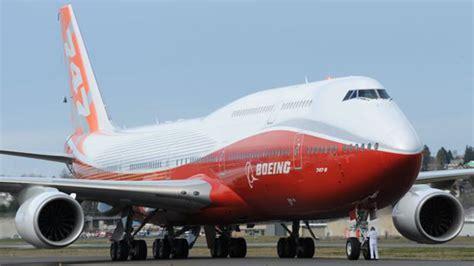
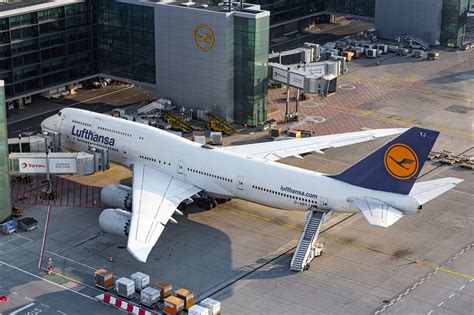
The Boeing 747-8, the final and most advanced iteration of Boeing’s iconic “Queen of the Skies,” stands as a towering symbol of long-haul air travel. As the largest and longest version of the 747 ever built, the 747-8 blends cutting-edge aerodynamics, advanced materials, and modern engines to extend its range and improve operational economics. But despite these technological improvements, one critical question remains: how many miles per gallon does a Boeing 747-8 actually get? In an era where fuel efficiency is a defining factor in both environmental policy and airline profitability, understanding this metric sheds light on the aircraft’s legacy and limitations.
At first glance, attempting to apply miles-per-gallon (MPG) logic—typically reserved for cars—to a four-engine intercontinental airliner may seem absurd. After all, a Boeing 747-8 is a 250-foot-long flying behemoth designed to carry hundreds of passengers across oceans. But with sustainability metrics gaining relevance in global aviation, MPG has become a surprisingly valuable tool to compare efficiency across transportation modes, if interpreted properly.
Understanding the Raw Numbers: Fuel Capacity vs. Range
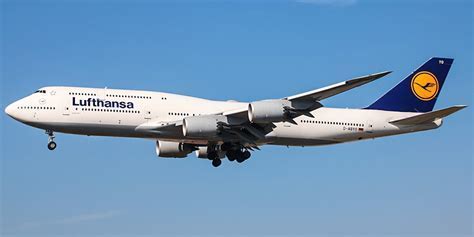
To estimate the Boeing 747-8’s fuel efficiency in miles per gallon, we begin with the aircraft’s fuel capacity and maximum range. According to Boeing, the 747-8 Intercontinental (747-8I) can carry 63,034 gallons (238,610 liters) of jet fuel. Its maximum range is listed at 8,900 miles (14,320 kilometers) when fully loaded with 410 passengers. By dividing range by capacity, we arrive at an approximate figure:
8,900 miles ÷ 63,034 gallons = 0.142 miles per gallon
That’s just 0.142 MPG, which is minuscule by automotive standards. For reference, a mid-sized gasoline car might average 25–30 MPG, while a fuel-efficient hybrid could exceed 50 MPG. Yet this calculation doesn’t paint the full picture of the 747-8’s operational reality.
Comparing Passenger Variants and VIP Configurations
Interestingly, different versions of the 747-8 yield slightly different MPG values. The Boeing Business Jet 747-8 (BBJ 747-8) is a VIP-configured variant carrying around 100 passengers, with a range of 10,213 miles and a slightly smaller fuel capacity than the passenger version. Its fuel efficiency improves slightly:
10,213 miles ÷ 63,034 gallons ≈ 0.162 MPG
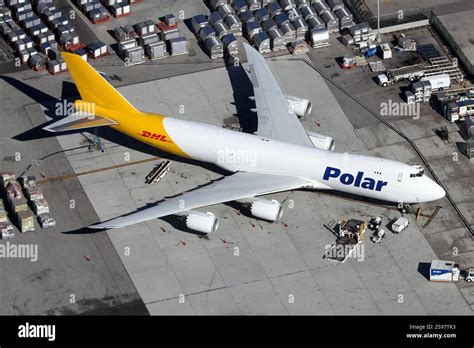
The cargo-focused 747-8F, on the other hand, has a fuel capacity of 59,734 gallons (226,095 liters) and a range of just 4,908 miles, equating to 0.082 MPG—the lowest of the group due to payload-to-range trade-offs.
Why These Figures Aren’t as Bad as They Seem
At first glance, these numbers may appear abysmal. But judging aircraft solely on MPG misses a crucial factor: capacity. The true measure of efficiency in aviation is passenger miles per gallon (PMPG)—how many miles each passenger can be flown per gallon of fuel. Using the 747-8I’s figure:
0.142 MPG × 410 passengers = 58.22 passenger miles per gallon
In comparison, a car carrying only a single occupant would need to achieve 58.22 MPG to match the fuel efficiency of a fully loaded 747-8. Most vehicles on the road fall well short of that benchmark, especially considering that cars are often not fully occupied. When cars carry only one person, the comparative efficiency of large aircraft like the 747-8 begins to make more sense.
Looking Back: Fuel Efficiency in Older 747 Models
To fully appreciate the 747-8’s efficiency gains, it’s worth looking back at the earlier versions of the jumbo jet. The original Boeing 747-100, introduced in the late 1960s, carried up to 48,445 gallons of fuel and had a range of 5,320 miles, leading to:
5,320 ÷ 48,445 = 0.11 MPG
That’s nearly 30% less efficient than the modern 747-8I. The subsequent 747-200B performed marginally better at 0.144 MPG, while later iterations like the 747-300 and 747-400 hovered around 0.139 MPG. The 747SP, a shortened variant for ultra-long-range routes, logged about 0.133 MPG.
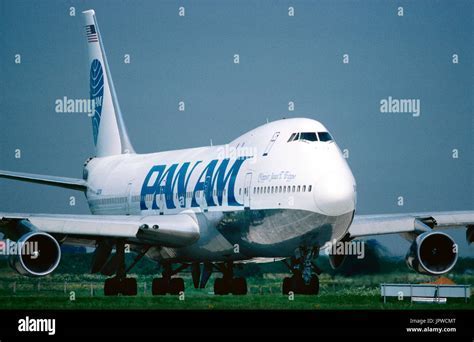
Each generation brought incremental improvements—more aerodynamic wings, more efficient engines, lighter materials—but none matched the refined balance of range and efficiency seen in the 747-8.
The Role of Load Factor in Efficiency
While passenger capacity is a key driver in per-passenger efficiency, the load factor—the percentage of seats filled on a flight—dramatically affects real-world performance. A 747-8I flying at 80% occupancy drops its PMPG to 46.58, while an underbooked flight may render the aircraft economically unsustainable.
This explains why the 747 was historically favored for high-demand, long-haul routes—such as New York to London or Frankfurt to Hong Kong—where full loads could be consistently achieved. But in today’s fragmented air travel market, dominated by twin-engine long-haul aircraft like the Boeing 787 and Airbus A350, filling a 747 consistently is far more challenging.
Operational Challenges and Fleet Trends
Although production of the 747 has officially ended, the 747-8 remains in service in both passenger and freighter roles. As of 2025, there are:
- 31 active 747-8I passenger aircraft
- 6 Boeing Business Jet (BBJ) 747-8s
- 89 freighter-configured 747-8Fs
Despite the decline in numbers, over 10,000 scheduled passenger flights are expected to operate this year using the type, translating to 20.9 billion available seat miles (ASMs). Still, with just three passenger airlines flying it, the writing is on the wall for the 747-8I.
How Altitude, Wind, and Route Impact MPG
Fuel efficiency in aviation is influenced by much more than engine design. The altitude at which an aircraft flies affects fuel burn, with higher cruising altitudes typically resulting in lower air resistance and greater efficiency. However, flying too high can decrease lift, leading to counterproductive outcomes.
Wind conditions also play a significant role. A 2019 study by the Polish Scientific Society of Combustion Engines found that a 40-knot tailwind can reduce fuel consumption by up to 14% versus flying into a 40-knot headwind. This explains why pilots and dispatchers invest significant effort in flight planning to align with prevailing jet streams whenever possible.
The 747-8’s Efficiency vs. Modern Jets
While the 747-8 is vastly improved over its predecessors, it cannot compete with the efficiency of twin-engine widebodies built after 2010. The Boeing 787-9 Dreamliner, for instance, can exceed 100 passenger miles per gallon, thanks to advanced composite construction, fuel-sipping engines, and fewer engines overall.
Similarly, the Airbus A350-900 delivers fuel economy figures that are 25–30% better than the 747-8. This explains why airlines like British Airways, Virgin Atlantic, and Qantas retired their 747 fleets in favor of newer, more economical aircraft. The COVID-19 pandemic only accelerated this transition, highlighting the jumbo jet’s vulnerability during times of suppressed demand.
Contextualizing the MPG Metric
It’s critical to recognize that MPG is an imperfect lens for evaluating aircraft. Aircraft are optimized for long-haul efficiency at cruising speed and altitude, rather than short-hop commuting. Cars, by contrast, operate in far more variable conditions, including traffic, stop-and-go urban driving, and idling.
Additionally, airlines operate under strict weight and balance constraints, ensuring that payload and range calculations are optimized for each flight. This logistical precision helps make up for the raw numbers, which otherwise might look unfavorable.
Conclusion: The 747-8’s MPG Legacy
The Boeing 747-8 may never be described as “fuel efficient” in the automotive sense, but its value lies in transporting hundreds of passengers and thousands of pounds of cargo across continents with reliability and speed. When viewed through the lens of per-passenger efficiency, the aircraft’s 58.22 PMPG makes it a surprisingly respectable performer, especially when fully loaded.
As aviation transitions into a more sustainable era, the 747-8 will likely remain a historical bridge between the fuel-hungry giants of the 20th century and the ultra-efficient jets of the future. And while its place in scheduled passenger service is fading, its legacy—both as a technical marvel and as a symbol of global travel—remains indelible.