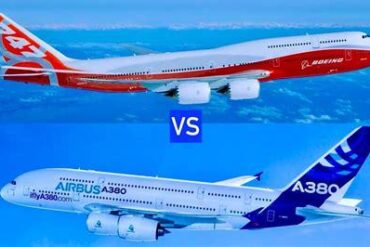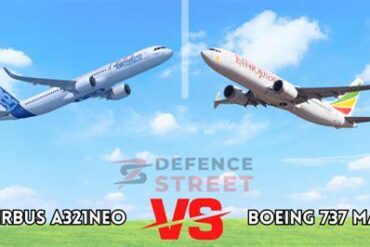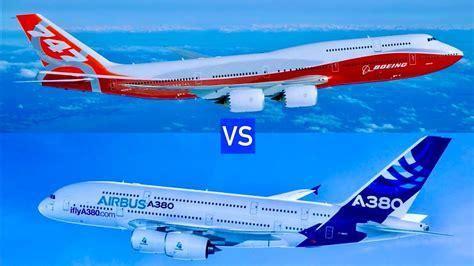
The battle between the Airbus A380 and the Boeing 747 is a duel between eras, philosophies, and engineering schools of thought. These two aircraft are not merely airplanes; they are flying cities, monuments to industrial ambition, and symbols of how humanity conquered intercontinental distance at scale. Yet in the age of climate scrutiny and razor-thin airline margins, romance bows to arithmetic. Miles per gallon—especially miles per gallon per passenger—has become the cold, hard metric that decides fleet strategies, route planning, and aircraft retirements.
Understanding which aircraft delivers better fuel efficiency requires peeling back layers of aerodynamics, engine technology, seating density, route economics, and real-world airline operations. Raw mpg numbers tell one story; per-seat efficiency tells another. And the reality is subtle, conditional, and deeply revealing about how modern aviation thinks.
By the end of this analysis, the picture that emerges is not simply “A380 wins” or “747 wins,” but rather a more nuanced verdict about how aircraft size, design philosophy, and market forces shape fuel economy at the very edge of engineering possibility.
The Jumbo Jet Philosophies: Two Visions of Mass Air Travel
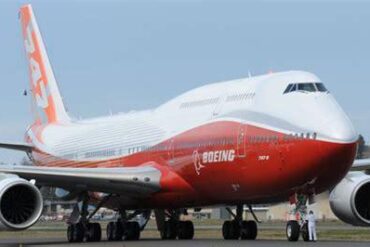
The Boeing 747 emerged in the late 1960s as a radical idea: a widebody aircraft large enough to democratize international travel. It was engineered with cargo flexibility, long range, and future adaptability in mind. The iconic hump was not just aesthetic; it was strategic, allowing cargo doors in the nose and a two-deck cockpit configuration. The 747 was born in a world where fuel was cheap, demand was exploding, and scale was king.
The Airbus A380 arrived decades later with a different worldview. Airbus believed hub-and-spoke megahubs would dominate, requiring enormous aircraft to shuttle massive volumes of passengers between global supernodes. The A380 was designed from the outset as a double-deck passenger behemoth, optimized for high-density routes and modern efficiency standards.
The 747 is evolutionary. The A380 is revolutionary. That philosophical difference is crucial when discussing fuel efficiency.
Raw Miles Per Gallon: Why the Numbers Mislead
On a simple aircraft-level basis, jumbo jets are not efficient compared to smaller aircraft. Both the A380 and 747 burn massive quantities of fuel. Depending on configuration and mission profile, figures often cited suggest the A380 achieves roughly 0.1 miles per gallon, while the 747-400 achieves around 0.2 miles per gallon.
At first glance, this suggests the Boeing 747 is twice as fuel efficient. That conclusion is wrong in any meaningful operational sense.
Aircraft mpg is a misleading metric because these aircraft are designed to carry hundreds of passengers. The relevant measure is miles per gallon per passenger, or fuel burn per seat-mile. Airlines care about cost per available seat mile (CASM), not how far an empty metal tube travels on a gallon of Jet A.
Per-Seat Efficiency: Where the A380 Shines
The Airbus A380 typically carries around 525 passengers in a standard three-class configuration, though it can exceed 800 in high-density layouts. The Boeing 747-400 generally seats around 416 passengers, with newer 747-8 Intercontinental variants seating up to roughly 660 depending on configuration.
Because the A380 carries significantly more passengers for a similar total fuel burn, its per-seat fuel efficiency improves dramatically when full. Typical estimates place the A380 at approximately 74–80 miles per gallon per passenger, compared to around 65–74 for the 747 variants.
That difference may seem modest, but in airline economics, a few percentage points can decide profitability across thousands of flights and millions of passengers.
Aerodynamics and Structural Design: The Physics of Efficiency
Fuel efficiency begins with aerodynamics. The A380 benefits from a more modern wing design, advanced computational fluid dynamics, and extensive wind tunnel optimization. Its wings have high aspect ratios and sophisticated high-lift devices that reduce drag during cruise.
The Boeing 747’s wing design dates back to the 1960s, with incremental updates across generations. While the 747-8 introduced a redesigned wing inspired by the Boeing 787, it still carries legacy design constraints. The A380 also uses more advanced materials and structural techniques, reducing weight relative to size and improving lift-to-drag ratios.
This matters because drag is the enemy of efficiency. Every percentage point of drag reduction translates directly into fuel savings over long-haul missions.
Engine Technology: Quiet Giants with Different DNA
The engines are where decades of progress separate the two aircraft most clearly. The A380 uses either the Engine Alliance GP7200 or the Rolls-Royce Trent 900. These engines feature high bypass ratios, advanced materials, and digital engine controls optimized for efficiency and reliability.
Older 747 variants rely on earlier-generation Pratt & Whitney and General Electric engines with higher specific fuel consumption. The 747-8 introduced the GEnx-2B, a modern turbofan derived from the 787 program, significantly improving fuel burn and narrowing the gap with the A380.
In essence, the A380’s engines were designed in the era of climate awareness and fuel cost sensitivity. The 747’s engines were born in the era of cheap fuel and technological bravado.
Capacity as a Force Multiplier
Fuel efficiency in aviation is often about spreading fixed costs across more passengers. The A380 is unmatched in this regard. Its double-deck design allows enormous seating density without sacrificing cabin comfort. When fully loaded, its per-seat fuel efficiency rivals smaller aircraft.
This is why airlines like Emirates built their business model around the A380. On high-demand routes, filling 500+ seats per flight is feasible, turning the A380 into a surprisingly efficient people mover.
The 747, while large, was never designed for such dense passenger layouts. Its flexibility leaned toward mixed passenger and cargo operations, which can dilute passenger fuel efficiency metrics.
Real-World Operations: Airlines Speak Through Fleet Decisions
Airline executives are ruthless pragmatists. Their fleet decisions reveal how fuel efficiency plays out in reality.
Qatar Airways’ CEO famously called the A380 a strategic mistake, citing high fuel burn and maintenance costs. The aircraft’s sheer size makes it unforgiving when demand dips. A half-full A380 becomes a fuel-economy nightmare.
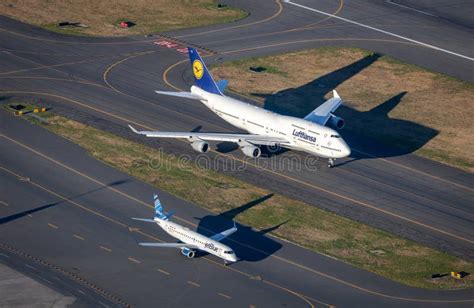
Lufthansa, by contrast, continues operating the 747-8, appreciating its blend of cargo capacity, range, and improved efficiency. The 747’s versatility gives it economic resilience, especially on mixed passenger-cargo routes.
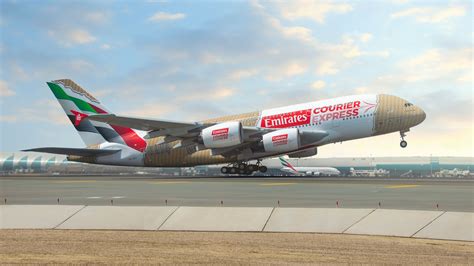
Emirates remains the A380’s greatest champion, operating over 100 units and using them as the backbone of its hub strategy. On routes like Dubai–London and Dubai–Sydney, high load factors make the A380 economically viable and, on a per-seat basis, efficient.
British Airways retired its 747 fleet but kept the A380, signaling that modern quadjets with high capacity can still make sense when deployed precisely.
Flight Length and Mission Profile: Efficiency Is Contextual
Both aircraft are optimized for long-haul operations. Fuel efficiency improves dramatically during cruise, where engines operate at optimal thrust settings and aerodynamic drag stabilizes.
Shorter routes are poison for jumbo jet efficiency. Takeoff and climb burn disproportionate amounts of fuel. On short routes, large aircraft spend too much time climbing and descending relative to cruising, destroying per-seat mpg.
An A380 flying Dubai–Jeddah is far less efficient than the same aircraft flying Dubai–Sydney. Meanwhile, a 747-8 flying New York–Frankfurt operates near its efficiency sweet spot.
The lesson is that mission profile matters as much as aircraft design.
Load Factor: The Tyranny of Empty Seats
Fuel efficiency collapses when seats go empty. A 90% full A380 is a marvel of efficiency. A 60% full A380 is an ecological and financial catastrophe.
A smaller or more flexible aircraft like the 747-8 can outperform a poorly filled A380 on a per-passenger basis. This is why airlines increasingly favor twin-engine widebodies like the A350 and 787: they reduce the risk of flying half-empty giants.
Load factor is the silent variable that turns engineering brilliance into operational folly.
Infrastructure and Ground Handling: Hidden Efficiency Costs
The A380 requires specialized airport infrastructure: dual jet bridges, reinforced runways, and expanded gates. Ground handling takes longer, increasing turnaround times and reducing aircraft utilization.
Fuel efficiency is not just about fuel burn; it is about how many revenue-generating hours an aircraft can fly. If an aircraft spends extra time on the ground, its economic efficiency drops, even if its engines sip fuel politely in the air.
The 747, being smaller and more flexible, integrates more easily into existing infrastructure. That logistical advantage translates into operational efficiency that pure fuel metrics fail to capture.
How Jumbo Jets Compare to Modern Twinjets
In the broader context of aviation, both the A380 and 747 are dinosaurs. Modern twin-engine aircraft like the Airbus A350 and Boeing 787 achieve 85–100 miles per gallon per passenger, dwarfing the efficiency of quadjets.
This is due to composite structures, ultra-high bypass engines, lighter frames, and optimized aerodynamics. Regulatory changes like ETOPS extended twin-engine operational limits, eliminating the safety-driven need for four engines on long-haul routes.
The industry has spoken: twins are the future, quads are relics of a previous paradigm.
Environmental Implications: Beyond Airline Economics
Fuel efficiency directly correlates with carbon emissions. The A380’s per-seat emissions are relatively competitive when full, but its total emissions per flight are enormous. The 747, especially older variants, emits more per seat-mile than modern aircraft.
As regulators tighten emissions standards and carbon pricing mechanisms expand, airlines face increasing pressure to retire inefficient aircraft. The A380 and 747 represent engineering triumphs that arrived just before the industry pivoted toward sustainability.
In the long arc of aviation history, they are transitional giants—bridges between brute-force aviation and optimized efficiency.
Exceptions and Edge Cases: When the 747 Wins
The Boeing 747-8 narrowed the efficiency gap significantly with modern engines and aerodynamic refinements. On routes with high cargo demand, the 747’s nose-loading capability and large belly cargo volume generate additional revenue, improving economic efficiency per flight.
A lightly filled A380 loses badly to a moderately filled 747-8 in per-passenger fuel metrics. Flexibility is fuel efficiency in disguise.
Moreover, the 747’s ability to serve mixed markets without infrastructure upgrades gives it strategic advantages that are not captured in mpg calculations.
Psychological and Market Factors: Why Size Fell Out of Favor
The A380 and 747 were built for a future that did not fully materialize. Airbus bet on mega-hubs; Boeing pivoted toward point-to-point travel with the 787. Market forces favored flexibility over scale.
Fuel efficiency metrics influenced that shift, but passenger preferences, airport congestion, and airline business models were equally decisive. The age of flying palaces gave way to the age of efficient, frequent, and direct flights.
Economic Reality: Fuel Efficiency Is Only Part of the Equation
Airlines care about total cost of ownership: fuel, maintenance, crew, infrastructure, financing, and residual value. Quadjets have more engines to maintain, more systems to inspect, and higher structural complexity.
Even if the A380 edges out the 747 in per-seat fuel efficiency, its maintenance and operational costs often outweigh that advantage. The economics of modern aviation reward lean designs and high utilization.
Fuel efficiency is necessary, but not sufficient.
The Cultural Legacy of the Giants
The 747 democratized global travel and reshaped tourism, commerce, and globalization. The A380 redefined passenger comfort with onboard bars, showers, and unprecedented cabin space.
Their fuel efficiency debates reflect more than engineering; they reflect the shifting priorities of civilization—from expansion to optimization, from spectacle to sustainability.
Verdict: Which Aircraft Gets More Miles Per Gallon?
In pure aircraft-level mpg, the Boeing 747 can appear more efficient. In per-seat fuel efficiency, the Airbus A380 generally edges out the 747, especially when operating at high load factors on long-haul routes.
However, the margin is modest, situational, and overshadowed by modern twin-engine aircraft that dramatically outperform both.
The A380 wins the narrow per-seat efficiency contest among jumbo jets. The 747 wins in flexibility, cargo economics, and infrastructure compatibility. Modern twinjets win the future.
The true lesson is that aviation efficiency is not a single number. It is a complex dance of physics, economics, demand, and strategic foresight. The A380 and 747 were masterpieces of their time, but time has moved on. The skies of tomorrow belong not to giants, but to optimizers.
And yet, when one of these behemoths lifts off, burning thousands of gallons to carry hundreds of humans across oceans, it remains one of the most audacious and beautiful feats of engineering ever achieved by a curious, restless species.