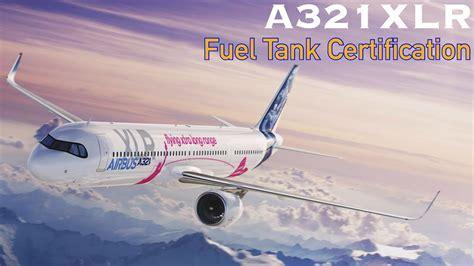
The Airbus A321XLR stands at the forefront of modern aviation technology, uniquely positioned between traditional short-haul and widebody long-haul aircraft. As airlines continue to sharpen their focus on cost and sustainability, the A321XLR’s extended range and notable fuel efficiency offer a compelling solution for routes once deemed economically unfeasible. But when it comes to fuel economy, how exactly does this aircraft stack up in terms of miles per gallon (MPG) — and more importantly, is MPG even the best measure to evaluate an aircraft like this?
The Airbus A321XLR: An Efficiency Powerhouse
Introduced into commercial service by Iberia in November 2024 with a transatlantic flight from Madrid to Boston, the Airbus A321XLR is a long-range narrowbody designed to fly up to 4,700 nautical miles (approximately 5,410 statute miles). Capable of accommodating 180–220 passengers in a typical two-class configuration, the A321XLR is engineered to serve “long, thin” routes — markets that lack the volume to justify widebody aircraft but are too far for traditional narrowbodies.
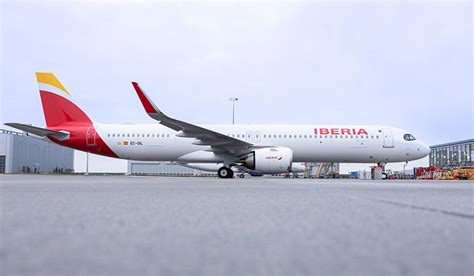
It is equipped with either CFM International LEAP-1A or Pratt & Whitney PW1100G-JM engines, both of which deliver significant fuel savings. Additionally, design enhancements such as advanced winglets (Sharklets), structural weight reductions, and an innovative rear center fuel tank make the XLR the most fuel-efficient variant of the Airbus A320 family.
What MPG Really Means for Aircraft
Unlike in cars, where MPG is a direct and relatively static measure, aircraft MPG is a fluid, context-sensitive metric. The A321XLR’s fuel burn fluctuates based on phase of flight, aircraft weight, weather conditions, altitude, and passenger/cargo load. Therefore, raw MPG numbers are often approximations, and operators usually prefer metrics like fuel burn per seat or cost per available seat-mile (CASM).
Nevertheless, estimating MPG can help provide a sense of scale for non-specialists. The A321XLR burns approximately 900–1,000 gallons of jet fuel per hour in cruise flight. At cruising speeds of Mach 0.78–0.80 (around 500–520 mph), this translates into an aircraft-level efficiency of roughly 0.5–0.6 miles per gallon.

While this number may sound dismal compared to cars, it misses a critical factor: the A321XLR carries up to 220 passengers. When evaluated on a passenger-miles per gallon (PMPG) basis, the A321XLR delivers more than 100 passenger-miles per gallon, outperforming most cars on a per-passenger basis — particularly those with low occupancy.
Passenger Miles Per Gallon: The Real Benchmark
Passenger Miles Per Gallon provides a more equitable and accurate representation of an aircraft’s efficiency. It measures how many passengers are transported one mile per gallon of fuel consumed. Given the A321XLR’s high seating capacity and optimized cruise efficiency, it regularly achieves PMPG ratings in excess of 100.
To put this in perspective, a mid-size car that achieves 30 mpg and carries two passengers delivers only 60 PMPG. A fully occupied XLR more than doubles that performance, all while flying at 35,000 feet across oceans.
This metric also underpins key airline economic decisions. By evaluating PMPG alongside cost per seat-mile, carriers can determine route viability and pricing strategies. The A321XLR empowers airlines to maintain long-haul reach without the high operating costs of larger aircraft, making it ideal for transatlantic routes, secondary city pairs, and new market testing.
Advanced Technologies Powering the XLR’s Efficiency
At the heart of the A321XLR’s fuel performance are its next-generation engines. The Pratt & Whitney PW1100G geared turbofan separates the fan from the low-pressure spool, allowing each to operate at its optimal speed, enhancing thermal and propulsive efficiency. Meanwhile, the LEAP-1A engine from CFM International employs composite fan blades, ceramic matrix composites, and 3D woven carbon fiber to reduce engine weight and fuel consumption.
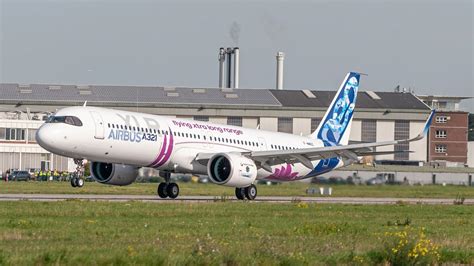
Beyond engines, Airbus has integrated multiple design improvements to maximize performance:
- Sharklets that reduce induced drag
- Integrated Rear Center Tank (RCT) adding fuel capacity without compromising aerodynamics
- Optimized weight distribution for better flight balance
Together, these features reduce overall fuel burn, helping the aircraft achieve its extended range without sacrificing efficiency.
Why MPG Is Still a Flawed Aviation Metric
While aircraft MPG offers a relatable comparison, it is inherently simplistic and misleading for aviation applications. Unlike cars, airplanes do not consume fuel at a steady rate. Takeoff and climb phases demand significantly more power and fuel than cruise, and short-haul flights may have a disproportionately high percentage of these inefficient segments.
Additionally, MPG ignores critical operational variables such as payload, flight routing, winds aloft, and air traffic delays, all of which impact real-world fuel consumption. Airlines instead rely on metrics like:
- Fuel cost per seat-mile
- PMPG for long-term efficiency analysis
- Total mission fuel burn for route planning
MPG might resonate with the public, but for those making fleet and route planning decisions, it offers limited actionable insight.
Operational Impact and Strategic Use of the A321XLR
The A321XLR’s economic advantages have been quickly recognized by global carriers. By using a single-aisle aircraft for long-haul operations, airlines reduce both crew and maintenance costs. This allows them to profitably operate routes that previously would have required a widebody aircraft filled to capacity to break even.
Early adopters like Aer Lingus, Iberia, and American Airlines are already leveraging the XLR to introduce new transatlantic city pairs that bypass congested hubs. This point-to-point model not only reduces costs but also enhances passenger convenience.

Furthermore, the environmental benefits cannot be overlooked. The A321XLR’s fuel burn per seat is significantly lower than many aging widebodies still in service, contributing to lower CO2 emissions per passenger. This aligns with the growing pressure airlines face from regulators and travelers alike to improve sustainability performance.
Final Analysis: Efficiency Beyond a Single Metric
The Airbus A321XLR represents a fundamental shift in how airlines can approach long-range flying. While its MPG — around 0.5 to 0.6 miles per gallon — may not dazzle on paper, it reflects a complex balance of aerodynamic design, advanced propulsion, and mission-specific optimization.
Measured more appropriately by passenger miles per gallon, the A321XLR showcases what’s possible in modern commercial aviation: over 100 PMPG, transatlantic range, and unmatched cost efficiency — all in a narrowbody airframe.
It is a prime example of how focusing on per-seat economics and operational flexibility can allow airlines to offer new routes, enter untapped markets, and meet environmental targets — all while improving the passenger experience. As fuel prices fluctuate and sustainability becomes a critical competitive factor, aircraft like the A321XLR will likely define the next era of efficient long-haul travel.