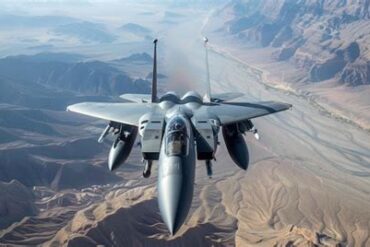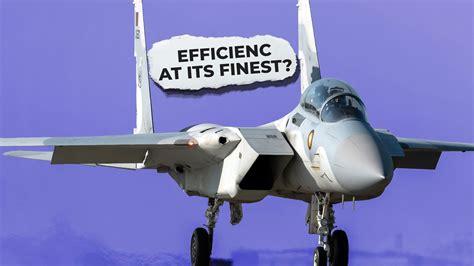
The F-15 Eagle, a cornerstone of American air superiority for decades, boasts incredible power, speed, and battlefield presence—but fuel efficiency is certainly not its strong suit. Unlike commercial or civilian vehicles, where miles per gallon (MPG) is a useful measurement, fighter jets burn fuel with such intensity that even the concept of MPG takes on a dramatically different scale. Still, to satisfy both technical curiosity and public interest, let us break down exactly how many miles per gallon the F-15 gets in a variety of conditions, from cruising at altitude to blazing through the sky with full afterburners.
Understanding Fighter Jet Fuel Use: More Than Just Numbers
While it may seem like a straightforward question, determining the F-15’s fuel economy is complex and context-dependent. Unlike cars, aircraft fuel consumption is typically measured in pounds per hour rather than gallons per mile. For clarity, we’ll use gallons in this article, but the real picture is painted by analyzing multiple variables:
- Speed (transonic vs. supersonic)
- Altitude
- Payload (weapons and external fuel tanks)
- Use of afterburners
- Mission type: patrol, combat, or ferrying
Each of these factors dramatically alters fuel burn. For example, flying low and fast in combat scenarios is far less efficient than high-altitude cruising. Additionally, afterburners, which inject fuel directly into the exhaust stream to produce immense thrust, can skyrocket fuel use tenfold.
F-15 at Transonic Speeds: The Most Efficient Zone
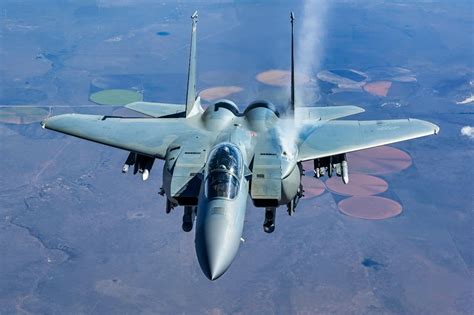
The F-15 becomes relatively more efficient at transonic speeds, typically around Mach 0.9 (600 mph) at cruising altitudes between 30,000 and 40,000 feet. In this “sweet spot,” the aircraft avoids the extreme drag and fuel dump associated with supersonic speeds, while still covering ground swiftly.
In this condition:
- A clean-configured F-15 (no weapons or external tanks) burns approximately 900 gallons per hour, or 1.5 gallons per mile.
- With a full combat loadout, that number rises to around 1,080 gallons per hour, or 1.8 gallons per mile.
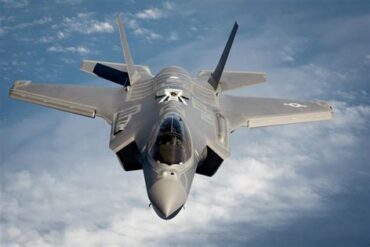
These numbers reflect a more sustainable operational pace, especially for patrol or ferrying missions. Comparatively, the F-16 Fighting Falcon sips fuel at 750 gallons per hour, and even the stealth-oriented F-35 consumes about 850 gallons per hour in similar conditions.
Supersonic Surge: Power at a Price
Once the F-15 pushes past Mach 1, fuel economy takes a dramatic nosedive. Supersonic flight, typically around Mach 1.5 (1,100 mph), is not standard in daily operations due to its steep fuel costs and tactical trade-offs.
- At supersonic speed and clean configuration, the F-15 guzzles fuel at 6,000 gallons per hour, translating to 5.45 gallons per mile.
- A fully loaded F-15 sees these figures rise to 7,200 gallons per hour and 6.55 gallons per mile.
This level of consumption restricts supersonic bursts to brief engagements, such as intercepting enemy aircraft, pursuing a retreating foe, or penetrating contested airspace. Maintaining these speeds for extended missions is tactically and logistically untenable.
Afterburners and Mach 2.5: When Thrust Replaces Efficiency
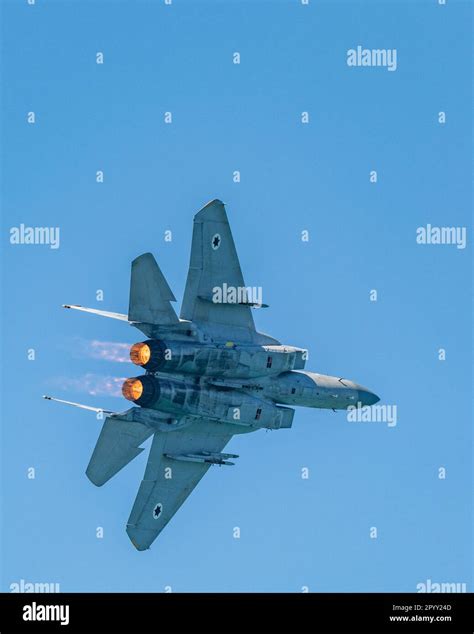
The F-15’s top speed of Mach 2.5 is largely symbolic of its engineering potential rather than a practical combat setting. Activating afterburners unlocks breathtaking acceleration—but at a fuel cost that makes even supersonic flight seem efficient by comparison.
- In clean mode at Mach 2.5, the F-15 consumes a staggering 14,925 gallons per hour, or 9.05 gallons per mile.
- With a full payload, this jumps to 17,910 gallons per hour, or 10.85 gallons per mile.
To put this into perspective: at top speed, the F-15 burns a gallon of jet fuel every 490 feet. That’s equivalent to one Olympic swimming pool’s worth of fuel every few minutes. For this reason, afterburners are typically reserved for emergencies or very short tactical sprints.
Internal and External Fuel Capacity
A standard F-15 carries about 2,000 gallons of internal fuel. This can be extended using:
- Conformal Fuel Tanks (CFTs): Low-drag tanks that carry 750 gallons each, hugging the fuselage with minimal aerodynamic penalty.
- External Drop Tanks: Removable tanks mounted under wings or fuselage for ferrying missions.
- Aerial Refueling: Extends mission time and range significantly, especially vital in long-distance deployments or loiter-heavy operations.
The introduction of these fuel-extension options means an F-15 could be airborne for hours, provided strategic refueling support is available. Nonetheless, the cost in gallons per mile remains the same, regardless of added capacity.
Combat Conditions: Fuel Use in the Fog of War
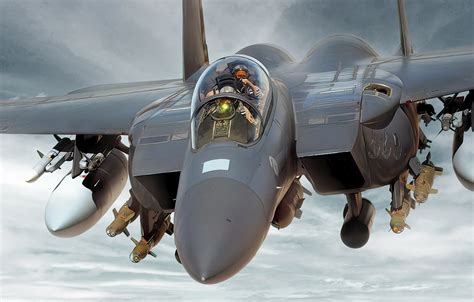
Fighter jets are not operated in vacuumed ideal conditions. During real-world combat operations, fuel usage skyrockets due to aggressive maneuvering, frequent altitude changes, and extended loitering over target zones. Pilots often expend tremendous fuel reserves to:
- Evade surface-to-air threats
- Perform tactical rolls and split-S dives
- Engage multiple bogies across altitudes
- Return quickly to safe airspace
Thus, fuel consumption in combat cannot be accurately forecasted and often surpasses training or ferry benchmarks. Mission planners and tanker aircraft crews must anticipate fluid needs in real time.
Engineering the Beast: Engines Behind the Burn
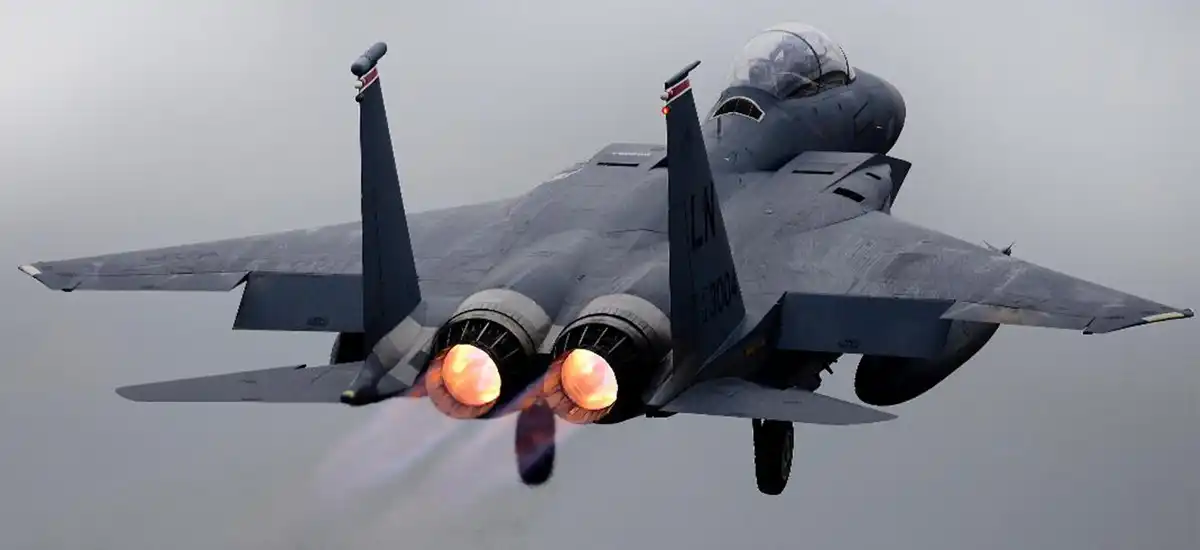
The F-15 series runs on the Pratt & Whitney F100 or General Electric F110 afterburning turbofans. These twin engines are the heart of the jet’s power profile. Depending on the variant:
- F100-PW-220 engines generate 25,000 pounds of thrust each.
- F100-PW-229 upgrades deliver 29,000 pounds each.
- F110-GE-129, used in the F-15EX II, pushes comparable power with modern enhancements.
Together, these engines give the F-15 unparalleled speed, climb rate, and payload capacity. However, that performance carries a steep fuel penalty. The sheer energy needed to keep this “twin-engine titan” aloft at combat speeds dwarfs anything seen in commercial aviation.
Strategic Tradeoffs: Why Fuel Efficiency Isn’t the Goal
It’s crucial to understand that fighter jets are not engineered for fuel efficiency. Their design ethos centers on:
- Thrust-to-weight ratio
- Climb rate and acceleration
- Maneuverability and agility
- Payload versatility
Fuel economy, by contrast, is a secondary or tertiary concern. While modern designs seek improvements in operational efficiency (often via weight reduction, aerodynamic refinements, and more efficient engines), the fundamental mission requirements of fighter jets demand short, intense bursts of power.
Indeed, stealth platforms like the F-35 sacrifice raw speed to preserve radar-evading features. Their design philosophy shifts from outrunning missiles to avoiding detection altogether.
The Bottom Line: How Many Miles Per Gallon Does an F-15 Really Get?
Depending on mission profile and configuration:
- Transonic clean: ~1.5 MPG
- Transonic full load: ~1.8 MPG
- Supersonic clean: ~5.45 MPG
- Supersonic full load: ~6.55 MPG
- Mach 2.5 clean: ~9.05 MPG
- Mach 2.5 full load: ~10.85 MPG
By car standards, even the F-15’s best MPG looks catastrophic. But in the realm of aerospace power projection, this is a calculated and accepted cost. Every gallon burned extends the reach of American air dominance, enabling rapid response, global reach, and tactical supremacy.
Conclusion: Thirsty for Power
The F-15 Eagle is more than a fighter; it is a flying embodiment of raw speed, dominance, and mission readiness. But with that dominance comes fuel-hungry appetite. Whether loitering quietly at high altitude or screaming across the sky in full afterburner, every mile flown carries with it an immense logistical weight in gallons consumed.
As global threats evolve and technology advances, new fighters like the F-15EX and next-gen programs will continue to balance lethality with logistics. But one fact remains unchanged: air superiority has a price—and it’s paid in jet fuel.