As the aviation industry pivots toward fuel efficiency and environmental responsibility, few questions generate as much debate as whether the Airbus A380 or the Boeing 747 offers better miles per gallon (mpg)—especially in an era increasingly defined by high fuel costs and carbon scrutiny.
While both aircraft are iconic and massive feats of engineering, their real-world fuel economy depends on numerous factors beyond raw consumption figures. From seating capacity and engine type to aerodynamic refinements and operational missions, the comparison is more nuanced than it first appears.
Fuel Burn vs. Passenger Miles: Understanding Efficiency Metrics
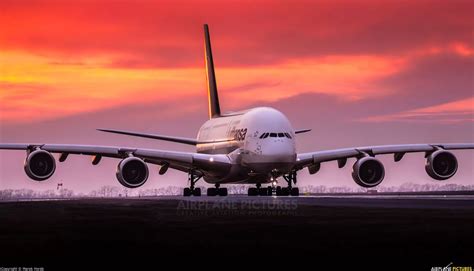
On the surface, raw fuel burn figures might suggest that the Boeing 747, particularly in its 747-400 variant, is more efficient. The 747-400 consumes roughly 3,800 gallons of fuel per hour, translating to an approximate 0.19 mpg. Meanwhile, the Airbus A380, despite being larger, comes in at an estimated 0.1 mpg. However, these figures are misleading when not viewed through the lens of seat-miles per gallon—a far more relevant measure in commercial aviation.
When we factor in passenger load, the A380’s enormous seating capacity of up to 853 in all-economy configuration—or typically around 525 in a standard three-class setup—becomes a major asset. In comparison, the 747-400 seats about 416 passengers. Even with similar fuel burn rates, the A380 spreads that consumption across significantly more people, yielding 74–80 mpg per passenger versus 65–74 for the 747.
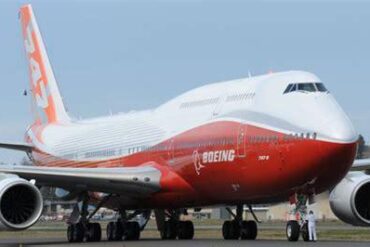
These numbers tighten when comparing the Boeing 747-8 Intercontinental, the latest and most efficient 747 variant. Its updated GEnx-2B67 engines, improved wing design, and higher capacity (up to 660 passengers) give it a fighting chance. Yet even this upgraded model falls just short of the A380 in most scenarios, especially on ultra-long-haul routes.
Aerodynamics, Engines, and Design Philosophy
Aircraft fuel efficiency is dictated by a trifecta of aerodynamic design, engine technology, and mission profile. The A380, developed decades after the 747’s original blueprint, features a supercritical wing, modern composite materials, and advanced flight systems. These refinements minimize drag and optimize lift-to-drag ratios, improving cruise performance.
Equally critical are the engines. The A380 is powered by either the Rolls-Royce Trent 900 or the Engine Alliance GP7200—both known for lower specific fuel consumption (SFC). In contrast, the 747-400’s older Pratt & Whitney PW4000 or GE CF6 engines trail in both power-to-weight and fuel efficiency.
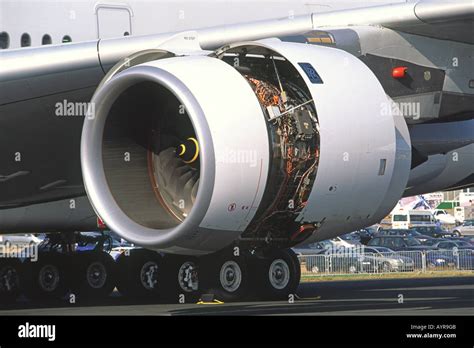
The Boeing 747-8 closes some of this gap with its GEnx engines and lengthened fuselage, but the A380’s modern systems give it the edge, especially when fully loaded. That said, efficiency isn’t fixed—it varies with load factor, cruise altitude, weather, and route length.
Airline Perspectives: Operational and Financial Realities
Real-world operator experience often reveals truths not found in technical manuals. Qatar Airways CEO Akbar Al Baker famously denounced the A380 as “the biggest mistake we ever made,” citing high fuel consumption, maintenance costs, and limited deployment flexibility. Qatar quickly began phasing out its A380 fleet in favor of more efficient twin-engine aircraft like the Airbus A350 and Boeing 787.
In contrast, Lufthansa continues to support its fleet of Boeing 747-8s, using them to serve high-density, intercontinental routes such as Frankfurt to New York. The 747-8 offers better cargo capacity and has fewer airport compatibility issues than the A380.
Then there’s Emirates, the A380’s biggest advocate, which operates over 100 of the aircraft. Emirates’ hub-and-spoke strategy centered in Dubai allows it to maximize the aircraft’s capacity. High seat load factors on routes like Dubai–London and Dubai–Sydney enable the airline to maintain profitability despite higher operating costs.
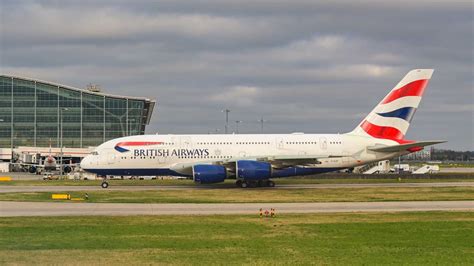
British Airways also offers a unique perspective. Having retired its 747-400 fleet in 2020, it has continued to operate the A380 on select transatlantic and Asian routes. The airline has leveraged the A380’s premium cabin space and high seat density on routes where demand supports it.
The Role of Mission Profile and Route Optimization
Fuel efficiency is rarely about cruising alone. On short-haul routes, both the A380 and 747 suffer due to extended time spent in fuel-intensive climb and descent phases. This is why using an A380 on a route like Dubai to Jeddah significantly undermines its efficiency compared to longer routes where the aircraft can cruise optimally for extended periods.
Conversely, the Boeing 747-8, when assigned to long-distance legs such as New York to Frankfurt, can operate near its optimal fuel performance envelope. Even so, its per-seat advantage still trails the A380 on ultra-long-haul flights with full cabins.
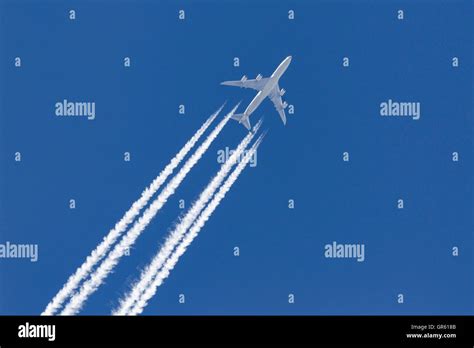
Load factors also shift the calculus. An A380 flying at 60% capacity will inevitably burn more fuel per passenger than a 747-8 flying at 90% capacity, regardless of engineering design. Airlines that can consistently fill the A380—as Emirates often does—unlock its superior economics. But where demand is uneven, the 747-8’s smaller footprint and lower operational demands can make it a safer bet.
Ground Constraints and Airport Compatibility
Beyond fuel economy, the A380 faces logistical and infrastructural hurdles. Its size demands wider taxiways, specialized jet bridges, and extended turnaround times. Not all airports can handle the A380 seamlessly. These requirements add indirect costs that dilute its fuel-per-seat advantage when frequent ground delays or reroutes occur.
The 747-8, though still large, fits within more existing airport frameworks. It requires only modest infrastructure changes compared to the A380, giving it greater route flexibility.
The Bigger Picture: Twinjets Take the Crown
While the A380 marginally outperforms the 747-8 in fuel economy per seat, both aircraft pale in comparison to newer twin-engine widebodies that dominate long-haul fleets today. The Airbus A350-900 and Boeing 787-9 deliver 85–100 mpg per seat, thanks to lighter materials, optimized fuselages, and high-bypass engines.
| Aircraft Model | Typical mpg per Seat | Max Passengers | Key Advantage |
|---|---|---|---|
| Airbus A350-900 | 90–100 | 352 | High efficiency, ultra-long range |
| Boeing 787-9 | 85–95 | 296 | Lower emissions, modern cabin |
| Airbus A380 | 74–80 | 853 | Capacity for dense, high-demand routes |
| Boeing 747-8I | 65–74 | 660 | Versatile, good cargo performance |
In the modern fleet planning environment, quadjets are rapidly fading. Airlines prioritize sustainability and cost efficiency, driving a shift toward twin-engine aircraft that don’t just sip fuel—they redefine the economics of international flying.
Final Take: Who Wins the Miles Per Gallon War?
After weighing the data, the Airbus A380 edges out the Boeing 747-400 and 747-8 in fuel efficiency per seat mile—but only just. Its vast passenger capacity gives it a narrow lead when load factors are high and route profiles are optimized. Still, operational costs, infrastructure demands, and inflexibility temper this advantage.
As aviation enters a new era of environmental awareness and profit-driven optimization, both the A380 and 747 may become more of a niche tool than a fleet staple. The question is no longer which jumbo gets more miles per gallon—it’s whether these majestic quadjets will have any place in the skies of the future.