The Boeing 747 has always been more than an aircraft. It is a flying cathedral of engineering ambition, a Cold War-era technological leviathan that reshaped global aviation economics and cultural imagination in one audacious sweep. By 2026, the Queen of the Skies is no longer the dominant passenger jet it once was, but it has not faded quietly into retirement. Instead, it has migrated into the high-stakes, capital-intensive world of air cargo, where volume, payload, and operational economics matter more than cabin aesthetics and social media buzz. The question of which airline holds the largest Boeing 747 fleet in 2026 is not just trivia—it is a window into how aviation’s industrial backbone is evolving in the age of e-commerce, globalized supply chains, and rapid fleet modernization.
The answer is clear and unambiguous: Atlas Air is the world’s largest Boeing 747 operator in 2026, commanding roughly 15% of all remaining active Jumbos. But the story behind that dominance is layered with strategic decisions, historical timing, fleet economics, and a broader industry trend toward consolidation of aging widebody freighters among specialized operators. To understand why Atlas Air sits at the top of the 747 hierarchy, one must first understand how the Jumbo transitioned from glamorous passenger flagship to industrial cargo workhorse.
The Boeing 747’s production line officially ended in 2023, marking the end of more than half a century of continuous manufacturing. As passenger airlines pivoted toward more fuel-efficient twin-engine widebodies like the Boeing 787, Airbus A350, and upcoming 777X, the 747’s future became increasingly concentrated in freight operations. Cargo carriers, less sensitive to fuel burn per seat and more focused on payload and acquisition cost, found the aging Jumbo to be an economic paradox: inefficient to operate, but remarkably cheap to acquire. This paradox has driven a consolidation effect, where a handful of cargo specialists amassed large fleets and developed deep maintenance and operational expertise, allowing them to keep the type profitable long after passenger airlines abandoned it.
The Airline With the Largest Boeing 747 Fleet in 2026
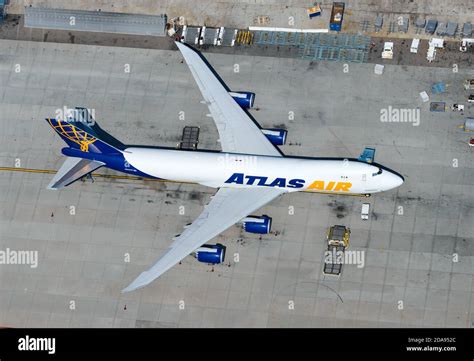
Atlas Air Worldwide Holdings stands as the undisputed global leader in Boeing 747 operations in 2026. According to fleet data from aviation intelligence platforms such as Planespotters.net and ch-aviation, Atlas Air’s fleet includes approximately 65 Boeing 747 aircraft, a mix of classic 747-400 variants and the newer 747-8 Freighter. This scale places Atlas Air far ahead of any other operator, giving it the largest concentration of Jumbos in the world.
This dominance is not accidental. Atlas Air was the final customer to receive a newly built Boeing 747-8 in 2023, symbolically closing the production chapter of the type. Yet, paradoxically, that was not the end of Atlas’s acquisition spree. The airline has continued to acquire second-hand 747s, including both 747-400s and 747-8Fs, as other operators retire or downsize their fleets. This strategy reflects a calculated bet: that global cargo demand, especially driven by e-commerce and supply chain volatility, will sustain the economics of large freighters for decades.
Atlas Air’s Origins and Strategic DNA
Atlas Air’s origins date back to 1992, a time when cargo was often treated as an afterthought by passenger airlines. While legacy carriers focused on belly cargo revenue, Atlas Air built its identity around dedicated freighters and ACMI leasing—Aircraft, Crew, Maintenance, and Insurance—essentially providing turnkey cargo capacity for airlines, logistics firms, and governments. This business model allowed Atlas to scale rapidly without relying solely on scheduled passenger operations, insulating it from cyclical passenger demand swings.
In 1997, Atlas Air placed a significant order for ten Boeing 747-400 Freighters, followed by additional aircraft in 1998. By 2001, Atlas Air Worldwide Holdings was established as a holding structure that encompassed Atlas Air, Polar Air Cargo, and Titan Aviation Leasing. This vertically integrated model gave Atlas control over leasing, operations, and charter services, creating a self-reinforcing ecosystem around large freighter aircraft.
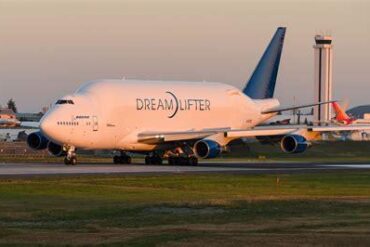
Over time, Atlas expanded into passenger charters, military contracts, and specialized cargo missions, including operating Boeing’s iconic Dreamlifters. These outsized 747 variants transport major components of the Boeing 787 program across continents, making Atlas an integral part of Boeing’s manufacturing supply chain.
A Deep Dive Into Atlas Air’s Boeing 747 Fleet Composition
Atlas Air’s 747 fleet is not monolithic. It is a patchwork of sub-variants that reflect decades of Boeing engineering evolution and aftermarket conversion programs. As of 2026, Atlas Air operates a mixture of older 747-400 variants and the more modern 747-8 Freighters, creating a layered fleet architecture optimized for different mission profiles.
The airline’s inventory includes approximately 47 Boeing 747-400 variants and 17 Boeing 747-8 Freighters, with additional aircraft sometimes wet-leased or temporarily inactive depending on maintenance cycles and market demand. The 747-400 fleet itself is subdivided into multiple specialized types:
- Boeing 747-400 Passenger aircraft configured for charter operations
- Boeing 747-400BCF (Boeing Converted Freighters), originally passenger aircraft converted to cargo
- Boeing 747-400BDSF (Bedek Special Freighters), converted by IAI Bedek Aviation Group
- Boeing 747-400LCF Dreamlifters, uniquely modified to carry outsized cargo
- Boeing 747-400ERF Extended Range Freighters
- Boeing 747-400FSCD factory-built freighters with side cargo doors
The average age of Atlas Air’s 747-400 fleet is nearly 26 years, while the 747-8 Freighters average around 10.6 years, illustrating the generational gap between legacy Jumbos and the final iteration of the type.
The Unique Role of the Boeing 747 Dreamlifter
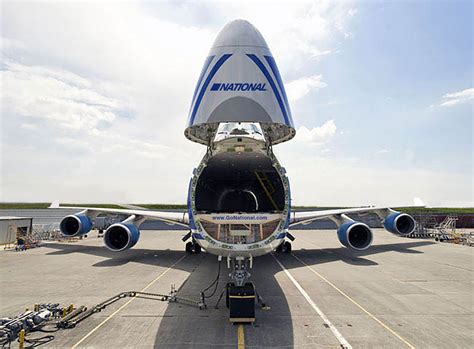
Among Atlas Air’s fleet, the four Boeing 747-400LCF Dreamlifters stand out as some of the most visually distinctive aircraft in the sky. These heavily modified Jumbos feature an enlarged fuselage capable of carrying entire fuselage sections and wings for the Boeing 787 program. Owned by Boeing but operated by Atlas Air, the Dreamlifters are a critical link in Boeing’s global manufacturing chain, ferrying components from Japan, Italy, and Wichita to Charleston for final assembly.
These aircraft are among the oldest in Atlas Air’s fleet, with ages exceeding 33 years, yet their unique mission profile makes them irreplaceable. No other aircraft currently in service matches the Dreamlifter’s volumetric cargo capacity, underscoring why the 747 remains indispensable for certain industrial tasks.
Passenger Jumbos in a Cargo-Dominated Fleet
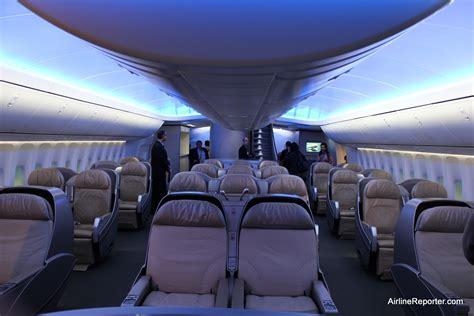
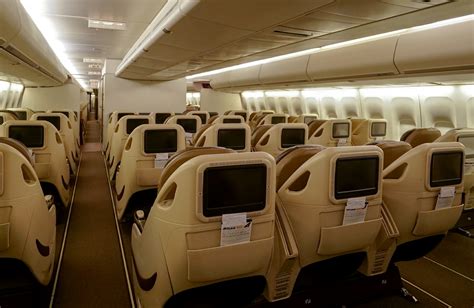
Despite being primarily a cargo operator, Atlas Air also maintains one of the largest remaining fleets of passenger-configured Boeing 747s. Five aircraft are configured for charter service, catering to sports teams, rock bands, corporate groups, and special events. These aircraft feature multiple cabin configurations, including VIP layouts with first-class suites and high-density seating arrangements for large group transport.
Two VIP PLUS aircraft are configured with 189 seats, combining first, business, and economy cabins with modern in-flight entertainment systems and intercontinental range. Another VIP HD aircraft offers 374 seats, while two high-density configurations accommodate up to 453 passengers. These passenger Jumbos highlight a niche market where the 747’s sheer size still provides unmatched logistical efficiency for large groups.
Why Atlas Air Keeps Buying More Boeing 747s
Atlas Air’s continued acquisition of Jumbos after production ended may seem counterintuitive in an era obsessed with fuel efficiency and carbon emissions. However, cargo economics operate on different rules than passenger aviation. Acquisition cost, payload volume, and residual value often outweigh fuel burn considerations, especially when fuel costs can be hedged and passed through to customers.
Since receiving its final new-build 747-8 in 2023, Atlas has acquired 13 additional second-hand 747s, including both -400s and -8s. This strategy allows Atlas to expand capacity at a fraction of the cost of purchasing new freighters like the Boeing 777F or Airbus A350F. Furthermore, by operating a large homogeneous fleet, Atlas benefits from economies of scale in maintenance, spare parts inventory, and crew training.
Global Boeing 747 Fleet Landscape in 2026
Atlas Air’s dominance becomes even clearer when compared to other major 747 operators. As of 2026, the ranking of the largest Boeing 747 fleets roughly follows this hierarchy:
- Atlas Air: ~65 aircraft
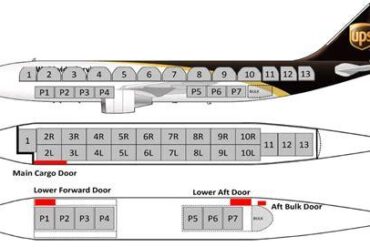
- UPS Airlines: ~43 aircraft (mix of 747-400 and 747-8)
- Cargolux: ~30 aircraft
- Lufthansa: fewer than 27 aircraft
- Kalitta Air: ~22 aircraft
- Cathay Pacific: ~20 aircraft
- Korean Air: ~16 aircraft
- AirBridgeCargo: ~13 aircraft
- Other operators such as Asiana and Silk Way West with smaller fleets
This concentration pattern reflects a broader industry shift: as passenger airlines retire their Jumbos, specialized cargo carriers consolidate the remaining aircraft into large, highly specialized fleets.
The Shrinking Passenger Presence of the Boeing 747
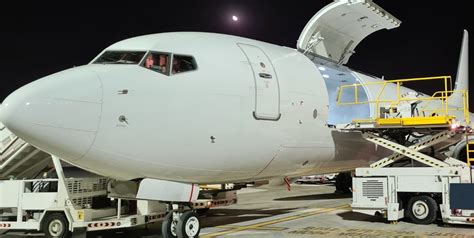
By 2026, scheduled passenger service for the Boeing 747 is approaching extinction. Airlines such as Lufthansa, once iconic operators of the type, have begun selling their 747-8 passenger aircraft, with some units even being repurposed for U.S. government programs like Air Force One and the Survivable Airborne Operations Center. A few outliers, such as Rossiya Airlines, continue to operate 747-400s on domestic routes due to geopolitical constraints and fleet availability issues, but these are exceptions rather than the rule.
This retreat from passenger service underscores the broader transition of the 747 from flagship passenger jet to specialized cargo platform. In many ways, the 747 is following the trajectory of earlier widebodies like the MD-11, which found a second life almost exclusively in freight operations.
The Economics of Keeping an Aging Jumbo Fleet Alive
Operating an aging fleet of 747s is not trivial. Maintenance costs rise with age, spare parts become scarcer, and regulatory requirements grow stricter. However, large operators like Atlas Air mitigate these challenges through scale. By controlling a significant share of the global 747 population, Atlas can stockpile spare parts, negotiate favorable maintenance contracts, and maintain in-house technical expertise that smaller operators cannot replicate.
This dynamic creates a self-reinforcing loop: as more airlines retire their 747s, the remaining aircraft become cheaper to acquire, further strengthening the business case for large-scale consolidation by specialist operators.
The Boeing 747-8 Freighter’s Competitive Edge
The Boeing 747-8 Freighter represents the final evolution of the Jumbo concept. Compared to the 747-400F, it offers a 20% increase in payload capacity and a 16% reduction in fuel consumption, making it one of the most efficient large freighters ever built. Atlas Air’s acquisition of additional 747-8Fs, including aircraft leased from BOC Aviation, demonstrates its commitment to maintaining a technologically modernized Jumbo fleet.
While newer twin-engine freighters like the Boeing 777F and Airbus A350F offer superior fuel efficiency, they cannot match the 747’s nose-loading capability and volumetric capacity for outsized cargo. This unique capability ensures the 747-8F remains relevant for specialized freight missions, from aerospace components to oversized industrial equipment.
The Role of Military and Government 747 Programs
Beyond commercial aviation, the Boeing 747 continues to play a critical role in military and government operations. The United States Air Force has acquired multiple 747-8 aircraft for the VC-25 Air Force One program and the E-4C Survivable Airborne Operations Center. These programs ensure that the 747 platform remains in service for decades, albeit in highly specialized roles.
This government demand also sustains a global ecosystem of suppliers, maintenance providers, and training organizations, indirectly benefiting commercial operators like Atlas Air.
The Future Trajectory of the Global 747 Fleet
As of 2026, approximately 420 Boeing 747 aircraft remain in service worldwide, with around 250 747-400s and 150 747-8s. The number is steadily declining, but not precipitously. Cargo demand, especially driven by e-commerce giants, global manufacturing supply chains, and geopolitical disruptions, continues to justify the operation of large freighters.
Atlas Air’s strategy suggests that the 747 will remain a cornerstone of heavy air cargo operations well into the 2030s. As long as there is demand for outsized cargo and high-volume freight corridors, the Jumbo’s unique capabilities will remain unmatched.
Why Atlas Air’s Dominance Matters in Aviation History
Atlas Air’s position as the world’s largest Boeing 747 operator is more than a fleet statistic. It represents a shift in how aviation power is measured. In the past, flagship passenger fleets defined prestige and influence. Today, cargo capacity, logistics infrastructure, and supply chain resilience are the new metrics of aviation dominance.
By controlling the largest concentration of Jumbos, Atlas Air sits at the center of global heavy air cargo, moving everything from consumer goods and pharmaceuticals to industrial machinery and aerospace components. In a world increasingly dependent on rapid logistics, this role is strategically significant.
The Boeing 747 as a Technological Fossil and Living Machine
The Boeing 747 is both a relic and a living organism in the aviation ecosystem. Its basic design dates back to the 1960s, yet it continues to evolve through conversions, retrofits, and specialized roles. Atlas Air’s fleet, with its mix of vintage 747-400s and modern 747-8Fs, embodies this temporal layering. Each aircraft carries not just cargo, but decades of engineering philosophy, economic shifts, and geopolitical history.
In that sense, the question of which airline has the largest Boeing 747 fleet in 2026 is also a question about which institution is curating the living legacy of the Jumbo Jet.
Conclusion: The Undisputed Jumbo King of 2026
In 2026, Atlas Air is the world’s largest operator of Boeing 747 aircraft, with a fleet of around 65 Jumbos spanning multiple variants and mission profiles. Its dominance reflects strategic foresight, economic pragmatism, and a deep integration into global cargo logistics. While passenger airlines have largely moved on from the 747, Atlas Air has doubled down, transforming the Queen of the Skies into a queen of global commerce.
As long as global trade demands massive payloads and outsized cargo transport, Atlas Air’s Jumbo fleet will continue to thunder across the skies, a flying testament to an era when bigger was better—and sometimes, still is.