The United Kingdom’s planned F-35 fleet expansion is entering a strange new phase. Despite announcing additional Lockheed Martin F-35 Lightning II purchases, Britain will not actually receive a single new aircraft from this enlarged order until the early 2030s. The delay is not caused by a lack of interest in the fighter, but by a combination of industrial bottlenecks, software development problems, and a carefully calculated strategic pause by the UK Ministry of Defence.
The next generation of British Lightning aircraft will also introduce a major change. For the first time, the Royal Air Force will operate the F-35A variant, adding a conventional takeoff and landing version of the stealth fighter alongside the existing short takeoff and vertical landing F-35B fleet. However, this expansion will not immediately increase Britain’s combat power. Instead, the new aircraft are being aligned with future NATO requirements, including the return of the UK to the alliance’s airborne nuclear-sharing mission.
Britain’s Expanded F-35 Fleet Faces a Seven-Year Waiting Period
The United Kingdom’s upcoming F-35 purchase includes 27 additional aircraft, consisting of 12 F-35A fighters and 15 F-35B jump jets. On paper, this represents a significant expansion of Britain’s stealth fighter capability. In reality, however, deliveries will not begin until the early 2030s because the global F-35 production system is facing major pressure.
The F-35 program has experienced a series of delays connected to manufacturing capacity, supply chain challenges, and the slow development of critical upgrades. The biggest issue revolves around the aircraft’s next-generation computing architecture known as Technology Refresh 3 (TR-3).
TR-3 is not simply a minor improvement. It provides the processing power required for the F-35’s upcoming Block 4 modernization package, which introduces improved sensors, electronic warfare systems, weapons integration, and enhanced battlefield connectivity. Without TR-3, many of the fighter’s planned capabilities cannot be fully activated.
Rather than accepting aircraft with incomplete combat capability, Britain has chosen to wait. This approach allows the RAF to receive more mature aircraft later in the decade instead of purchasing jets that require expensive upgrades after delivery.
The F-35A Brings Britain Back Into NATO Nuclear Sharing
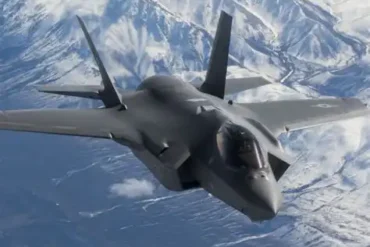
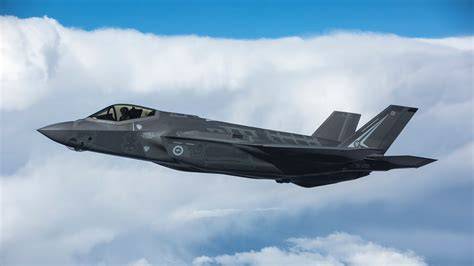
The most significant aspect of Britain’s expanded F-35 order is not the number of aircraft but the arrival of the F-35A variant. Unlike the F-35B operated from Royal Navy aircraft carriers, the F-35A is designed for conventional runway operations and is the only Lightning II version currently certified to carry the B61-12 nuclear gravity bomb.
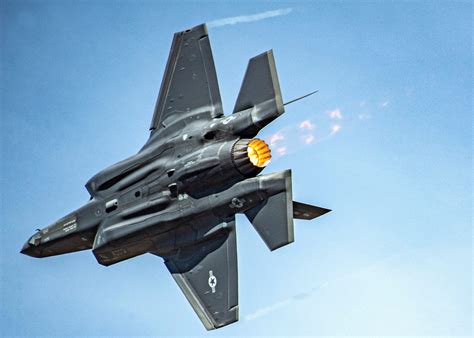
This capability allows the United Kingdom to participate again in NATO’s Dual Capable Aircraft (DCA) mission. Britain previously maintained an airborne nuclear capability through the WE.177 nuclear bomb carried by RAF strategic bombers, but that capability ended in 1998 when the weapon was retired.
For decades, the UK’s nuclear deterrent has relied almost entirely on the Royal Navy’s Vanguard-class ballistic missile submarines. The introduction of F-35A aircraft does not replace the submarine force, but it creates another strategic option within NATO’s collective defense structure.
The decision reflects growing concerns about European security following Russia’s increasingly aggressive military posture. By operating nuclear-capable F-35As, Britain strengthens its role within NATO’s nuclear planning framework while also reinforcing the transatlantic defense relationship with the United States.
However, the aircraft will not immediately enter nuclear alert duties after arrival. RAF officials have indicated that the initial batch will primarily support pilot conversion training. Transitioning pilots from the F-35B to the F-35A requires time because the two aircraft share many systems but have different flight characteristics and operational roles.
Why The UK Chose To Delay Instead Of Buying More F-35s Now
At first glance, delaying aircraft deliveries may appear counterproductive. Britain needs more combat aircraft, and its existing F-35 fleet has already faced availability challenges. However, the decision reflects a broader strategy aimed at avoiding unnecessary costs.
The current F-35B fleet has struggled with maintenance pressures, limited spare parts availability, and shortages of skilled engineers. The National Audit Office has highlighted concerns about aircraft readiness, with availability rates remaining below expectations.
A larger fleet does not automatically create greater combat power if too many aircraft remain unavailable. Fighter capability depends on more than aircraft numbers. It requires trained pilots, maintenance personnel, spare parts, weapons stocks, and reliable software.
The UK originally planned to acquire 138 F-35 aircraft, creating a much larger force pool for carrier operations and global deployments. However, the current plan effectively limits the fleet to approximately 75 aircraft, including 63 carrier-capable F-35Bs and 12 land-based F-35As.
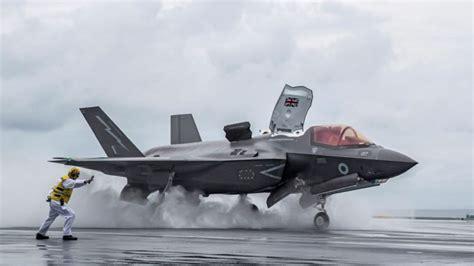
This smaller fleet creates difficult choices for the Royal Navy. The aircraft carriers HMS Queen Elizabeth and HMS Prince of Wales were designed to operate substantial numbers of F-35Bs, potentially carrying up to 36 aircraft during major strike missions. With fewer aircraft available, maintaining a continuous carrier presence becomes more challenging.
F-35 Software Problems Are Driving Procurement Delays
The delay in British F-35 deliveries is closely connected to wider problems affecting the entire Joint Strike Fighter program. The aircraft was designed around continuous modernization, meaning software updates are just as important as physical improvements.
The current challenge centers on the transition toward Block 4 capability. The upgrade requires TR-3 hardware, new software, and additional testing before the aircraft can achieve full operational status.
Early TR-3 aircraft deliveries created difficulties because the system was not fully mature. Some aircraft were delivered with limited software functionality, restricting them primarily to training activities rather than frontline combat operations.
For the UK, receiving these aircraft would create a difficult financial situation. Britain would need to invest additional resources upgrading recently delivered fighters while waiting for future software releases. Delaying procurement allows the RAF to bypass some of these problems and receive aircraft closer to their intended final configuration.
Operating costs are another concern. The F-35 remains one of the most advanced fighters ever built, but its sophisticated technology comes with a high price. Estimates from US government assessments place the operating cost of an F-35 at tens of thousands of dollars per flight hour, significantly above many older aircraft.
For a country balancing multiple defense priorities, including nuclear submarine modernization and next-generation aircraft development, every pound spent on sustainment matters.
The F-35 Pause Gives Britain Time To Prepare For GCAP
The timing of the F-35 delivery delay also creates an important opportunity for Britain’s next-generation fighter ambitions. The UK is a leading participant in the Global Combat Air Programme (GCAP) alongside Japan and Italy.
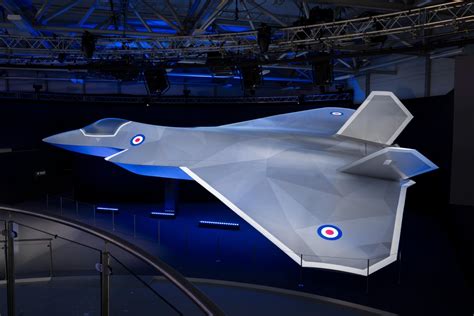
GCAP aims to produce a sixth-generation combat aircraft expected to enter service around 2035. The program represents Britain’s attempt to maintain sovereign aerospace expertise while developing technologies beyond the current F-35 generation.
A rushed F-35 expansion could have consumed significant defense funding that might otherwise support GCAP development. By delaying additional Lightning purchases, Britain gains financial flexibility during a critical period.
The UK, Japan, and Italy are investing heavily in advanced manufacturing, artificial intelligence, autonomous systems, next-generation sensors, and advanced weapons integration. These technologies will define future air warfare.
The F-35 remains a central part of British air power for decades to come, but GCAP represents the longer-term ambition. The two programs are not direct replacements for each other. Instead, the F-35 provides a highly capable fifth-generation platform while GCAP aims to create the next step in air combat technology.
Britain’s F-35 Strategy Is About Timing, Not Abandonment
The UK’s decision to delay new F-35 deliveries should not be interpreted as a rejection of the aircraft. Britain remains one of the most committed international partners in the Joint Strike Fighter program and was the only country outside the United States to receive Tier One partner status during development.
The F-35 will continue to serve as the foundation of British carrier aviation and remain essential to NATO operations. The introduction of the F-35A will also expand Britain’s strategic responsibilities within the alliance.
Instead, the delay represents a calculated attempt to synchronize procurement with technology maturity. By waiting until the early 2030s, Britain expects to receive aircraft with improved software, greater combat capability, and better integration with future weapons such as the Meteor air-to-air missile and SPEAR-3 precision strike weapon.
The decision also gives the RAF time to complete infrastructure improvements at facilities such as RAF Marham, where security upgrades and operational preparations are required for the F-35A’s future role.
The Real Challenge Is Building A Sustainable F-35 Force
The biggest question for Britain is no longer whether it can buy advanced fighters. The challenge is whether it can generate enough combat-ready aircraft from a relatively small fleet.
Modern air power depends on availability. A fleet of advanced aircraft that cannot regularly deploy provides limited strategic value. The UK must continue investing in maintenance capacity, training pipelines, weapons stocks, and technical expertise.
The F-35 is an incredibly capable aircraft, combining stealth, sensor fusion, electronic warfare, and networked operations. But those advantages only matter when enough aircraft are available for missions.
The arrival of new F-35As and F-35Bs in the 2030s will therefore mark more than a fleet expansion. It will represent the completion of a carefully planned transition toward a new era of British air power, combining fifth-generation fighters, NATO nuclear cooperation, and preparation for sixth-generation combat aircraft.
Britain’s expanded F-35 fleet may be arriving later than expected, but the delay reflects a broader strategy: waiting for the right aircraft, at the right time, with the right capabilities.