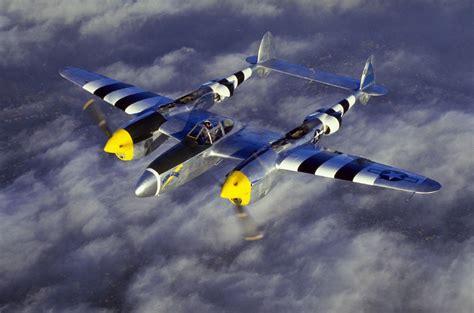
The Lockheed P-38 Lightning occupies a rare and almost paradoxical place in aviation history. It was an aircraft born ahead of its time, burdened early by complexity, misunderstood by some of its pilots, and yet capable of extraordinary adaptability across the most demanding combat environments of the Second World War. Few fighters flew as far, carried as much, or shifted roles as fluidly as the P-38. From icy European altitudes to the sprawling distances of the Pacific, the Lightning proved that versatility, not simplicity, could define battlefield success.
Unlike fighters that excelled narrowly in a single role, the P-38 evolved into a multirole platform long before that term became doctrinal language. It intercepted bombers at high altitude, escorted heavy formations deep into enemy territory, struck ground targets with bombs and rockets, hunted ships, photographed enemy defenses, guided bomber formations through cloud cover, and even prowled the night skies with radar. The story of the Lightning is not merely one of engineering brilliance, but of adaptation under pressure, iterative refinement, and pilots learning how to unlock the potential of an unconventional machine.
January 27, 1939, marked the maiden flight of the XP-38 prototype, an event that quietly reshaped American fighter design philosophy. Eighty-seven years later, the aircraft remains a case study in how bold engineering choices can yield enduring tactical flexibility. The Lightning did not succeed because it was easy. It succeeded because it could become what the mission demanded.
Born Ahead of Its Time: Radical Design and Strategic Ambition
The Lockheed P-38 emerged from a 1937 United States Army Air Corps requirement that seemed almost aspirational. The service wanted a high-altitude interceptor capable of unprecedented speed, climb rate, and endurance. At a time when most fighters were single-engine machines with limited range and light armament, Lockheed engineers Clarence “Kelly” Johnson and Hall Hibbard proposed something radically different.
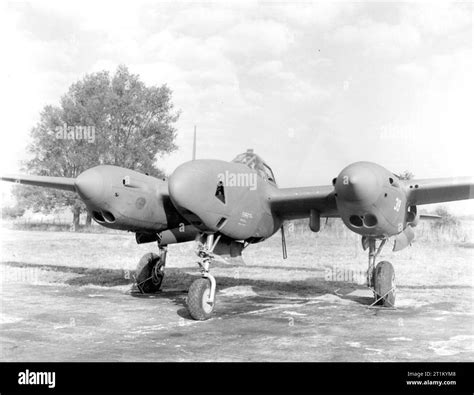
The defining feature was the twin-boom configuration, with two engine nacelles connected by a central gondola housing the pilot and weapons. This layout was not aesthetic experimentation; it was a solution to multiple problems at once. Housing the Allison V-1710 engines in separate booms allowed for large turbo-superchargers, critical for high-altitude performance, while freeing the nose for concentrated armament. Counter-rotating propellers eliminated torque effects, improving stability during takeoff and combat.
Just as revolutionary was the P-38’s nose-mounted firepower. Four .50-caliber machine guns paired with a 20 mm cannon delivered devastating punch without the convergence limitations of wing-mounted guns. This meant consistent lethality at any range, a decisive advantage in both air-to-air combat and strafing attacks.
The XP-38’s transcontinental dash in 1939 ended ignominiously with a crash landing at Mitchel Field, but the performance demonstrated en route captured attention. Even in failure, the Lightning signaled that American fighter design was entering a new era.
Engineering for Adaptation: From Prototype to Combat Aircraft
Early development revealed the cost of ambition. Compressibility effects in high-speed dives caused loss of control, cockpit heating proved inadequate for extreme altitudes, and early turbo-supercharger systems demanded constant pilot attention. These flaws did not doom the aircraft; instead, they forced a cycle of continuous refinement that would define the P-38’s wartime evolution.
Initial production models like the P-38D and P-38E introduced self-sealing fuel tanks, pilot armor, and improved systems reliability. As combat experience accumulated, incremental changes reshaped the aircraft’s capabilities. Improved turbo controls, oxygen systems, and engine variants steadily expanded the Lightning’s operational envelope.
This willingness to modify rather than replace proved crucial. The P-38 was not locked into a single configuration. It became a family of aircraft, unified by a common airframe but diversified through mission-specific refinements.
A Family of Variants: One Airframe, Many Roles
By mid-war, the Lightning existed in multiple distinct forms, each tailored to operational realities. The P-38G and H variants improved high-altitude performance, making them more effective as bomber escorts. The P-38J introduced redesigned intercoolers integrated into the wing leading edges, solving chronic cooling issues while increasing internal fuel capacity. Power-assisted ailerons and dive-recovery flaps transformed handling at high speed, restoring pilot confidence during aggressive maneuvers.
The final P-38L represented the culmination of this process. With reinforced structures, higher-rated engines, and standardized external stores, it was equally at home dropping bombs, firing rockets, or engaging enemy fighters. Few contemporaries could match this breadth of capability without extensive redesign.
Specialized variants extended the Lightning’s reach even further. F-4 and F-5 reconnaissance versions removed armament entirely, replacing guns with multiple camera installations. Their speed and altitude allowed unescorted photographic missions deep into enemy territory. Among those who flew these missions was Antoine de Saint-Exupéry, whose disappearance in an F-5B over southern France added a poignant literary chapter to the aircraft’s history.
Droop Snoots and Pathfinders: Reinventing the Fighter-Bomber
As the Lightning transitioned into a fighter-bomber, limitations emerged. The solid nose that made its armament so lethal restricted bombing accuracy. Lockheed’s solution was ingenious: the Droop Snoot. By replacing the guns with a glazed bombardier’s station and Norden bombsight, a single P-38 could lead an entire formation, releasing bombs simultaneously even through cloud cover.
Pathfinder versions went a step further, carrying ground-mapping radar to guide formations to obscured targets. These adaptations demonstrated how the P-38’s size and power allowed it to absorb new equipment without compromising performance. What began as an interceptor became a precision strike platform.
Dominance Across the Pacific: Range as a Weapon
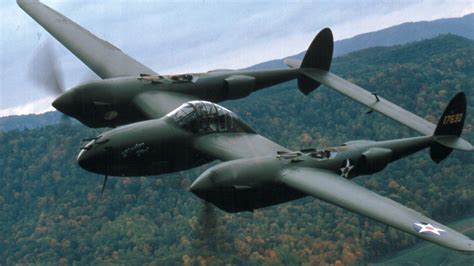
Nowhere did the Lightning’s strengths shine brighter than across the vast distances of the Pacific theater. Island-hopping campaigns demanded fighters capable of long-range escort and reliable over-water operations. Twin engines offered reassurance when single-engine aircraft failed, and large internal fuel capacity, augmented by drop tanks, enabled missions beyond the reach of most contemporaries.
The P-38’s concentrated firepower was particularly effective against lightly armored Japanese aircraft. Pilots could engage from greater distances, delivering lethal bursts before opponents could respond. Operation Vengeance in April 1943 epitomized this advantage, as P-38s flew hundreds of miles to intercept and destroy the aircraft carrying Admiral Isoroku Yamamoto.
The Lightning was not a dogfighter in the traditional sense. Its size and weight made prolonged turning engagements hazardous. Yet pilots who mastered energy fighting tactics—diving attacks, high-speed passes, and disciplined disengagement—achieved extraordinary success. Richard Bong and Thomas McGuire, the top American aces of the war, both scored the majority of their victories in P-38s.
Europe’s High Altitudes: A Different Kind of Test
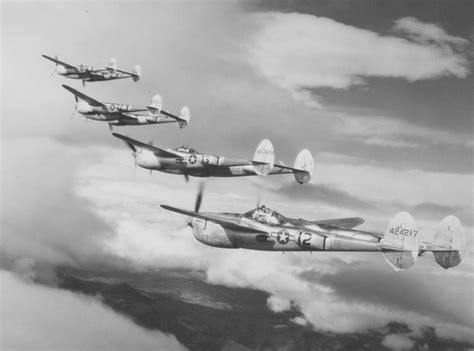
The European theater presented a harsher proving ground. Dense air defenses, advanced German fighters, and frigid weather exposed the Lightning’s early shortcomings. Cockpit heating failures and complex engine management led to mixed pilot perceptions, particularly among inexperienced airmen.
Yet the aircraft’s potential was undeniable. As later variants addressed cooling and compressibility issues, the P-38 regained competitiveness. Enhanced intercoolers, air brakes, and boosted controls allowed pilots to exploit altitude and speed effectively against Bf 109s and Fw 190s.
Colonel Robin Olds famously described the P-38 as “too much airplane” for the unprepared, a statement that captures both its difficulty and its power. In skilled hands, it remained a formidable escort and interceptor until the arrival of longer-ranged single-engine fighters.
Ground Attack and Tactical Support After Normandy
Following the Normandy invasion, the Lightning’s role shifted decisively toward tactical air support. Ninth Air Force units employed P-38s against rail yards, bridges, airfields, and troop concentrations. The aircraft’s ability to carry bombs, rockets, and napalm while retaining its full gun armament made it a flexible strike platform during the rapid Allied advance.
Low-level operations exploited the P-38’s stability and firepower, while twin engines offered survivability against ground fire. Though often overshadowed by newer fighters, the Lightning remained an indispensable workhorse during the final push into Germany.
Night Fighters and Late-War Experiments
In the war’s closing months, the P-38’s adaptability extended into the night. The P-38M Night Lightning, equipped with airborne interception radar and a second crew member, represented a final attempt to expand the platform’s mission set. Though too late to influence the outcome, it underscored the airframe’s capacity to absorb emerging technology.
These experiments foreshadowed postwar trends, where multirole fighters equipped with sensors and guided weapons became the norm. In many ways, the Lightning anticipated this evolution decades earlier.
Reconnaissance: Seeing the War Before It Happened
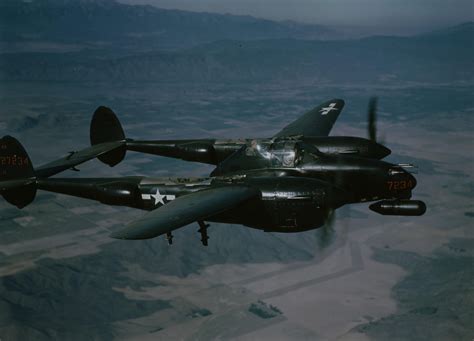
Perhaps the least glamorous yet most strategically vital role played by the Lightning was reconnaissance. Unarmed F-5 variants flew deep into hostile airspace, photographing beaches, rail networks, and defensive positions. Their speed and altitude reduced vulnerability, while the aircraft’s stability produced clear, actionable imagery.
Intelligence gathered by reconnaissance Lightnings proved critical in planning major operations, including the Normandy landings. In this role, the P-38 shaped battles long before the first shot was fired.
Legacy of Versatility: Lessons from the Lightning
Today, the Lockheed P-38 Lightning endures as more than an iconic silhouette. It represents a philosophy of designing for growth, of building an aircraft capable of evolving alongside the conflict it was meant to fight. Its success was never guaranteed, and its challenges were real, but its adaptability allowed it to remain relevant across every major theater of World War II.
Surviving examples in museums and airworthy collections continue to draw admiration, especially as anniversaries rekindle interest in its achievements. The Lightning reminds modern observers that versatility is not accidental. It is engineered, tested, refined, and ultimately proven in combat.
As one of the most flexible fighters ever fielded, the P-38 did more than strike like lightning. It stayed, adapted, and reshaped the battlefield wherever it flew.