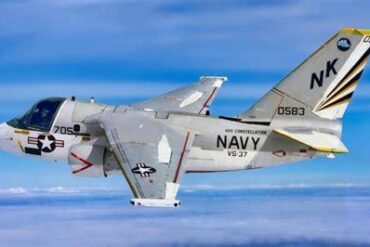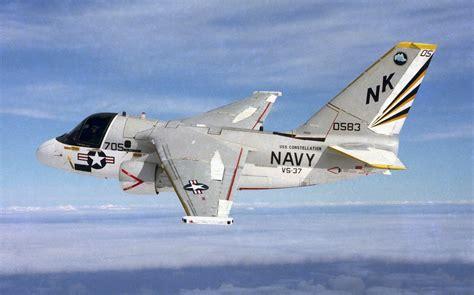
The Lockheed S-3 Viking stood as a technological and operational cornerstone of the U.S. Navy’s airborne anti-submarine warfare (ASW) capabilities for over three decades. Designed with precision, versatility, and longevity in mind, the Viking not only fulfilled its initial ASW role with distinction, but later evolved into a multipurpose naval asset encompassing surface surveillance, aerial refueling, electronic intelligence (ELINT), and more. From its Cold War beginnings to its final flight under NASA, the S-3 Viking left an indelible legacy in naval aviation.
Origins in Cold War Tensions: The VSX Program
In the escalating naval arms race of the mid-1960s, the U.S. Navy sought a cutting-edge replacement for the aging Grumman S-2 Tracker. The VSX (Carrier-Based ASW Aircraft) program called for a modern jet-powered ASW platform capable of operating from aircraft carriers. Lockheed, with its strong aerospace pedigree, joined forces with Ling-Temco-Vought (LTV) to produce a design tailored for carrier compatibility, including folding wings and reinforced landing gear, while Sperry Univac developed the aircraft’s revolutionary digital mission computer systems.
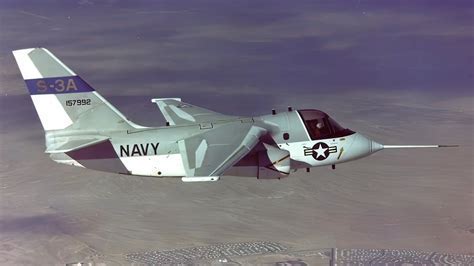
The resulting design, designated the S-3 Viking, was selected in August 1969. A total of eight YS-3A prototypes were ordered for developmental testing. After a rigorous test schedule, the first flight took place on January 21, 1972, and by February 20, 1974, the S-3A entered operational service.
Sophisticated Design: Power, Crew, and Systems
The Lockheed S-3 Viking featured a high-wing monoplane configuration, with twin General Electric TF34-GE-2 turbofan engines housed in underwing nacelles. The aircraft’s layout provided not only aerodynamic stability at low speeds but also a large internal volume for mission systems and crew stations.
The aircraft carried a crew of four: pilot, co-pilot/tactical coordinator (COTAC), tactical coordinator (TACCO), and sensor operator (SENSO). This crew structure allowed for the effective management of its advanced sensor suite and weaponry, integrated through a powerful General Purpose Digital Computer that fed data to multi-purpose CRT displays. Redundancy was built into every key system: dual hydraulic circuits, emergency manual flight controls, an onboard Auxiliary Power Unit (APU), and even manual backup for electronic systems.
Flight control was enhanced with leading-edge and Fowler flaps, spoilers, and rudder trim assist, allowing the Viking to operate efficiently across a wide range of speeds and altitudes. For carrier operations, robust tailhook and nose/tail gear structures allowed it to endure catapult launches and arrested recoveries.
Armament and Mission Versatility
Originally conceived as an ASW platform, the S-3A was armed to the teeth for submarine-hunting. The weapons bay and wing pylons could carry:
- Mk 46 torpedoes
- Depth charges
- Free-fall bombs
- AGM-84 Harpoon anti-ship missiles
- AGM-84H/K SLAM-ER for land targets
- AGM-65 Maverick air-to-surface missiles (later versions)
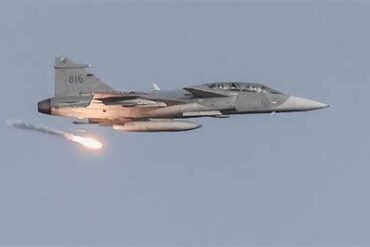
To track submarines, it employed active and passive sonobuoys, a retractable Magnetic Anomaly Detector (MAD) boom, and radar systems enhanced with Inverse Synthetic Aperture Radar (ISAR) in later models. Electronic countermeasures included chaff dispensers, infrared flares, and specialized ELINT antennas in the ES-3A Shadow variant.
Refueling capabilities were a major operational breakthrough. The addition of a buddy-store fuel tank system enabled the Viking to serve as an aerial tanker, especially during prolonged combat air operations. This later role was pivotal as the Viking became the Navy’s primary carrier-based tanker in its final years.
Early Challenges and Fleet Integration
When the S-3A began replacing the Grumman S-2 Tracker in 1975, initial fleet experiences revealed growing pains. Mission computer failures, spare parts shortages, and limited logistical infrastructure hindered early operations. Despite these hurdles, the platform’s potential was undeniable.
A major turning point came in 1987, with the introduction of the S-3B upgrade. This retrofit package included:
- Enhanced radar and electronic support measures
- ISAR capability for superior surface imaging
- AGM-84 Harpoon integration
- Upgraded mission computers
- Improved navigation and targeting avionics
The S-3B proved to be a robust, multi-role aircraft, equally at home tracking enemy subs or providing aerial refueling to F/A-18s during sustained operations.
Specialized Variants and Expanding Roles
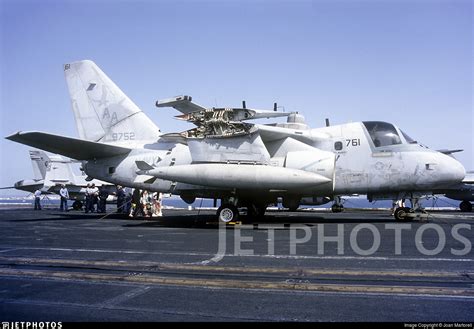
Beyond the S-3A and S-3B, the Viking lineage saw the development of multiple specialized variants. Six aircraft were converted into US-3A models for Carrier Onboard Delivery (COD) duties, tasked with high-priority transport between carriers and shore bases. One S-3A became a KS-3A, evaluated as a dedicated tanker, though this variant did not enter full production.
Most notably, 16 airframes were transformed into ES-3A Shadows, which served as electronic intelligence (ELINT) platforms. Outfitted with advanced antenna arrays, signal analysis equipment, and secure data links, these aircraft operated in support of fleet commanders during sensitive intelligence-gathering missions from 1993 to 1999.
Combat Experience and Strategic Deployment
The S-3 Viking saw action in nearly every major U.S. naval engagement from the late Cold War through the post-9/11 era. During the 1991 Gulf War, S-3Bs conducted maritime patrols, aerial refueling, and missile strikes. A notable achievement occurred when a SLAM-ER missile launched from an S-3B successfully neutralized an Iraqi Silkworm missile site.
In the 1990s Balkan conflicts, Vikings supported NATO operations over the Adriatic Sea, delivering refueling support and conducting over-the-horizon targeting of surface threats. The aircraft’s long loiter time and sensor suite proved invaluable in littoral environments.
During Operation Enduring Freedom and Operation Iraqi Freedom, the Viking shifted primarily to tanker and surface strike roles. An S-3B made headlines in 2003 when it fired an AGM-65 Maverick missile at a target near Basra, Iraq. That same year, an S-3B was re-designated “Navy One” as it transported President George W. Bush to the aircraft carrier USS Abraham Lincoln, where he gave the famous “Mission Accomplished” speech.
Sunset Years and NASA Research Missions
The S-3 Viking’s front-line service officially ended in January 2009, when it was retired from fleet operations. However, its story didn’t end there. Three aircraft remained in use with VX-30 at Naval Air Station Point Mugu, supporting weapons testing and range surveillance until early 2016.
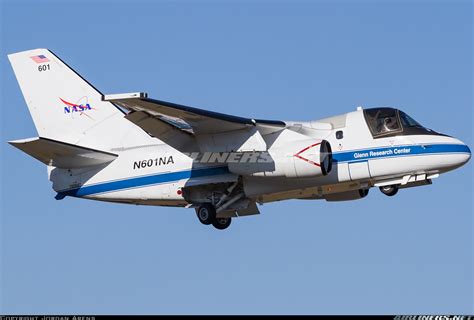
One specially modified S-3B, tail number N601NA, found a second life with NASA. Deployed in various atmospheric and oceanographic research missions, it flew until July 2021, contributing valuable data in environmental science, aeronautics, and remote sensing.
Attempts at Revival and Enduring Legacy
Efforts to extend the Viking’s life came from multiple quarters. Lockheed Martin proposed a modified C-3 Viking for the U.S. Navy’s COD requirements, but it was ultimately passed over in favor of the V-22 Osprey. Similarly, the Republic of Korea Navy considered refurbishing mothballed S-3Bs for ASW roles, though the plan was shelved in 2018.
Despite these unrealized ambitions, the Viking’s contribution to naval aviation remains unparalleled. A handful of airframes now reside in aviation museums and airparks across the United States, preserved as testaments to an era of Cold War vigilance, technological advancement, and operational flexibility.
As the last jet-powered, carrier-based ASW aircraft ever fielded by the U.S. Navy, the S-3 Viking stands as a symbol of unmatched maritime patrol prowess. Its long-range capability, multi-role adaptability, and digital integration were well ahead of their time — an embodiment of naval air power’s evolution through the late 20th century.