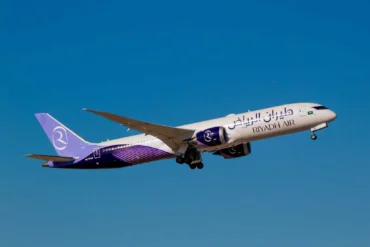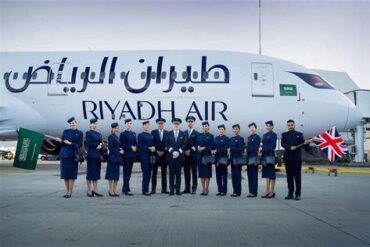
Saudi Arabia’s ambitious new airline Riyadh Air is rapidly transforming its international network strategy, opening reservations for four new routes that strengthen its position as a future global aviation player. The carrier has added services connecting its hub at King Khalid International Airport (RUH) in Riyadh with Islamabad, Lahore, Bangkok, and Manila, expanding its reach across South and Southeast Asia.
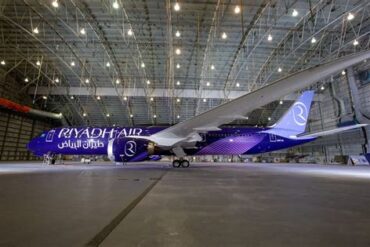
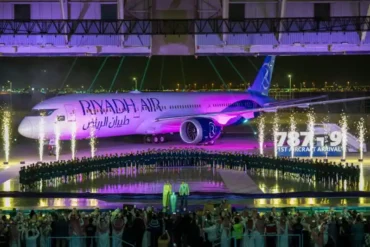
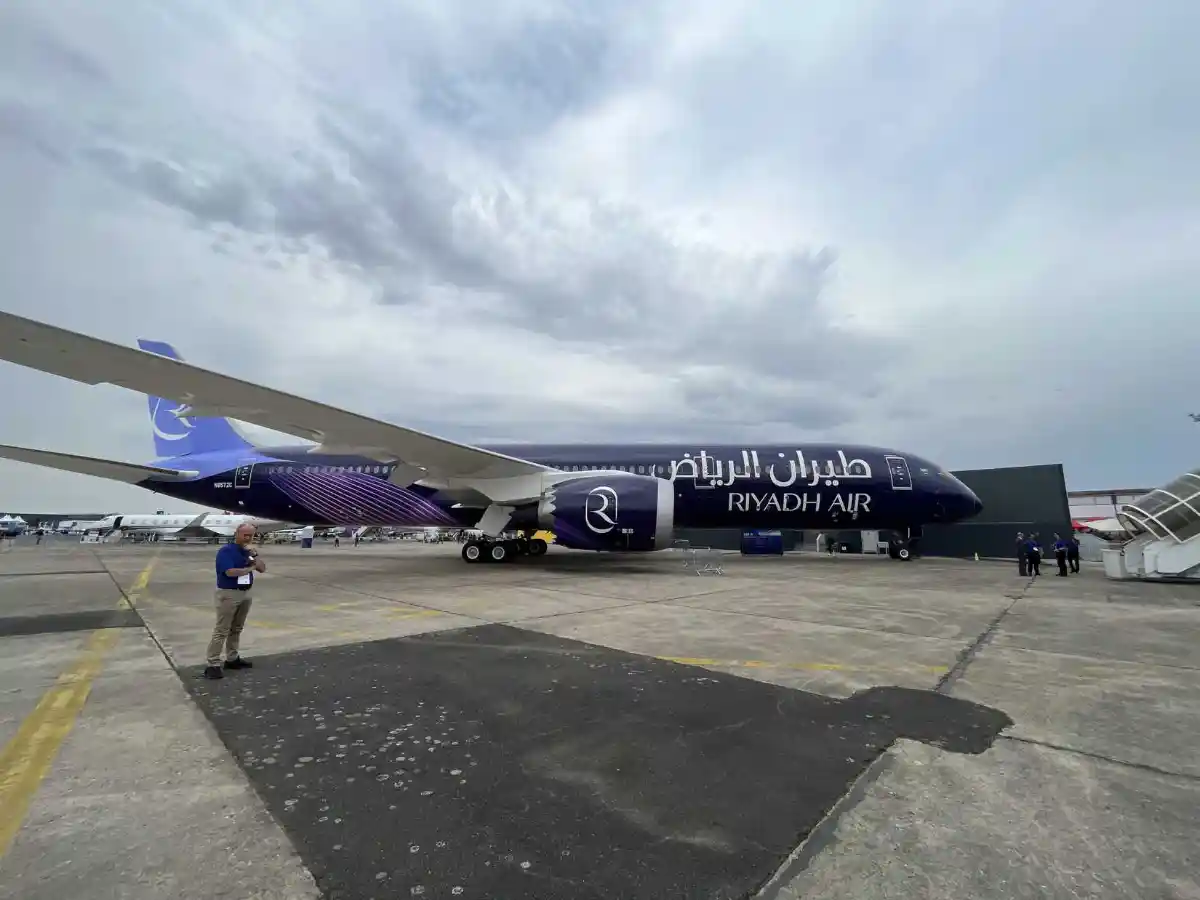
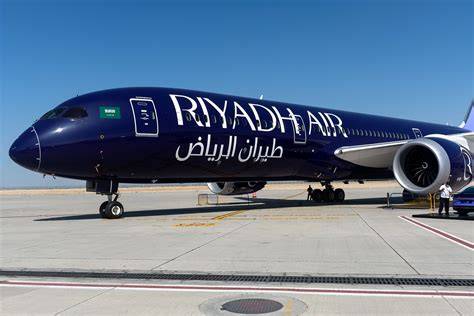
The latest network expansion highlights Riyadh Air’s aggressive growth plans after entering commercial operations with a fleet built around the Boeing 787-9 Dreamliner. The airline is using the long-range capabilities of the aircraft to establish connections between Saudi Arabia and key international markets while building a foundation for its long-term ambition of becoming a major global hub carrier.
Riyadh Air Adds Four Strategic Asian Routes With Boeing 787-9 Operations
The first phase of the expansion focuses on Pakistan, where Riyadh Air will introduce flights to Islamabad (ISB) and Lahore (LHE). The Islamabad route is scheduled to begin on August 14, operating daily, while flights to Lahore will launch on August 18 with three weekly frequencies.
Both services will be operated using the Boeing 787-9 Dreamliner, an aircraft designed for long-haul efficiency and passenger comfort. The choice of the 787-9 allows Riyadh Air to serve medium- and long-distance international routes while maintaining operational flexibility as its network continues to grow.
Pakistan represents an important market for Saudi Arabia due to strong economic, cultural, and travel links between the two countries. The new routes are expected to attract both business and leisure travelers while providing additional connectivity options through Riyadh.
The airline is also expanding further east with new services to Bangkok, Thailand, and Manila, Philippines. Flights to Bangkok will begin on September 2 with four weekly operations, while Manila service will launch on September 9 with daily flights.
Building a Global Hub Strategy Through Riyadh Connections
Unlike the Pakistan routes, which are expected to rely heavily on direct passenger demand, the Bangkok and Manila services are part of Riyadh Air’s broader global connectivity strategy. These routes are designed not only for point-to-point travelers but also for passengers connecting through Riyadh to Europe and other international destinations.
This hub-and-spoke approach mirrors the strategies used by established Middle Eastern airlines, including carriers that have transformed their home airports into major global transfer points. Riyadh Air aims to position Saudi Arabia as a competitive aviation gateway between Asia, Europe, and the Middle East.
The airline’s Boeing 787-9 fleet plays a central role in this strategy. Riyadh Air’s Dreamliners are configured with 28 business class seats, 39 premium economy seats, and 223 economy seats, offering a multi-class cabin designed to compete with established international airlines.
CEO Tony Douglas has highlighted strong customer reactions to the airline’s onboard experience, noting that passengers have responded positively to the carrier’s current Boeing 787 fleet. The emphasis on premium service, modern aircraft, and digital-focused operations is a key part of Riyadh Air’s effort to differentiate itself in a highly competitive industry.
Riyadh Air’s Expanding International Network
The four new Asian routes are part of a much larger network development plan. Riyadh Air currently has a growing presence across Europe, the Middle East, Africa, and Asia, with announced destinations including London Heathrow, Manchester, Madrid, Malaga, Dubai, Jeddah, Cairo, Dhaka, Kuala Lumpur, and Mumbai.
The airline plans to operate approximately 22 routes by March 2027, with an even more ambitious target of reaching 100 destinations by the end of the decade. Achieving this goal will require rapid fleet growth, strong partnerships, and continued expansion into strategically important markets.
China is also expected to become an important part of Riyadh Air’s future network, as the carrier prepares to enter additional major Asian markets. Expanding across Asia allows Riyadh Air to capture growing travel demand while supporting Saudi Arabia’s broader economic diversification goals under Vision 2030.
Boeing 787 Fleet Expansion Supports Riyadh Air’s Ambitious Growth
The Boeing 787-9 Dreamliner remains the foundation of Riyadh Air’s fleet strategy. Current scheduling data shows that the airline operates a fleet consisting entirely of Boeing 787 aircraft, giving it a modern long-haul fleet from the beginning of operations.
The carrier has placed significant future orders to support its expansion plans, including commitments for 40 additional Boeing 787-9 aircraft and 20 Boeing 787-10 aircraft. The larger 787-10 orders were converted from previous 787-9 commitments, allowing Riyadh Air to introduce additional capacity on high-demand routes.
Beyond Boeing’s widebody aircraft, Riyadh Air has also invested in Airbus narrowbody aircraft. The airline has orders for 60 Airbus A321neo jets, which will provide flexibility for regional and shorter international services.
The carrier has further strengthened its future fleet plans with commitments for 31 Airbus A350-1000 aircraft, creating a diverse fleet capable of serving everything from regional markets to ultra-long-haul destinations.
A New Global Airline Challenger Takes Shape
Riyadh Air’s rapid expansion demonstrates the scale of Saudi Arabia’s ambitions in commercial aviation. By combining a modern Boeing 787 fleet, strategically selected international routes, and a hub strategy centered on Riyadh, the airline is attempting to establish itself as a serious competitor in global air travel.
The addition of Islamabad, Lahore, Bangkok, and Manila shows that Riyadh Air is not simply adding destinations but carefully building a network designed around global connectivity. As more aircraft arrive and additional markets open, the airline’s transformation from startup carrier into international aviation challenger will become one of the industry’s most closely watched developments.