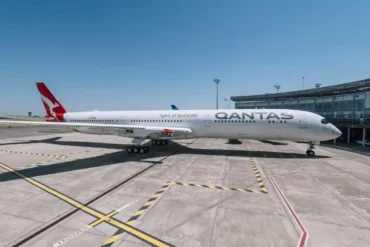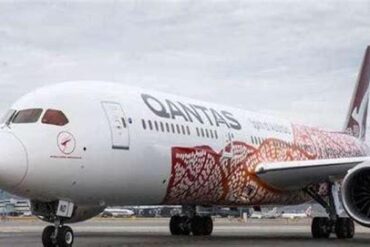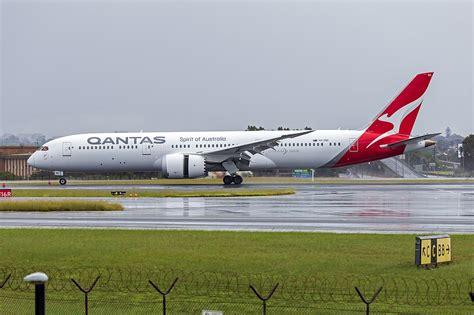
A Qantas Boeing 787-9 Dreamliner bound for Australia was grounded in Rome on Saturday after a bedbug outbreak was discovered on board, forcing the carrier to scrap a scheduled long-haul service and rebook passengers on flights departing within 48 hours. The incident, confirmed by the airline and first reported by the BBC, turned an otherwise routine turnaround at Rome Fiumicino Airport (FCO) into one of the more unusual operational disruptions of the year.
Qantas flight QF6, the return leg of a daily Melbourne–Perth–Rome rotation, was cancelled before departure. The aircraft at the centre of the disruption was VH-ZNI, the Boeing 787-9 operating the route. Rather than press the widebody back into service, Qantas opted to keep the jet on the ground so engineers and maintenance crews could carry out a deep clean of the affected cabin. The airline’s spokespeople confirmed the decision stemmed from an issue isolated to a small number of economy seats.
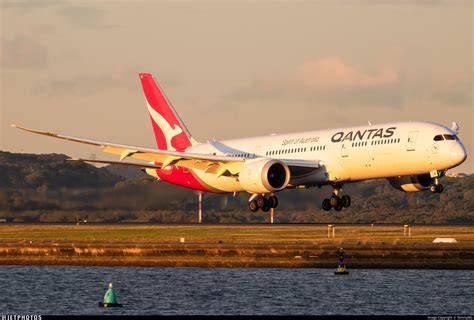
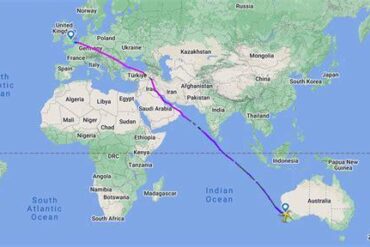
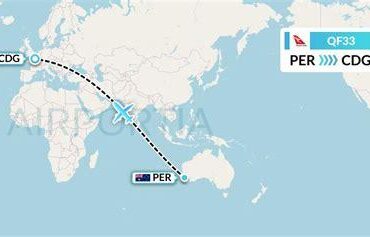
The problem surfaced not in Rome, but hours earlier in the air. The inbound sector from Perth to the Italian capital took 16.5 hours, a rare nonstop link between Australia and Europe, and it was during that leg that passengers began complaining of insect bites. Cabin crew distributed antihistamines to soothe the irritation, but the onboard supply was quickly exhausted as more travellers reported symptoms. By the time the Dreamliner touched down, the scale of the complaints made a standard turnaround impossible.
Tracking data from Flightradar24 showed Friday’s iteration of QF5, the Melbourne–Rome service routed via Perth, arrived more than an hour behind schedule, landing at 7:33 AM on Saturday, October 10, against a usual arrival slot of 6:15 AM. That delay compressed an already tight window: QF6 normally departs Rome at 10:45 AM local time, leaving little more than three hours for cleaning, catering and crew handover. A bedbug infestation demanded far longer than that.
Qantas moved swiftly to protect its passengers. The airline rebooked travellers booked on the cancelled QF6 service onto alternative flights within 48 hours and provided hotel accommodation in Rome for those stranded. Its Boeing 787-9 Dreamliners seat up to 236 passengers across three cabins, though Qantas did not disclose how many were affected or how many seats the infestation touched.
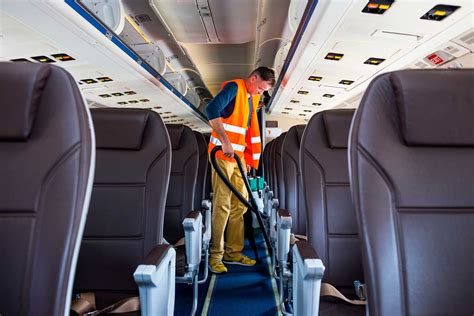
The aircraft itself did not remain idle indefinitely. VH-ZNI departed Rome at 2:02 PM on October 10 under the ferry flight number QF7006, positioning back to Perth and arriving at 11:06 AM the following day. It then continued to Sydney as QF6007 before rejoining regular scheduled service. The repositioning allowed Qantas to return the jet to its Australian network without carrying fare-paying passengers on a cabin still under scrutiny.
Investigators and media coverage pointed to a familiar culprit. Reporting by The Guardian suggested a passenger’s luggage or clothing most likely acted as the inadvertent vessel that carried the bedbugs aboard the Dreamliner, a transmission route that makes such incidents notoriously difficult for carriers to prevent at the gate.
Bedbug outbreaks remain rare in commercial aviation, but the Qantas case is not without precedent. In January 2025, Turkish Airlines faced passenger reports of bedbugs on several flights, supported by photographs of bites. Earlier still, in October 2017, the BBC reported that British Airways apologised to a Canadian family bitten by bedbugs on a flight from Vancouver (YVR) to London Heathrow (LHR); cabin crew reportedly could not reseat them because the aircraft was sold out.
For Qantas, the cancellation underscores how cabin hygiene and duty of care intersect with operational scheduling. A single infested seat row can trigger a full deep-clean protocol, displace hundreds of travellers and pull a long-haul widebody out of rotation for more than a day. The airline’s decision to absorb that cost rather than fly a contaminated cabin reflects both passenger expectations and the practical difficulty of eradicating bedbugs at cruising altitude.
The Dreamliner has since returned to duty, and Qantas has not reported further incidents linked to VH-ZNI. The episode nonetheless joins a short but memorable list of aviation disruptions caused not by weather, mechanical failure or industrial action, but by a pest small enough to travel unnoticed in a folded jacket.