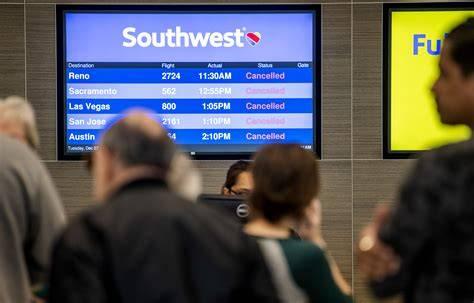
Southwest Airlines has removed three international routes from its network as part of a deliberate reallocation of capacity toward more profitable flying. Two of the dropped services connected United States cities to Cancun International Airport (CUN), while the third linked Baltimore/Washington International Thurgood Marshall Airport (BWI) to Los Cabos International Airport (SJD). All three terminations took effect in April 2026, and together they signal a sharper, more surgical approach to international expansion from a carrier that built its reputation on domestic point-to-point flying.
The affected city pairs are the O’Hare–Cancun service, the Colorado Springs–Cancun service, and the Baltimore–Los Cabos service. Each cut carries its own commercial logic, and each leaves a slightly different competitive landscape behind. What unites them is the underlying rationale: Southwest is no longer willing to carry routes with weak load factors simply to preserve the appearance of a broad international map. The airline’s leadership has framed the changes as a network strategy reset designed to remove underperforming services and redeploy aircraft onto higher-demand missions.
Why Southwest Is Reallocating Capacity Rather Than Shrinking Internationally
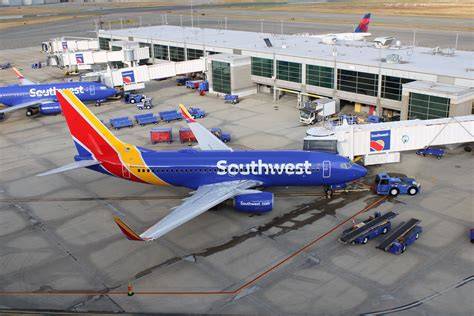
Southwest Airlines remains the world’s largest low-cost carrier, operating more than 800 Boeing 737 jets. That scale gives it unusual flexibility: when a route fails to fill seats reliably, the aircraft assigned to it can be shifted to a stronger market within weeks rather than sitting idle. The three cuts therefore represent a transactional decision about aircraft utilization and revenue per available seat mile rather than a retreat from international flying overall.
Critics increasingly describe Southwest as a hybrid carrier, noting that the airline has moved away from a purist low-cost model and now positions itself with a blend of included perks, paid extras, and tiered boarding products. That evolution matters to the route decisions: a carrier chasing premium-leaning travelers needs each international departure to carry an appropriate mix of fares, and markets that consistently underperform on that measure become candidates for removal. The airline’s own commentary emphasizes redeployment to more profitable, high-demand services, which is the language of a carrier optimizing a finite fleet rather than one shrinking its ambition.
Chicago O’Hare Exits Southwest’s Network and the Cancun Route Ends
The O’Hare–Cancun route was the most visible casualty. Southwest withdrew from Chicago O’Hare International Airport (ORD) entirely during the first half of 2026, with the Cancun service ending in the spring. The exit reflects a strategic choice to concentrate Chicago capacity at Midway International Airport (MDW), where Southwest has long held a dominant position and continues to operate nonstop flights.
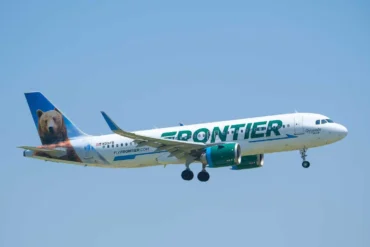
The decision simplifies the airline’s Chicago footprint. Running split operations across O’Hare and Midway carries real costs in staffing, gate utilization, and crew scheduling, and Southwest concluded that the secondary airport offered the stronger platform. At Midway, the carrier competes head-to-head with Frontier Airlines on the same airport pairing, an unusually direct low-cost matchup in one of the country’s busiest travel markets.
Demand on the O’Hare–Cancun city pair has not disappeared. American Airlines, Frontier Airlines, and United Airlines all continue to operate the route, collectively filling the void left by Southwest’s departure. Travelers who previously booked Southwest for that specific airport pairing now have three established alternatives, and the competitive intensity on the corridor makes the decision to step away more understandable: the carrier would have been fighting for share against three incumbents while simultaneously winding down its broader O’Hare presence.
| From | To | End Month | Competition |
|---|---|---|---|
| Chicago O’Hare (ORD) | Cancun (CUN) | April 2026 | American Airlines, Frontier Airlines, United Airlines |
| Colorado Springs (COS) | Cancun (CUN) | April 2026 | Route left unserved |
| Baltimore (BWI) | Los Cabos (SJD) | April 2026 | Route left unserved |
Colorado Springs Loses Its Only International Route
The Colorado Springs–Cancun cut carries greater local consequence. Colorado Springs Airport (COS) is the second-busiest airport in Colorado after Denver International Airport (DEN), and the Cancun service represented its sole international connection. Its removal leaves COS with no international services at all, a meaningful blow for travelers in the Pikes Peak region who previously avoided a drive north to Denver.
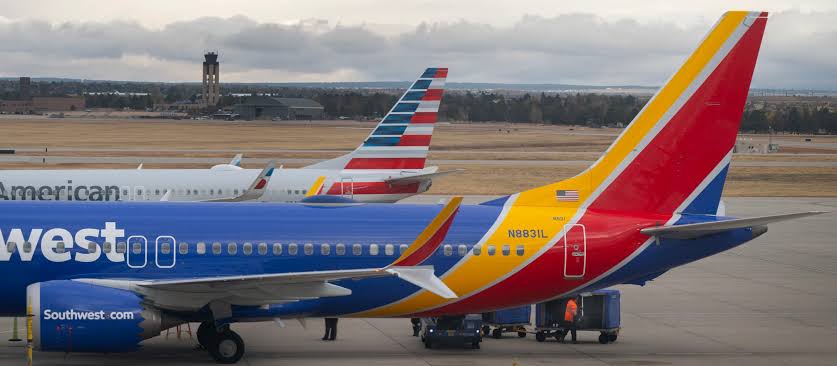
The route’s numbers reportedly told a difficult story. Load factors on the Colorado Springs to Cancun service were low, with data cited by MigFlug placing them among the weakest across the airline’s entire operation. A route with consistently soft demand is difficult to defend when the same aircraft could earn more elsewhere, and Southwest treated the service accordingly as part of its broader effort to eliminate underperforming routes and low-demand international flying.
Southwest nonetheless remains the largest operator at Colorado Springs, accounting for more than 40 percent of all flights. Its domestic commitments at the airport are unaffected, and the most popular routes from COS continue to be Denver, Dallas/Fort Worth International Airport (DFW), and Phoenix Sky Harbor International Airport (PHX). The loss of international service therefore reflects the thinness of the transborder market rather than any downgrading of the airport’s standing within the carrier’s domestic network.
Baltimore/Washington Loses Its Los Cabos Link
The third cut removed the nonstop service from Baltimore/Washington International Thurgood Marshall Airport (BWI) to Los Cabos International Airport (SJD) on Mexico’s Pacific coast. Like the Colorado Springs route, it ends in April 2026 and leaves the city pair unserved by any carrier, eliminating a direct option for travelers seeking the Baja California Sur resort corridor from the Baltimore region.
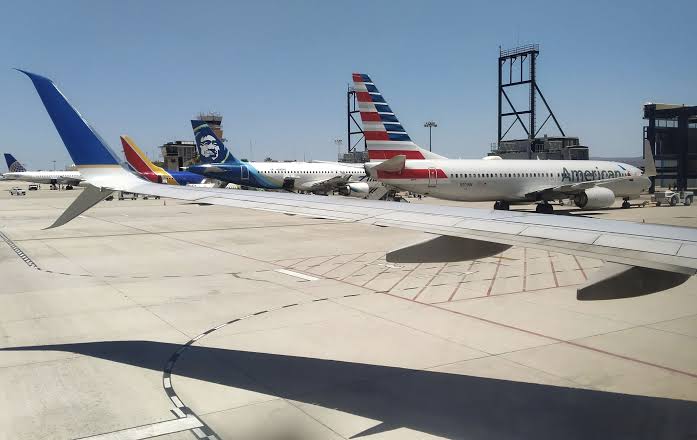
For Baltimore, the impact is narrower than it is for Colorado Springs. Southwest continues to operate 11 seasonal and year-round international services from BWI: Aruba, Belize City, Cancun, Grand Cayman, Liberia, Montego Bay, Nassau, Punta Cana, Providenciales, San Jose, St. Maarten, and St. Thomas. The carrier’s international presence at Baltimore remains substantial, and Los Cabos stands out as one of the few services that could not sustain adequate demand from the market.
What These Cancellations Mean for Travelers and How to Adjust
Travelers holding bookings or planning trips on the affected routes should check their reservations directly with Southwest, which typically rebooks passengers or issues refunds when it cancels a service outright. Those bound for Cancun from the Chicago area can turn to American, Frontier, or United at O’Hare, or consider Southwest’s continuing Cancun service from Midway if timing allows. Colorado Springs travelers seeking Mexico will need to route through Denver or another connecting hub. Baltimore passengers heading to Los Cabos face a similar connection requirement, though the airline’s ten remaining international destinations from BWI still cover most of the Caribbean and Mexico options travelers commonly request.
The strategic read for the broader market is consistent: Southwest is prioritizing routes where its aircraft can earn strong returns, and it will cut or relocate capacity when demand proves insufficient. The three April 2026 terminations show that international expansion is not exempt from that discipline, and that a low-cost carrier competing in a hybrid era increasingly treats every departure as a candidate for the same rigorous commercial test.